
Business
Nigeria’s Economic Performance: Domestic Debt Rise and Agriculture Trade Shift in Q2 2026
Nigeria's economic landscape in the second quarter of 2026 presents a mixed picture of fiscal press...
TAMFIS NIG LTDRC 8067447CAC ACTIVEFinima, Bonny Island, Rivers State

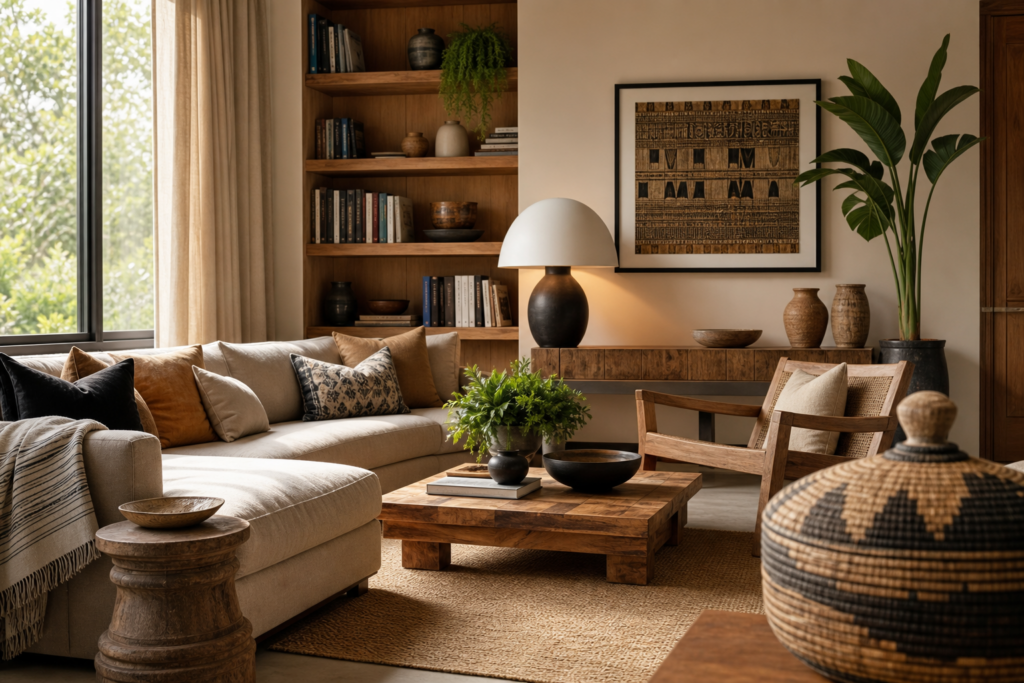
A successful home refresh is rarely about buying everything again. The most convincing interiors usually develop through a sequence of thoughtful decisions: removing what no longer serves the room, improving how people move through it, introducing useful light and adding objects with genuine meaning. This approach costs less, creates less waste and produces a home that feels personal rather than copied from a showroom.
Before choosing colours or accessories, decide what the room needs to do. A sitting room may have to support conversation, television, reading and occasional work. A bedroom needs calm, storage and suitable lighting at different times of day. When the purpose is clear, decorative choices become easier because each one can support the way the space is actually used.
Take photographs of the room from several angles. A photograph often reveals visual clutter, awkward gaps and poor proportions that become invisible through familiarity. Remove damaged accessories, duplicate furniture and items that have migrated into the room without a purpose. This is not an instruction to make the home empty; it is a way to give important pieces enough space to be noticed.
Measure the room, doorways and main furniture. Sketch a simple plan and test alternative arrangements before lifting anything heavy. Keep natural walking routes clear and avoid pushing every item against a wall by default. In a larger room, a rug and a pair of chairs can form a smaller conversation area. In a compact room, furniture with visible legs and a little space beneath it can make the floor feel less crowded.
A useful palette often has three layers: a quiet background colour, a supporting mid-tone and one or two accents. The background does not have to be white. Warm stone, clay, soft green, muted blue and gentle grey can provide a calm foundation. Repeat the supporting tone across several materials—perhaps timber, leather, woven fibre or painted joinery—so the scheme feels connected.
Test paint in the room rather than choosing from a small card under shop lighting. Observe it in morning sun, afternoon shade and artificial light. Strong colours can work beautifully when used deliberately: on one wall, inside shelving, across a ceiling or on a single piece of furniture. Repetition matters more than quantity. A small accent that appears in a cushion, an artwork and a ceramic vessel can feel more resolved than a room filled with unrelated bright objects.
Rooms can look flat even when their colours are attractive. Texture introduces the small variations that make a space feel comfortable. Combine smooth and irregular surfaces: linen beside timber, glazed ceramics beside woven baskets, brushed metal beside wool or cotton. Natural materials are valuable because their grain and variation soften hard architectural lines.
Textiles are an accessible way to change a room. Curtains hung close to the ceiling can emphasise height, while a properly sized rug can unite a seating group. Choose cushions and throws for touch as well as pattern. In a warm climate, breathable cotton and linen may be more practical than heavy piles. Washability, resistance to fading and ease of replacement should be part of the design decision.
One central ceiling fitting cannot meet every need. Aim for a combination of ambient, task and accent lighting. Ambient light makes the room usable; task light supports reading, cooking or work; accent light draws attention to artwork, plants or textured walls. Table and floor lamps also create pools of light that feel more intimate in the evening.
Consider colour temperature and glare. A bare, very bright lamp at eye level can make an otherwise comfortable room unpleasant. Shades, diffusers and reflected light are gentler. Position reading lamps beside the seat rather than behind it, and make sure work surfaces are lit without casting a shadow from the user’s body.
When new furniture is necessary, assess construction, comfort and scale before following a trend. Check joints, hinges, drawer runners and upholstery. Ask whether the item can be repaired, re-covered or used elsewhere later. Vintage, locally made and refurbished pieces can introduce character that mass-produced matching sets often lack.
Personal objects complete the room. Books, family photographs, travel pieces, local craft and inherited items tell a story, but they need not all be displayed at once. Rotate smaller collections and group related objects rather than scattering them across every surface. Artwork should be hung in relation to furniture and eye level, not automatically close to the ceiling.
A beautiful room must also cope with its environment. Strong sunlight can fade textiles and artwork, while humidity can affect timber, leather and poorly ventilated storage. Choose finishes that tolerate local conditions, use washable covers where dust is common and leave airflow around large furniture. Window treatments can reduce glare and heat without making the room permanently dark.
Set a realistic maintenance standard before buying. Deeply textured rugs, delicate pale upholstery and crowded open shelves demand regular care. If that effort does not suit the household, select simpler surfaces and fewer exposed objects. Practicality does not weaken a design; it allows the room to remain attractive after the first photograph.
The best home décor is not a finished performance. It is a flexible setting for everyday life. Allow useful pieces, meaningful objects and changing routines to shape the room over time. A measured refresh should leave the home easier to use, more comfortable to inhabit and recognisably yours.
Keep reading
Business
Nigeria's economic landscape in the second quarter of 2026 presents a mixed picture of fiscal press...
Business
Liverpool manager Andoni Iraola is confronting a significant selection headache as two key forwards, Cod...
News
Health News tamfitronics [Editor’snote:[Editor’snote: This transcript was generated using both transcription ...
TAMFIS NIG LTD
Electrical and instrumentation engineering, bid preparation and consulting, IT and software.