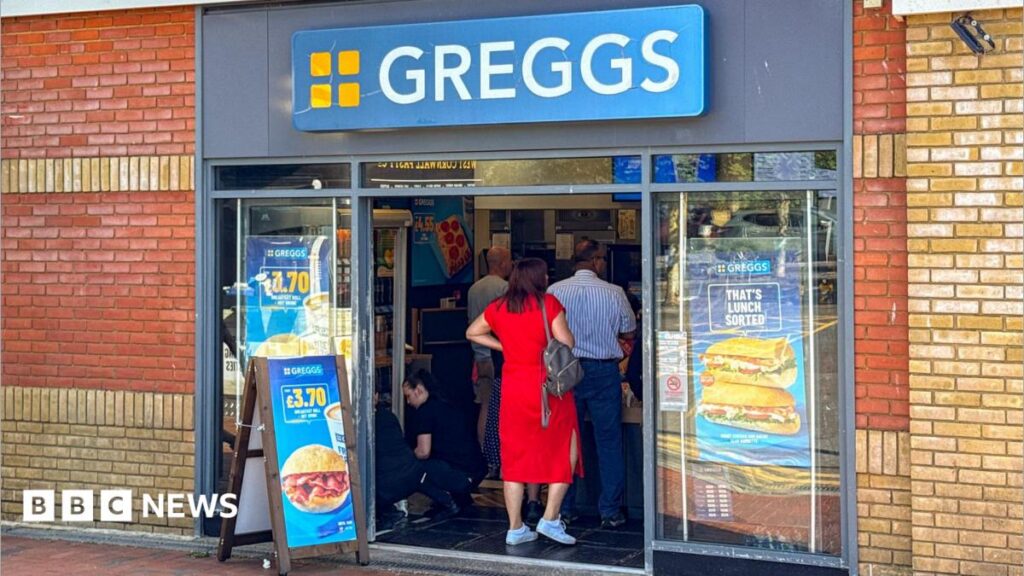
Image source, iStock Editorial / Getty ImagesImage caption, Greggs profits rose after it launched a range of new productsByEmer MoreauBusiness reporterPublished22 minutes agoGreggs's pivot towards healthier products and trending drinks has helped it boost sales, with the bakery chain reporting a 20% rise in profit over the first half of the year.Greggs, the UK's largest fast-food chain, has launched a range of new products this year, many of which latch onto trends such as high-protein salads and matcha.Greggs's chief executive Roisin Currie previously told BBC News the rise of weight-loss…
Broader Context and Outlook
Currency fluctuations and regional demand differences frequently complicate like-for-like comparisons of corporate results across reporting periods.
External shocks — from commodity price swings to geopolitical instability — can materially affect a company’s bottom line in ways that are only partly within management’s control, as this case illustrates.
Employee and union responses to corporate performance of this kind can vary considerably, particularly when strong results coincide with broader cost-of-living pressures on the workforce.
Longer-term, the sustainability of results like these often depends on how well a company can adapt its supply chains, pricing, and product mix to shifting conditions.
Shareholders and market watchers alike tend to focus not just on headline figures but on the underlying strategy a company signals for navigating a changing operating environment.
Analysts often distinguish between one-off gains and sustainable structural improvements when assessing results like these, since the market tends to reward the latter far more consistently over time.
Industry-wide trends frequently explain part of the picture, meaning individual corporate results of the kind discussed here are best understood in the context of how competitors and the broader sector are performing.
Corporate results like those referenced in “Matcha and protein pivot pays off for Greggs as profits rise” are usually read by analysts as a signal of broader consumer and market trends, rather than being evaluated purely in isolation.
The framing chosen by different outlets covering “Matcha and protein pivot pays off for Greggs as profits rise” can vary considerably depending on editorial priorities, which is one reason it is often useful to read more than a single account of a developing story.
The way a story like “Matcha and protein pivot pays off for Greggs as profits rise” is remembered a year from now often depends less on the initial headlines and more on what follow-up reporting and official inquiries eventually establish.
Understanding the full context behind a story like this usually requires looking beyond the immediate headline to the broader institutional, historical, or social factors that shaped how events unfolded.
Readers who want to stay informed on a topic like this are generally well served by following multiple credible outlets, since initial reports can sometimes vary in emphasis or detail.
Official inquiries or reviews, where they follow a story of this kind, typically take considerably longer to conclude than the news cycle that first brought the story to public attention, which can create a gap between public perception and the eventual documented record.
Social media discussion around stories like “Matcha and protein pivot pays off for Greggs as profits rise” often amplifies certain details disproportionately, and readers are generally well advised to treat viral framing with some caution until it is corroborated by established reporting.
The economic, legal, or social ripple effects of a story like this are not always apparent immediately, and often only become clear once analysts have had time to examine the fuller set of circumstances involved.
Institutional responses to situations like this — statements, reviews, or policy adjustments — are frequently shaped as much by public pressure and reputational concerns as by the underlying facts themselves.
As is often the case with breaking developments, some of the details surrounding “Matcha and protein pivot pays off for Greggs as profits rise” may be revised or clarified as more information becomes available in the coming days.
Archival context — how similar situations were handled in the past, and what came of them — frequently offers a more reliable guide to likely outcomes than speculation in the immediate aftermath of a story like this.
Comparisons to similar past events are a common feature of coverage like this, offering readers useful context even though no two situations unfold in exactly the same way.
Longstanding institutional practices and precedent frequently play a larger role in how situations like this are ultimately resolved than any single statement made in the heat of the initial news cycle.
Public interest in stories of this kind tends to spike sharply in the first 48 hours before gradually settling into a steadier stream of analysis and follow-up coverage over the following weeks.
Trust in the reporting and institutions surrounding a story like this tends to be reinforced or eroded not by any single article, but by the cumulative pattern of accuracy and transparency over time.
For readers trying to make sense of a fast-moving story like “Matcha and protein pivot pays off for Greggs as profits rise”, it is often worth distinguishing between confirmed facts, official statements, and early speculation, since these three categories tend to get blended together in the first wave of coverage.
News organisations covering developments connected to “Matcha and protein pivot pays off for Greggs as profits rise” typically rely on a combination of official sources, eyewitness accounts, and expert commentary, each of which carries a different level of certainty and should be weighed accordingly.