Lifestyle Many things can throw one’s microbiome out of kilter. Not eating ample fiber or relying too extra special on highly processed food can starve the “factual micro organism” build on your intestine. Frequent and sustained antibiotic exhaust can additionally unintentionally homicide them off.
With today’s busy schedule, many people skip the things that support gut health. “Modern lifestyles affect the microbiome in many different ways,” says Christopher Damman, a gastroenterologist at the University of Washington in Seattle.
One thing research shows? The microbiome appears to be highly resilient. And a few simple dietary changes can have an almost immediate impact.
Lifestyle How Long Does it Steal to Enhance Intestine Smartly being?
With research on the gut microbiome — the trillions of microorganisms that live in our digestive tract — expanding over the past decade or so, scientists have explored how gut health can influence conditions such as inflammation, metabolism, and immune function, as well as mental health and overall well-being.
In one studyresearchers fed one group of individuals a plant-based diet and another group a diet high in meat but low in fiber. The microbiomes of each group changed significantly within 24 hours. They also “bounced back” when the participants reverted to their usual diet.
That’s good to know, because it demonstrates that small daily lapses do not need to be devastating to your microbiome.
“Although it shifts quickly, if you go back to what you did before, it will likely revert back,” says Gail Cresci, a gut microbiome researcher at the Cleveland Clinic.
Regulate to-up work confirmed that eating a intestine-pleasant weight-reduction plan for about six months helped solidify sure changes to the intestine.
Read More: 5 Things That Will Help Keep Your Microbiome Healthy
Lifestyle Including Prebiotics and Probiotics in Your Diet
So, what’s the explicit dietary procedure to save a couple of up watch over your intestine? The immediate resolution is prebiotics and probiotics.
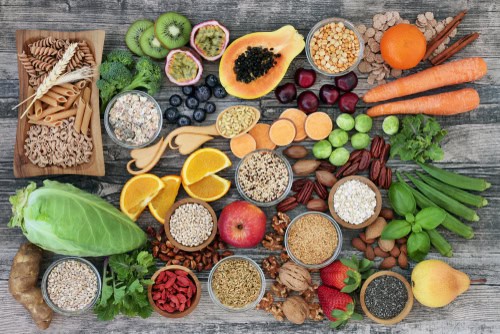
Prebiotics come from unprocessed fiber-rich whole foods such as fruits, vegetables, whole grains, nuts and legumes. Probiotics come from fermented foods such as kefir, sauerkraut, and kimchi.
Prebiotics are the food supply for the intestinal microbiota and probiotics are the actual microbes. Both prebiotics and probiotics occur naturally in certain foods, or they can also be dietary supplements.
Read More: What’s the Difference Between Prebiotics and Probiotics?
Lifestyle Metabolites in the Gut Microbiome
When we eat foods with prebiotics, we don’t break them down entirely at first. That’s where the microbiome comes in. Bacteria in the intestine can metabolize the fiber-rich food, and this helps maintain a healthy balance of beneficial gut bacteria while also allowing the beneficial bacteria to produce metabolites. These metabolites come in a variety of molecules that benefit the body in various ways, says Cresci.
Complicating issues, different types of fiber produce different metabolites — which have varied benefits to the body.
“When we start taking different fibers from different sources, the biological impacts are quite different,” Andrew Gewirtz a Georgia State University researcher says.
Gewirtz is now studying different kinds of fiber to better understand the specific roles each plays. Some fibers even produce the same kinds of reactions as medications like Ozempic.
Read More: Gut Biome Diversity Could Shape Personality, Energy Levels
Lifestyle Intellectual the Most attention-grabbing Invent of Fiber to Steal
Fiber added to a highly processed food may not be as effective as fiber from a more natural source. The U.S. Food and Drug Administration (FDA) changed a labeling requirement years ago that no longer distinguishes between, for example, the fiber in a multi-grain artisanal loaf of bread and a “fiber-enhanced” brownie that also contains many additives.
Fiber supplements can also be misleading. “You’re only getting what’s in the supplement and nothing else,” Carrie Daniel-MacDougall, associate professor of Epidemiology at The University of Texas MD Anderson Cancer Center, says.
A prebiotic food typically produces many beneficial metabolites, she adds. To get the same prebiotic effect as, say, a cup of beans, you’d need to take several different supplements.
Damman adds that he’s not entirely opposed to fiber supplements — so long as they are, indeed, a complement, and not an alternative to naturally occurring fiber.
“I am also a pragmatist and recognize a busy daily life,” Damman says. “It is better than nothing.”
Read More: 4 Science-Backed Diets to Improve Your Health
Lifestyle Including Probiotics in Your Microbiome
Probiotics — by way of how they work within the body — are pretty straightforward. You will need the chance to add microorganisms from fermented foods such as yogurt, sauerkraut, or kimchi directly to your intestine. Each food contains multiple strains of microorganisms. Each strain, when fed, could produce multiple metabolites. So, as with fiber sources, a variety of probiotic food sources may be more helpful than a single one.
Probiotic supplements should also be considered with caution, Damman says. Since the contents of such supplements are not regulated by the FDA, you may not be getting exactly what the label says.
“Fair groups have evaluated off-the-shelf probiotics,” Damman says. “And it is genuinely striking how poor the correlations are between what the label says and what is actually in there.”
Even probiotic supplements with similar-sounding names may not be equivalent, because different subspecies can have different effects. “That adds a layer of complexity to the probiotic landscape,” Damman says.
Read More: What to Feed Your Microbes
Lifestyle Researching the Advantages of Intestine Smartly being
That’s not to say there aren’t conditions or treatments that can’t be helped by taking probiotics, though. Nonetheless, in those cases, it will likely be best to turn to a health care provider or a registered dietitian.
Focused approaches aiming at gut health are in early research stages. Daniel-MacDougall is studying how boosting the microbiome helps the immune system, which in turn could help cancer patients. Cresci is examining how dietary approaches targeting the human gut microbiome could restore some of the cellular and immune system damage caused by alcohol. And Gewirtz has studied the impact of the microbiome on both diabetes and obesity.
Nonetheless, Mingyang SongHarvard T. H. Chan School of Public Health epidemiologist, cautions that a tailored approach to treating many diseases through the microbiome must be a waste of time.
“It’s a very interesting idea, given that the microbiome is so crucial to health,” he says.
Nevertheless Song also says it could perhaps even be difficult to “tease apart” the microbiome’s contribution to specific health issues. For example, the same diet that promotes a healthy microbiome has been linked to a lower incidence of colon cancer. Nevertheless he’s uncertain if the microbiome is a “mediator” or merely on “standby.”
That’s not to say that a healthy microbiome doesn’t contribute to overall good health. The microbiome is likely acting in concert with a variety of other processes.
Song also recommends a diet that includes fruits, vegetables, and whole grains. He acknowledges that this requires more effort than taking a supplement or relying on a single “helpful” food.
“People like to have the ‘magic bullet’,” Song says. “Unfortunately, it’s not that simple.”
Read More: Fresh Clues to Chronic Diseases Turn Up in the Gut
Lifestyle Article Sources
Our writers at Discovermagazine.com use peer-reviewed stories and high-quality sources for our articles, and our editors review for scientific accuracy and editorial standards. Review the sources cited below for this article:
Previous to becoming a member of Sight Journal, Paul Smaglik spent over Twenty years as a science journalist, that specialise in U.S. lifestyles science coverage and global scientific occupation points. He began his occupation in newspapers, nonetheless switched to scientific magazines. His work has seemed in publications alongside side Science News, Science, Nature, and Scientific American.
Originally reported by discovermagazine.com. Adapted for our readers.