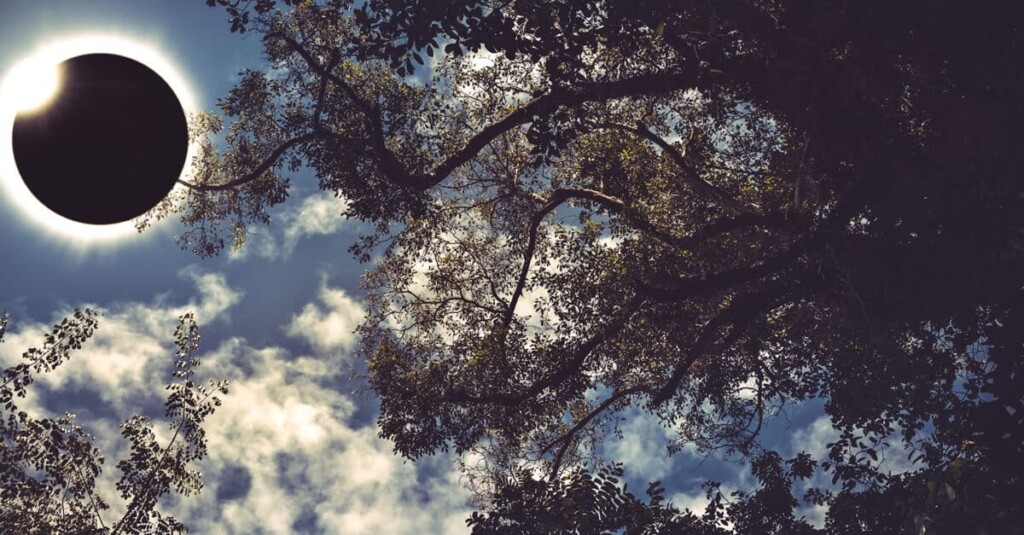
The night sky has long captivated humanity, inspiring awe and curiosity across cultures and centuries. While stars and constellations offer a nightly spectacle, few celestial events rival the drama and rarity of a total solar eclipse. On April 8, 2024, a total solar eclipse will sweep across a narrow path in the United States, temporarily turning day into night and revealing the sun’s elusive corona. This event presents an exceptional opportunity for both seasoned astronomers and casual sky watchers to witness a phenomenon that some locations experience only once every few centuries. Understanding the nature of solar eclipses and preparing properly can enhance the viewing experience and ensure safety during this fleeting spectacle.
What Is a Total Solar Eclipse?
A solar eclipse occurs when the moon moves directly between the Earth and the sun, casting a shadow on the Earth’s surface. Depending on the alignment and distances between these celestial bodies, the eclipse can be total, partial, or annular.
A total solar eclipse, such as the one occurring this April, happens when the moon completely covers the sun’s disk, blocking its bright light and revealing the sun’s outer atmosphere, known as the corona. This corona is usually invisible to the naked eye due to the sun’s overwhelming brightness.
The precise alignment of the sun, moon, and Earth during an eclipse is called syzygy, a rare near-perfect straight line of three or more celestial bodies. This alignment is what makes total solar eclipses so dramatic and scientifically valuable.
Historically, solar eclipses have held deep cultural significance. Ancient Greeks often interpreted them as divine messages, while in modern times, eclipses have contributed to scientific breakthroughs, such as the 1919 eclipse that provided evidence supporting Einstein’s theory of general relativity.
The Path of Totality and Viewing Opportunities
The path of totality is a narrow strip on the Earth’s surface where observers can witness the full eclipse, experiencing darkness akin to twilight for a brief period. For the April 8 eclipse, only thirteen U.S. states will fall within this path, making it a unique occasion for residents and travelers in those areas.
Outside the path of totality, viewers will still see a partial eclipse, where the moon covers most but not all of the sun. Partial eclipses last longer—typically between 70 to 80 minutes—offering a prolonged, though less dramatic, viewing experience.
During the moments just before and after totality, observers can witness phenomena such as Baily’s Beads, where sunlight streams through lunar valleys creating a string of bright spots along the moon’s edge. This transitions into the diamond-ring effect, a brilliant burst of light resembling a sparkling ring.
Because solar eclipses are highly predictable, astronomers use mathematical models to forecast their paths and timings years in advance. This allows enthusiasts to plan their viewing locations carefully to maximize their experience.
Safety Guidelines for Viewing the Eclipse
Viewing a solar eclipse safely is paramount. Looking directly at the sun without proper protection can cause permanent eye damage. It is essential to use certified eclipse glasses that meet international safety standards, such as ISO certification.
Regular sunglasses, no matter how dark, do not provide adequate protection. For those interested in alternative viewing methods, building a pinhole projector or using other indirect viewing techniques recommended by NASA can offer safe ways to observe the eclipse.
Planning ahead is also critical. Arriving early at your chosen viewing site can help avoid crowds and traffic delays, especially in areas within the path of totality where interest will be high.
Additionally, be mindful of weather conditions. Cloud cover can obstruct the view, so having a backup plan, such as traveling to a nearby location with clearer skies, can improve the chances of witnessing the event.
Making the Most of This Rare Celestial Event
A total solar eclipse is a rare and profound experience that many people may witness only once in their lifetime. Taking the time to fully immerse yourself in the moment can deepen your appreciation of the natural world and the cosmos.
During totality, the sudden darkness and the sight of the sun’s corona can evoke a sense of wonder and reflection. It’s an opportunity to pause and connect with the universe on a scale that everyday life rarely allows.
Whether you are an astronomy enthusiast or a casual observer, sharing the experience with others can enhance the enjoyment. Consider organizing a viewing gathering or joining community events to learn more and celebrate the occasion together.
Finally, documenting the event through photography or journaling can help preserve your memories and inspire others to appreciate the beauty and significance of solar eclipses.
What this means
The upcoming total solar eclipse presents a unique opportunity to witness one of nature’s most extraordinary spectacles. By understanding the science behind eclipses, preparing safely, and embracing the moment fully, observers can enjoy a memorable experience that connects them to the vastness of the cosmos. Whether you find yourself in the path of totality or viewing a partial eclipse, April 8 promises a celestial show that will inspire wonder and appreciation for years to come.
Obi says his wife funds her own purchases. This analysis separates his explanation, unverified handbag prices and the evidence needed to assess public spending.
Omotola’s podcast remarks raise practical questions about income, reputation and values. Here is how professionals can assess offers without inventing claims about missed earnings.