I've been a World Cup official – I promise you there is no favouritism
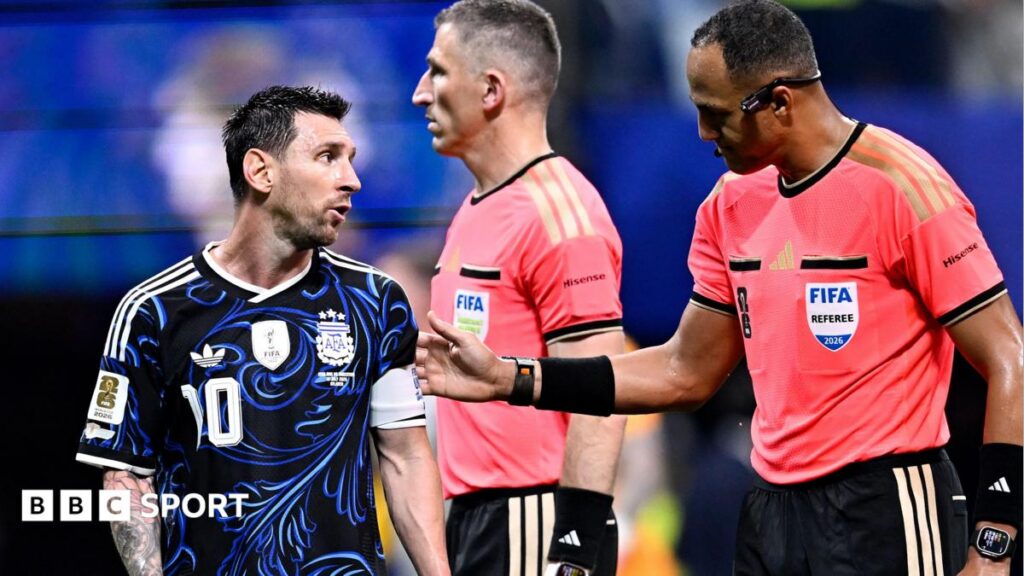
Image source, Getty ImagesImage caption, Lionel Messi is set to line up for Argentina against Spain in Sunday's World Cup finalByDarren Cann2010 World Cup final assistant refereePublished2 hours agoAccording to many fans, social media timelines and corners of the internet, Fifa wants Argentina and Lionel Messi to win the World Cup – and the officials are all in on it. As referees, we are forced to deal with the idea that we are part of some kind of conspiracy theory all the time.And it is nonsense. I can't stress this…
I've been a World Cup official – I promise you there is no favouritism
What happened
Image source, Getty ImagesImage caption, Lionel Messi is set to line up for Argentina against Spain in Sunday's World Cup finalByDarren Cann2010 World Cup final assistant refereePublished2 hours agoAccording to many fans, social media timelines and corners of the internet, Fifa wants Argentina and Lionel Messi to win the World Cup – and the officials are all in on it. As referees, we are forced to deal with the idea that we are part of some kind of conspiracy theory all the time.And it is nonsense. I can't stress this strongly enough.I was lucky enough to be an assistant referee at two World Cups, in 2010 and 2014, as part of a team which featured referee Howard Webb, with Michael Mullarkey running the other line.We were independent, and we made our own decisions. I can assure you this has not changed.The referees are from all four corners of the globe, all from different football associations, separate confederations, and Fifa effectively borrows their services for six weeks.They are completely distinct from Fifa, in a separate training camp.I'm sorry to disappoint any conspiracy theorists, but I can promise you there aren't any clandestine meetings between Fifa's executive committee and the referees.We don't see any of the suits at all.You are basically working every day – physical training, watching clips, debriefing the matches…
The Persistent Challenge of Match-Fixing Conspiracy Theories
Claims that football’s governing bodies favour particular teams or star players have circulated for decades, typically intensifying around marquee fixtures involving the sport’s most recognisable stars, and tend to spread rapidly on social media regardless of the evidence available to support them. Match officials have periodically spoken publicly to address such claims directly, emphasising the extensive video review processes, independent assessment panels and rigorous training that underpin top-level officiating at major tournaments.
Refereeing decisions in high-stakes knockout matches naturally draw intense scrutiny, given the stakes involved and the number of neutral and partisan observers analysing every contentious call in real time and in slow-motion replay. Governing bodies typically maintain that the introduction of video assistant referee technology has significantly reduced the scope for major officiating errors, even as public debate about individual contentious decisions continues regardless of the technology’s involvement.
How Officiating Assignments Are Actually Determined
Match officials for major tournament fixtures are typically selected well in advance through a formal assessment process run by the sport’s governing bodies, based on performance evaluations, experience at the international level and nationality considerations designed specifically to avoid any conflict of interest with the competing nations. Referees candidly discussing the pressures of officiating the sport’s biggest matches often describe extensive preparation routines, including detailed video analysis of both teams’ playing styles ahead of a fixture, aimed at anticipating likely flashpoints before they occur on the pitch.
Transparency initiatives from football’s governing bodies, including post-match explanations of contentious decisions and continued investment in officiating technology, are generally presented as part of an ongoing effort to maintain public confidence in the integrity of top-level competition.
Building Public Trust in Officiating
Football’s governing bodies have invested heavily in recent years in technology and transparency measures aimed at building public confidence in officiating decisions, including post-match explanations and, in some competitions, public release of referee communications during contentious incidents. Former officials speaking publicly about their experiences often aim to demystify the decision-making process for fans, explaining the training, protocols and real-time pressures involved in making split-second calls during elite-level matches.
Despite these efforts, conspiracy theories about officiating bias toward star players or historically successful nations persist, particularly on social media, where selectively edited clips and out-of-context statistics can spread rapidly regardless of the broader context. Sports media organisations increasingly employ dedicated officiating analysts to provide detailed, evidence-based breakdowns of contentious decisions, aiming to counter misinformation with clear technical explanation.
The Enduring Role of Human Officials Alongside Technology
Even as video assistant referee technology has expanded across top-level football, human officials remain central to final decision-making, tasked with interpreting technology-assisted evidence within the flow and context of a live match. Advocates for continued investment in officiating training argue that public trust is best built through consistent, well-explained decision-making over time, rather than any single technological fix addressing conspiracy claims in isolation.
Governing bodies have also increasingly invited retired officials to take part in public education initiatives, aiming to give fans a clearer, first-hand understanding of the officiating process well before controversies arise during a live tournament.
Fan engagement initiatives run by football’s governing bodies increasingly include behind-the-scenes content showing the officiating team’s preparation and in-match communication, part of a broader effort to make the traditionally closed-off refereeing process more visible and understandable to the public.
Independent panels reviewing officiating standards after major tournaments typically publish anonymised performance data, offering an additional layer of accountability beyond individual officials’ own public statements.
Supporters of continued reform argue that greater diversity among top-level officiating panels, alongside expanded technology use, would further strengthen public confidence in the impartiality of decision-making at the very highest level of the sport.
Ultimately, most experienced observers within the sport agree that consistent, well-communicated officiating over time, rather than any single statement or intervention, remains the most effective long-term antidote to persistent conspiracy narratives.
Thousands of young protesters in Delhi continue to demand education reforms and the resignation of Education Minister Dharmendra Pradhan after a police crackdown. The…
Facing a looming financial collapse, Thames Water’s main lenders have offered the UK government a ‘golden share’ and increased local authority involvement to avoid…
Facing record-breaking temperatures and severe drought, Thames Water has introduced a hosepipe ban impacting over 10 million customers across parts of southern England to…