How Climate Change and Tariffs Are Transforming China’s Cattle Industry
China, the world’s largest importer of beef, is experiencing a significant shift in its cattle industry driven by environmental and economic factors. Regions previously characterized by desert and sparse vegetation are now flourishing with grasslands, thanks to changing climate patterns and deliberate land reclamation efforts. At the same time, tariffs and trade policies have incentivized domestic production, allowing China to increase its beef herd substantially. This article explores how climate change and tariffs are helping China raise more cattle, the impact on the global beef market, and what this means for producers worldwide.
How Climate Change and Tariffs Are Transforming China’s Cattle Industry
From Desert to Grassland: The Transformation of Tongliao
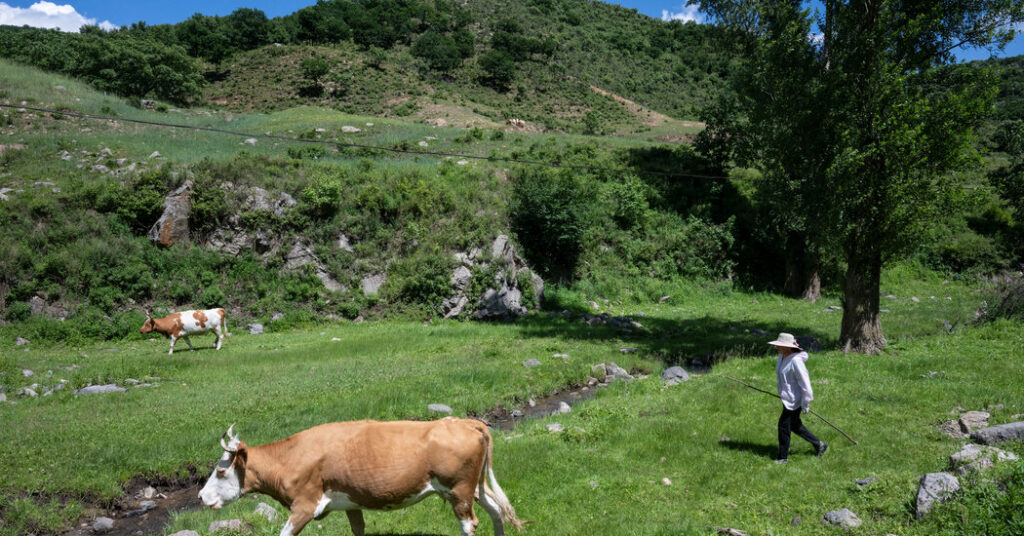
Tongliao, located on the eastern edge of the Gobi Desert in China’s Inner Mongolia region, exemplifies the dramatic environmental changes reshaping China’s cattle industry. Once dominated by sand, gravel, and camels, Tongliao has been transformed into a verdant landscape of grasslands and cornfields. This change is the result of decades of concerted efforts to reclaim arid land, combined with shifting climate patterns that have increased rainfall in northern China since the 1990s.
The Chinese government’s National Climate Center reports that northern China has become significantly wetter over recent decades. This increased precipitation has allowed areas like Tongliao to support lush grasslands, similar to renowned beef-raising regions such as Montana in the United States or Argentina’s Pampas. The introduction of poplar tree plantations and the cultivation of corn and grass have provided ample feed for cattle, creating an environment conducive to expanding beef production.
Climate Change’s Role in Expanding China’s Cattle Herd
Climate change, often associated with negative environmental impacts, has paradoxically benefited parts of northern China by increasing rainfall and greening previously barren lands. These wetter summers have reversed desertification trends, allowing vegetation to flourish and supporting larger herds of cattle.
In Tongliao alone, nearly four million head of cattle now graze on reclaimed pastures, contributing to a nationwide beef herd that has grown by one-third since 2018, reaching nearly 90 million animals. This expansion reflects a broader trend across northern China, where improved environmental conditions have made cattle farming more viable and profitable.
Shen Zhixin, a senior forestry and grassland engineer in Tongliao, notes that the sand is retreating while greenery expands, highlighting the tangible effects of climate shifts on land use and agricultural potential.
Tariffs and Trade Policies Driving Domestic Beef Production
Alongside environmental changes, China’s trade policies have played a crucial role in promoting domestic beef production. As the world’s largest beef importer, China has historically relied heavily on imports from countries like Argentina, Australia, Brazil, and the United States. However, tariffs and trade tensions have encouraged Beijing to pursue greater self-sufficiency in beef production.
By imposing tariffs on imported beef, China has made foreign products more expensive, incentivizing local farmers and businesses to invest in expanding the domestic cattle industry. This policy shift aligns with broader economic goals to reduce dependence on imports and bolster food security.
The combination of favorable environmental conditions and supportive trade policies has enabled China to increase its cattle herd significantly, positioning it as the world’s third-largest beef producer after Brazil and the United States.
Global Implications for Beef Exporting Countries
China’s growing self-reliance in beef production has significant consequences for the global beef market. As the largest importer, China’s demand has historically influenced prices and trade flows, especially for major exporters like Argentina, Australia, Brazil, and the United States.
With China expanding its domestic herd and reducing reliance on imports, these exporting countries may face decreased demand, potentially leading to shifts in global beef prices and trade dynamics. Argentina, for instance, exports two-thirds of its beef to China, highlighting the scale of potential impact.
Moreover, the transformation of northern China’s landscape into productive cattle grazing areas could inspire similar initiatives in other regions, further altering global beef supply patterns.
Challenges and Sustainability Considerations
Despite the positive aspects of increased beef production in China, challenges remain. Expanding cattle herds require significant water and feed resources, which could strain local ecosystems if not managed sustainably. The long-term effects of climate change are uncertain, and future shifts in weather patterns could disrupt current gains.
Additionally, environmental concerns related to methane emissions from cattle and land use changes must be addressed to ensure that the growth of China’s beef industry aligns with broader climate goals.
Balancing economic growth, food security, and environmental sustainability will be critical as China continues to develop its cattle industry.
What this means
China’s cattle industry is at a crossroads shaped by the interplay of climate change and trade policy. The transformation of arid lands into productive grasslands has enabled a rapid expansion of beef production, aligning with national goals of food security and economic self-reliance. While this shift offers opportunities for China to reduce its dependence on imports, it also introduces challenges related to sustainability and global market dynamics. As China continues to develop its cattle industry, careful management and international cooperation will be essential to balance growth with environmental stewardship and to navigate the evolving landscape of the global beef trade.
Editor’s note: The following is AI-generated commentary and context on this topic, not original reporting.
Broader Context and Outlook
Industry-wide trends frequently explain part of the picture, meaning individual corporate results of the kind discussed here are best understood in the context of how competitors and the broader sector are performing.
External shocks — from commodity price swings to geopolitical instability — can materially affect a company’s bottom line in ways that are only partly within management’s control, as this case illustrates.
Longer-term, the sustainability of results like these often depends on how well a company can adapt its supply chains, pricing, and product mix to shifting conditions.
Analysts often distinguish between one-off gains and sustainable structural improvements when assessing results like these, since the market tends to reward the latter far more consistently over time.
Currency fluctuations and regional demand differences frequently complicate like-for-like comparisons of corporate results across reporting periods.
Employee and union responses to corporate performance of this kind can vary considerably, particularly when strong results coincide with broader cost-of-living pressures on the workforce.
Shareholders and market watchers alike tend to focus not just on headline figures but on the underlying strategy a company signals for navigating a changing operating environment.
Corporate results like those referenced in “How Climate Change and Tariffs Are Transforming China’s Cattle Industry” are usually read by analysts as a signal of broader consumer and market trends, rather than being evaluated purely in isolation.
Comparisons to similar past events are a common feature of coverage like this, offering readers useful context even though no two situations unfold in exactly the same way.
The framing chosen by different outlets covering “How Climate Change and Tariffs Are Transforming China’s Cattle Industry” can vary considerably depending on editorial priorities, which is one reason it is often useful to read more than a single account of a developing story.
Institutional responses to situations like this — statements, reviews, or policy adjustments — are frequently shaped as much by public pressure and reputational concerns as by the underlying facts themselves.
Thousands of young protesters in Delhi continue to demand education reforms and the resignation of Education Minister Dharmendra Pradhan after a police crackdown. The…
Facing a looming financial collapse, Thames Water’s main lenders have offered the UK government a ‘golden share’ and increased local authority involvement to avoid…
Facing record-breaking temperatures and severe drought, Thames Water has introduced a hosepipe ban impacting over 10 million customers across parts of southern England to…