
News
RUSSIA versus NATO and BRICS vs. NATO Military SWOT
Recall that Poland’s Minister Sikorski’s core claim is partially supported by the numbers, but the framing “quite quickly” and “without the U.S.” does not…
TAMFIS NIG LTDRC 8067447CAC ACTIVEFinima, Bonny Island, Rivers State

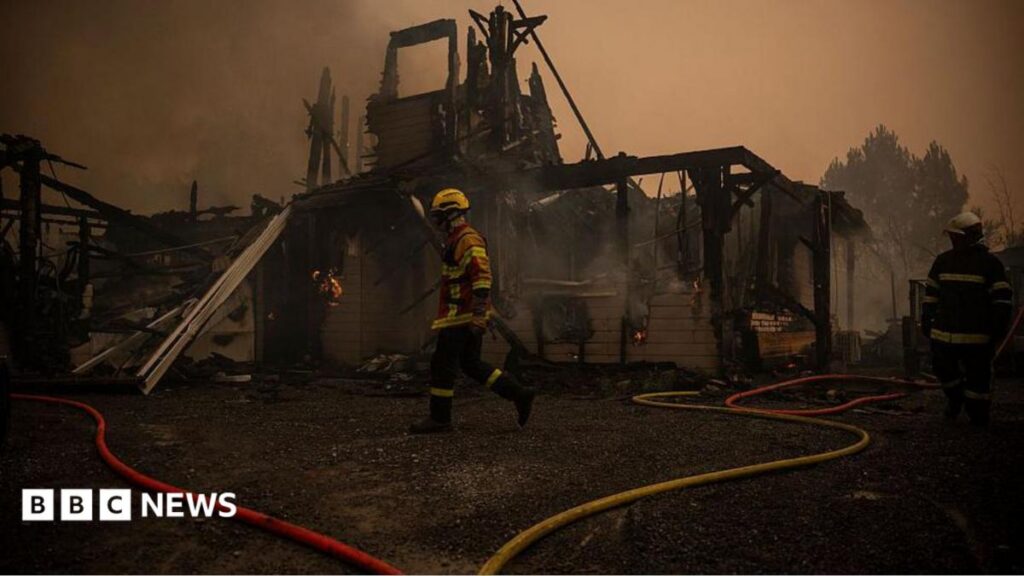
In a dramatic escalation of wildfire activity in southwestern France, officials have ordered the full evacuation of the Cap Ferret peninsula, a popular tourist destination. The move comes as flames continue to spread across the Gironde region, consuming vast areas of land and threatening communities. This crisis unfolds alongside severe wildfire outbreaks in neighboring Spain, where a national emergency has been declared. This article examines the unfolding events, the response efforts, and the broader implications of these wildfires on the region.
The wildfire that ignited on Tuesday in Saumos, located within the Gironde region of southwestern France, has rapidly expanded, burning approximately 8,700 hectares (around 21,500 acres) of land. The fire’s progression has been relentless, prompting authorities to intensify their response efforts.
The region is known for its dense forests and proximity to residential and tourist areas, which has complicated firefighting operations. The environmental damage is significant, with large swaths of forest and natural habitat destroyed, affecting biodiversity and local ecosystems.
Tragically, the firefighting efforts have come at a human cost. Two firefighters lost their lives on Tuesday while combating the blaze near Bordeaux’s airport. Since then, no new injuries have been reported, but the loss underscores the dangers faced by emergency responders.
In response to the escalating threat, the prefect of the Gironde region, Sophie Brocas, ordered the 'final phase' of evacuation for the entire Cap Ferret peninsula early on Friday morning. This decision reflects the severity of the situation and the need to prioritize civilian safety.
The peninsula, a well-known tourist hotspot, saw hundreds of residents and visitors evacuate by boat. Authorities arranged for boats to operate from four piers between 07:00 and 10:00 local time, facilitating a swift and orderly departure for those unable to use the main road.
Evacuees were directed to leave via the main road heading towards Bordeaux, ensuring a clear and manageable flow of traffic. This dual evacuation strategy—by land and sea—helped to alleviate congestion and allowed for a more efficient exit from the danger zone.
French President Emmanuel Macron described the wildfire situation as 'very tense,' particularly highlighting the challenges in the Gironde region. Recognizing the scale of the crisis, Macron requested assistance from the European Union to bolster firefighting capabilities.
In response, France is set to receive aerial firefighting support from several EU countries, including Croatia, Portugal, the Czech Republic, and Slovakia. These aircraft will enhance France’s ability to combat the fires from the air, complementing ground operations.
The deployment of international resources underscores the transnational nature of wildfire management in Europe, where countries increasingly collaborate to address shared environmental and safety challenges.
While France battles the Gironde fires, Spain is simultaneously confronting severe wildfires near its capital, Madrid. Fires have broken out in multiple locations, including Villa del Prado, San Martín de Valdeiglesias in the Madrid region, and Burgohondo in Ávila.
The Spanish government declared a national emergency to mobilize resources and coordinate a comprehensive response. Interior Minister Fernando Grande-Marlaska emphasized the seriousness of the situation, which threatens populated areas and natural landscapes.
The proximity of these fires to Madrid has raised concerns about air quality, public safety, and the potential for further evacuations if conditions worsen. Spain’s emergency declaration allows for greater flexibility in deploying personnel and equipment to affected areas.
The wildfires in France and Spain are part of a growing pattern of increasingly severe fire seasons in Europe, driven by factors such as climate change, prolonged droughts, and heatwaves. These conditions create an environment conducive to rapid fire spread and heightened risk to communities.
The current events highlight the importance of preparedness, cross-border cooperation, and investment in firefighting infrastructure. Early warning systems, public education on fire safety, and sustainable land management practices are critical components in mitigating future wildfire impacts.
Authorities face the challenge of balancing immediate emergency response with long-term strategies to enhance resilience. As climate patterns evolve, adapting to these new realities will be essential to protect lives, property, and natural resources.
The evacuation of the Cap Ferret peninsula amid the Gironde wildfires represents a critical moment in France’s ongoing battle against increasingly destructive fires. The loss of life and extensive environmental damage highlight the urgent need for coordinated emergency responses and international support. Meanwhile, Spain’s simultaneous wildfire challenges reflect a broader regional crisis demanding heightened vigilance and proactive measures. As climate conditions continue to shift, European nations must strengthen collaboration, invest in firefighting resources, and develop comprehensive strategies to mitigate the devastating impacts of wildfires on communities and ecosystems alike.
Editor’s note: The following is AI-generated commentary and context on this topic, not original reporting.
Coastal peninsulas present distinct evacuation challenges compared with inland communities, since limited road access can create bottlenecks when large numbers of residents and tourists attempt to leave simultaneously, sometimes prompting authorities to supplement road evacuation with boats when maritime access is available. Wildfire behaviour in dry, windy conditions can shift rapidly, meaning evacuation orders that seem cautious in the morning can appear urgent by afternoon as fire fronts advance faster than initial containment estimates anticipated.
Popular tourist destinations facing wildfire threats also carry an economic dimension alongside the immediate safety concerns, as evacuations during peak summer season can significantly affect local businesses dependent on tourism revenue. Emergency services in fire-prone regions of southern Europe have increasingly had to coordinate cross-border resources during severe fire seasons, reflecting a broader pattern of intensifying wildfire risk linked to prolonged heat and drought across the Mediterranean region.
Originally reported by bbc.co.uk. Adapted for our readers with AI assistance.
Keep reading
News
Recall that Poland’s Minister Sikorski’s core claim is partially supported by the numbers, but the framing “quite quickly” and “without the U.S.” does not…
News
Thousands of young protesters in Delhi continue to demand education reforms and the resignation of Education Minister Dharmendra Pradhan after a police crackdown. The…
News
Facing a looming financial collapse, Thames Water’s main lenders have offered the UK government a ‘golden share’ and increased local authority involvement to avoid…
TAMFIS NIG LTD
Electrical and instrumentation engineering, bid preparation and consulting, IT and software.