
News
RUSSIA versus NATO and BRICS vs. NATO Military SWOT
Recall that Poland’s Minister Sikorski’s core claim is partially supported by the numbers, but the framing “quite quickly” and “without the U.S.” does not…
TAMFIS NIG LTDRC 8067447CAC ACTIVEFinima, Bonny Island, Rivers State

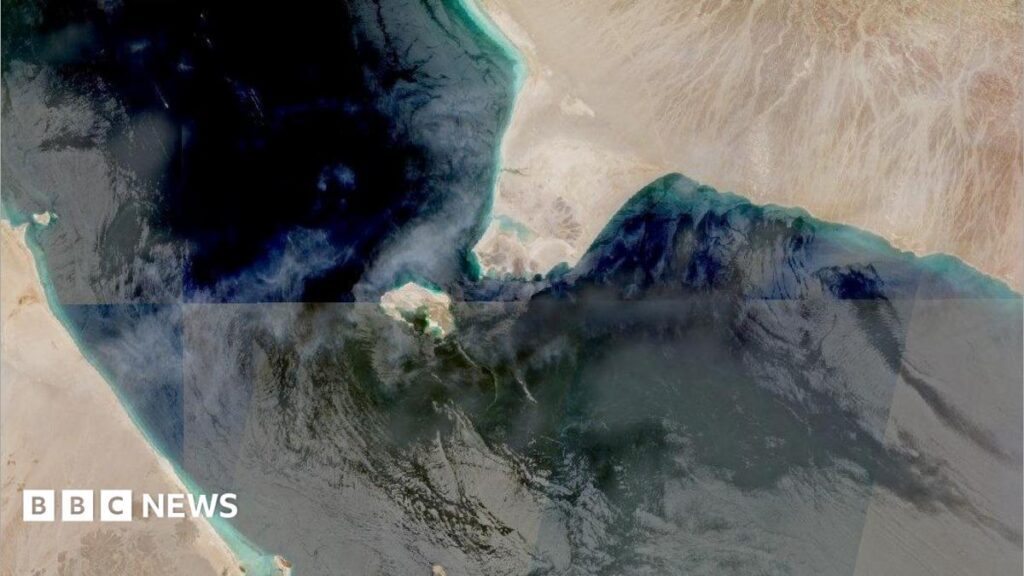
The Red Sea and the Strait of Hormuz have become focal points of escalating conflict involving multiple regional and international actors. Yemen’s Houthi rebels, backed by Iran, have claimed responsibility for attacking Saudi oil tankers in the Red Sea, following a series of US military strikes against Iranian targets. These incidents underscore the fragile security situation in critical maritime corridors essential for global energy supplies. This article analyzes the recent developments, their implications for international shipping, and the broader geopolitical context.
The Red Sea and the Strait of Hormuz are vital waterways for global oil shipments, particularly for Saudi Arabia and other Gulf countries. The Bab al-Mandab Strait, at the southern end of the Red Sea, serves as a strategic chokepoint connecting the Red Sea to the Gulf of Aden and the Arabian Sea. Similarly, the Strait of Hormuz links the Persian Gulf with the Gulf of Oman and the Arabian Sea, through which a significant portion of the world’s oil supply passes.
In recent months, tensions between the United States and Iran have intensified, with both sides engaging in military actions and threats. The US has conducted multiple consecutive nights of airstrikes targeting Iranian forces, while Iran and its allied groups have responded with attacks on commercial vessels and military assets in the region. Yemen’s Houthi rebels, who receive backing from Iran, have increasingly asserted their presence in the Red Sea, threatening maritime traffic.
On the day following the US’s twelfth consecutive night of strikes on Iran, Yemen’s Houthi rebels announced they had attacked two Saudi oil tankers in the Red Sea. The vessels named by the Houthis were the Encelia and the Layla. While the attack on the Encelia has been corroborated by British maritime risk management sources and the UK Maritime Trade Operation (UKMTO), the claim regarding the Layla remains unconfirmed.
The Houthis stated that the attacks employed drones and missiles, targeting the tankers for allegedly violating a naval blockade the group declared as a 'maritime embargo' against Saudi Arabia. This embargo includes the closure of the Bab al-Mandab Strait, a critical shipping route. The group’s military spokesperson, Yahya Saree, emphasized that the Houthis intended to continue enforcing what they described as a 'siege for a siege' policy.
The UKMTO reported that an unknown projectile struck a Saudi tanker near Al Shuqaiq, causing a fire but no casualties. This incident marks the first confirmed attack by the Houthis since their maritime embargo announcement, signaling a potential escalation in their naval operations.
In response to the ongoing threats and attacks, US Central Command (Centcom) launched strikes targeting Iranian assets at the direction of President Donald Trump. These strikes aimed to degrade Iran’s capacity to threaten civilian mariners and commercial vessels in regional waters. The US strikes reportedly resulted in two fatalities in southern Iran near the Iraq border, according to Iranian state media.
Following the US strikes, Kuwait, Jordan, and Bahrain reported responding to airborne threats, with Iran’s military claiming to have targeted US assets in these countries. The Iranian Revolutionary Guard Corps (IRGC) declared the Strait of Hormuz 'completely closed' after an explosion in the channel, and Iranian media reported that one tanker caught fire while two others turned back after encountering a mined route south of the strait.
President Trump had previously warned that the US would target Iranian infrastructure, including bridges or power plants, if Iran attacked ships in the Strait of Hormuz. He also vowed to 'take care of' the Houthis if they obstructed the Red Sea shipping lanes.
The attacks and threats in the Red Sea and Strait of Hormuz carry significant implications for global energy markets and maritime security. The Bab al-Mandab Strait is a critical gateway for Saudi oil exports, and its closure or disruption could severely impact global oil supply chains.
Since the Houthis announced their maritime embargo, at least seven oil tankers have reportedly turned back near Yemen, with the Houthis claiming to have forced approximately ten ships to retreat. This disruption adds to the volatility already caused by the effective closure of the Strait of Hormuz amid US-Iran hostilities.
Global fuel prices have experienced notable fluctuations in response to these tensions, reflecting concerns over supply security. The risk of further escalation threatens to exacerbate these market uncertainties.
The recent flare-up in maritime hostilities occurs against a backdrop of stalled peace negotiations between the US and Iran. In June, both countries signed a Memorandum of Understanding (MoU) aimed at halting military operations and reopening the Strait of Hormuz. The agreement also envisioned a broader resolution to the regional conflict within 60 days.
However, the ceasefire effectively collapsed within weeks after renewed attacks on shipping in the Strait of Hormuz and subsequent US military responses. President Trump declared the ceasefire 'over,' and both sides have since engaged in retaliatory actions.
The involvement of the Houthis adds complexity to the conflict, as their control over parts of Yemen and influence in the Red Sea region make them a significant player. Their maritime embargo and attacks on Saudi vessels could provoke further military responses and complicate diplomatic efforts.
Given the current trajectory, prospects for immediate de-escalation appear limited. Continued vigilance and coordinated international efforts will be essential to safeguard maritime routes and prevent a broader regional conflict.
The recent attacks by the Houthis on Saudi oil tankers and the ongoing US-Iran military confrontations represent a dangerous escalation in an already volatile region. The strategic importance of the Red Sea and the Strait of Hormuz to global oil shipments means that disruptions here have far-reaching consequences for international trade and energy security. While diplomatic efforts have sought to ease tensions, the breakdown of ceasefire agreements and the involvement of multiple actors complicate prospects for peace. Moving forward, coordinated international engagement and robust maritime security measures will be critical to prevent further escalation and safeguard these vital waterways.
Originally reported by bbc.co.uk. Adapted for our readers with AI assistance.
Keep reading
News
Recall that Poland’s Minister Sikorski’s core claim is partially supported by the numbers, but the framing “quite quickly” and “without the U.S.” does not…
News
Thousands of young protesters in Delhi continue to demand education reforms and the resignation of Education Minister Dharmendra Pradhan after a police crackdown. The…
News
Facing a looming financial collapse, Thames Water’s main lenders have offered the UK government a ‘golden share’ and increased local authority involvement to avoid…
TAMFIS NIG LTD
Electrical and instrumentation engineering, bid preparation and consulting, IT and software.