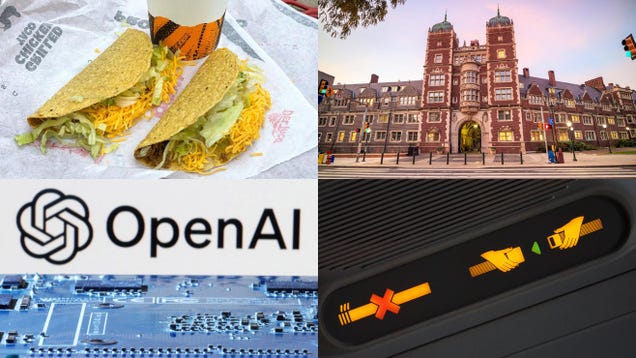
The first months of 2024 have brought significant developments across technology, business, and consumer sectors. Artificial intelligence continues to reshape corporate earnings and market valuations, while traditional industries like fast food and automotive manufacturing adapt to new competitive pressures and consumer trends. This article provides a comprehensive overview of these dynamic shifts, highlighting the implications for businesses and consumers alike.
Artificial Intelligence: Revenue Milestones and Market Impact
Artificial intelligence (AI) remains a dominant force in the technology sector, with OpenAI recently achieving a significant financial milestone. Seven years after its inception, OpenAI’s annualized revenue reached $2 billion in December 2023, placing it alongside tech giants such as Google and Meta in terms of rapid income generation within a decade. This achievement underscores AI’s growing commercial viability and its central role in shaping future technological innovation.
Further evidence of AI’s economic influence comes from companies like Palantir and Arm, which have reported revenue growth directly linked to AI-related products and services. Investor enthusiasm for AI continues to drive stock market gains, although the sector’s hype has been tempered by the need for sustainable business models. Nvidia, a key supplier of AI chips, has notably surpassed Amazon in market capitalization, reflecting its critical position in powering AI applications across industries.
Fast Food Industry: Del Taco’s Ambitious Expansion
In the fast food sector, Del Taco is positioning itself as a serious contender against established players like Taco Bell. Despite Taco Bell’s high-profile menu launches in 2024, Del Taco has announced significant expansion plans aimed at increasing its national footprint. This strategic move highlights the competitive nature of the quick-service taco market and suggests that Del Taco is seeking to capitalize on consumer demand for diverse and affordable dining options.
Del Taco’s growth ambitions could reshape market dynamics by introducing increased competition and innovation. For consumers, this may translate into more choices and potentially better value. For industry observers, the expansion signals a broader trend of fast food brands investing in geographic and menu diversification to capture new customer segments.
Automotive Industry: Tesla’s Pricing Strategy and Market Movements
Tesla recently adjusted the pricing of its Model Y, reducing the starting price by $1,000 to $35,490 in February 2024. CEO Elon Musk explained this price cut as a seasonal incentive, noting that vehicle purchases typically decline during colder months. However, Tesla has indicated that prices are expected to rise again in March, reflecting the company’s dynamic pricing approach to balance demand and production costs.
In the broader automotive context, historical car manufacturers like Volkswagen, Toyota, General Motors, and Ford continue to maintain their legacy amid evolving market conditions. The industry’s roots trace back to the late 1700s but were fundamentally transformed during and after the Industrial Revolution and the World Wars. Today, these companies face new challenges and opportunities from technological advancements and shifting consumer preferences.
Airline Industry: United Airlines’ Unique Aircraft Grounding
In an unusual development, United Airlines temporarily grounded its Airbus A321neo planes due to issues unrelated to safety. The cause was linked to the operation of 'No Smoking' signs, which are mandated by a 1990 U.S. law to be controlled by the flight crew. This incident highlights how regulatory compliance can impact airline operations in unexpected ways, even decades after smoking bans were implemented on planes.
While the grounding caused some operational disruptions, United Airlines emphasized that passenger safety was never compromised. This event serves as a reminder of the complex regulatory environment in the aviation industry and the importance of adhering to longstanding federal mandates.
Media Industry: Challenges Amid Layoffs and Closures
The journalism sector continues to face significant headwinds, with major outlets like The Wall Street Journal and CBS News announcing layoffs in recent weeks. Additionally, the news startup The Messenger has ceased operations, underscoring the ongoing financial pressures on media companies in a rapidly changing landscape.
These developments reflect the decades-long decline in traditional journalism revenue streams, exacerbated by shifts in consumer behavior and digital disruption. The contraction of newsrooms raises concerns about the future of quality reporting and the broader implications for informed public discourse.
Entertainment and Transportation: Impact of Major Concert Tours
The global tours of pop icons Taylor Swift and Beyoncé have had a notable impact beyond music, driving a 35% year-over-year increase in rideshare services such as Lyft. This surge in transportation demand around stadium events highlights the interconnectedness of entertainment and urban mobility sectors.
For rideshare companies, these spikes offer lucrative opportunities to capitalize on large-scale events, while for city planners, they present challenges related to traffic management and public safety. The phenomenon illustrates how cultural events can influence economic activity across multiple industries.
Higher Education: University of Pennsylvania’s AI Degree Program
Reflecting the growing importance of artificial intelligence, the University of Pennsylvania’s College of Engineering is set to offer a Bachelor of Science degree in AI. This program aims to equip undergraduate students with foundational knowledge and practical skills in AI technologies, preparing them for careers in a rapidly evolving field.
The introduction of specialized AI degrees at prestigious institutions signifies the increasing demand for expertise in this area and the recognition of AI as a transformative force across sectors. It also points to broader educational trends emphasizing interdisciplinary learning and technological fluency.
What this means
The early months of 2024 reveal a landscape marked by rapid technological advancement, strategic business maneuvers, and evolving consumer behaviors. Artificial intelligence continues to drive revenue growth and market valuations, while traditional sectors like fast food and automotive adapt to new competitive realities. Regulatory nuances impact industries such as aviation, and the media sector grapples with sustainability challenges. Meanwhile, cultural phenomena influence transportation patterns, and educational institutions respond by developing specialized programs. Together, these developments illustrate a dynamic economy in transition, where innovation and adaptation remain key to success.
Originally reported by qz.com. Adapted for our readers with AI assistance.
Governor Babagana Zulum's administration transformed Borno's devastated health infrastructure into a regional centre of excellence, committing over 15 percent of the state budget to…