Educational Resources
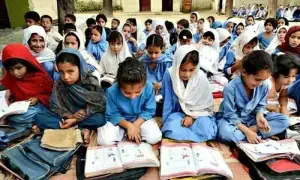
Timings for govt schools, colleges across Sindh reduced by an hour
In a move underscoring the intersection of education policy and economic reality, the Sindh government h...
TAMFIS NIG LTDRC 8067447CAC ACTIVEFinima, Bonny Island, Rivers State


South Africa stands at the crossroads of profound contrasts. From the parched taps in Gauteng’s public schools exposing deep socio-economic divides, to the staggering remuneration packages of CEOs amid growing inequality, and the rich cultural tapestry preserved in the kitchens of Leipoldt’s heritage, this weekend’s wrap captures the pulse of a nation grappling with its challenges and celebrating its soul. This article examines these distinct yet interconnected stories, offering insight into the realities shaping South Africa’s present and future.
Water scarcity has become more than an environmental issue in Gauteng; it is a symbol of the widening gap between privileged and disadvantaged schools. While affluent institutions boast uninterrupted water supplies, many public schools face chronic outages, forcing them to cancel classes and exposing learners to health hazards such as raw sewage leaks.
The implications of these water disruptions extend beyond inconvenience. For learners in under-resourced schools, the absence of clean water undermines hygiene, compromises safety, and disrupts educational continuity. This disparity accentuates the socio-economic divide, as wealthier schools turn water scarcity into educational moments, teaching sustainability and conservation.
Efforts to address this crisis have been met with mixed success. Infrastructure challenges, municipal inefficiencies, and budget constraints hinder sustainable solutions. Advocates emphasize the urgent need for equitable resource allocation to ensure all children have access to basic necessities essential for learning and well-being.
Gold prices have surged to unprecedented levels, prompting questions about the distribution of wealth generated by this boom. While the South African government benefits from increased royalties, the broader economic advantages for society remain ambiguous, with many communities near mining operations seeing little improvement.
Mining companies have reported record profits, yet the promised socio-economic upliftment often fails to materialize in mining towns. Environmental degradation, health hazards, and labor disputes continue to plague the industry, casting doubt on whether the gold rush translates to genuine progress for local populations.
Experts argue that a more inclusive approach is necessary, one that balances profitability with community development, environmental stewardship, and fair labor practices. Transparent governance and active stakeholder engagement are pivotal to ensuring that the gold price boom contributes meaningfully to South Africa’s economy and social fabric.
Fabricio Bloisi, CEO of Naspers and Prosus, recently made headlines with a remuneration package exceeding R1 billion in 2025. Such staggering figures spotlight the growing chasm between corporate leadership and ordinary South Africans grappling with economic hardship and unemployment.
Critics question the morality and sustainability of these compensation structures, arguing that exorbitant executive pay exacerbates inequality and undermines social cohesion. The debate extends to whether these packages reflect genuine value creation or merely reward financial engineering and market speculation.
Calls for reform emphasize the need for transparent, performance-based remuneration aligned with long-term societal interests. Advocates urge companies to consider the broader impact of pay disparity on employee morale, public perception, and the nation’s pursuit of inclusive economic growth.
Nestled in the heart of South Africa, Leipoldt’s Kitchen is more than a restaurant; it is a living museum of the country’s rich culinary history. Named after the renowned poet and cultural icon C. Louis Leipoldt, the kitchen celebrates traditional recipes passed down through generations, reflecting the diverse cultural mosaic of the nation.
The kitchen serves as a cultural hub where storytelling and gastronomy intertwine. Each dish tells a story—of indigenous ingredients, colonial influences, and the resilience of communities who preserved their heritage through food despite historical upheavals.
Efforts to sustain Leipoldt’s Kitchen involve community engagement, culinary education, and cultural tourism. By fostering pride in local cuisine and heritage, the kitchen contributes to identity formation and economic empowerment, illustrating how food can nourish both body and soul.
Botshelo Mthomboti, an award-winning accountant and author, is transforming how learners engage with mathematics by blending it with poetry. This innovative approach makes complex concepts accessible and enjoyable, particularly for pupils struggling with traditional teaching methods.
By humanizing numbers and infusing creativity into education, Mthomboti’s work addresses educational disparities exacerbated by resource limitations and outdated curricula. His poetry-based methodology has garnered attention for its potential to enhance numeracy and inspire a love for learning.
This fusion of arts and sciences exemplifies the broader trend of interdisciplinary education, highlighting the importance of adaptability and creativity in preparing learners for a rapidly changing world.
Artificial intelligence is accelerating the automation of white-collar jobs, with some experts predicting a 50% decline within five years. This trend poses significant challenges for South Africa’s workforce, particularly in sectors reliant on administrative, clerical, and professional roles.
Despite the urgency, policymakers have been slow to regulate AI’s integration or implement protective measures for workers. The lack of proactive strategies risks exacerbating unemployment and widening inequality, especially among vulnerable populations with limited access to reskilling opportunities.
Addressing this disruption requires a multifaceted approach encompassing education reform, social safety nets, and public-private partnerships to foster innovation while safeguarding livelihoods. South Africa’s leadership faces a critical test in navigating the balance between technological progress and social equity.
Lukhanyo Calata’s moving testimony at the Khampepe Inquiry reignited national conversations about apartheid-era injustices and the ANC’s alleged ‘secret agreements’ that stalled prosecutions. His words underscore the enduring struggle for truth, accountability, and reconciliation in South Africa.
The testimony highlights the emotional toll on victims’ families and the broader societal imperative to confront historical wounds honestly. It also reflects the complexity of balancing political expediency with moral responsibility in transitional justice processes.
Renewed public engagement with these issues signals a collective desire to close the chapters of impunity and foster a future grounded in transparency and healing. Calata’s courage serves as a catalyst for continued advocacy and reflection.
The stories unfolding across South Africa—from the dry taps of Gauteng’s schools to the opulence of CEO paychecks, and from the preservation of culinary heritage to the disruption of jobs by AI—paint a complex portrait of a nation at a pivotal moment. These narratives compel us to confront deep-seated inequalities, celebrate cultural resilience, and envision a future where progress is inclusive and just. As South Africans grapple with these challenges, the weekend wrap serves as a reminder that the path forward requires courage, innovation, and a commitment to shared humanity.
Originally reported by dailymaverick.co.za. Adapted for our readers.
Keep reading
Educational Resources
In a move underscoring the intersection of education policy and economic reality, the Sindh government h...
Educational Resources
All eyes are on the FIBA World Cup, but we can't help but think about what's to come in the WNBA....
Educational Resources
Portugal finds itself grappling with a multifaceted crisis as severe storms, known as Storm Kristin and ...
TAMFIS NIG LTD
Electrical and instrumentation engineering, bid preparation and consulting, IT and software.