
Educational Resources
Timings for govt schools, colleges across Sindh reduced by an hour
In a move underscoring the intersection of education policy and economic reality, the Sindh government h...
TAMFIS NIG LTDRC 8067447CAC ACTIVEFinima, Bonny Island, Rivers State

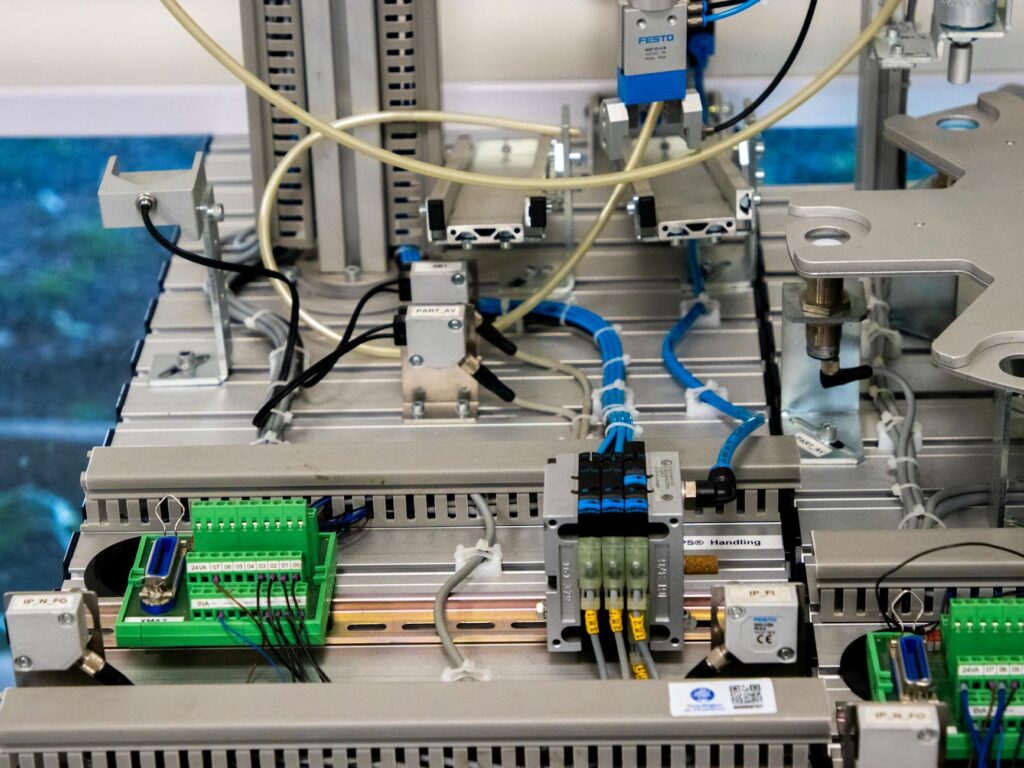
Process control systems refer to the methodologies and technologies employed across industries to regulate production processes, ensuring output consistency, quality, and operational efficiency. From manufacturing plants and chemical processes to power generation and pharmaceutical production, process control systems are integral in maintaining stability and reliability of numerous industrial applications. Effective process control can significantly reduce waste, enhance safety, optimise energy usage, and improve the overall profitability and sustainability of operations.
At its core, process control systems involve measurement, comparison, calculation, and corrective action, which function collaboratively to maintain the desired level or output of any given process. Sensors measure specific parameters (such as temperature, pressure, or concentration), whereas controllers analyse data and determine necessary adjustments. Lastly, actuators carry out the commands issued by controllers, adjusting the parameters to meet desired conditions. The primary objective of these controls is ensuring operational consistency, efficiency, safety, and economics in various industrial processes.
The stages of process control typically include:
Understanding this overview helps organisations adopt effective process control systems and optimise their industrial operations for superior operational reliability and productivity.
Control systems are broadly categorised into two primary types, each defined by how they interact with system outputs:
An open-loop control system, also known as a non-feedback system, acts without considering output feedback. That means output variations do not impact system performance. The controller delivers signals to actuators without checking and adjusting continual output measures, making this type simpler in structure but less adaptable to changes and disturbances.
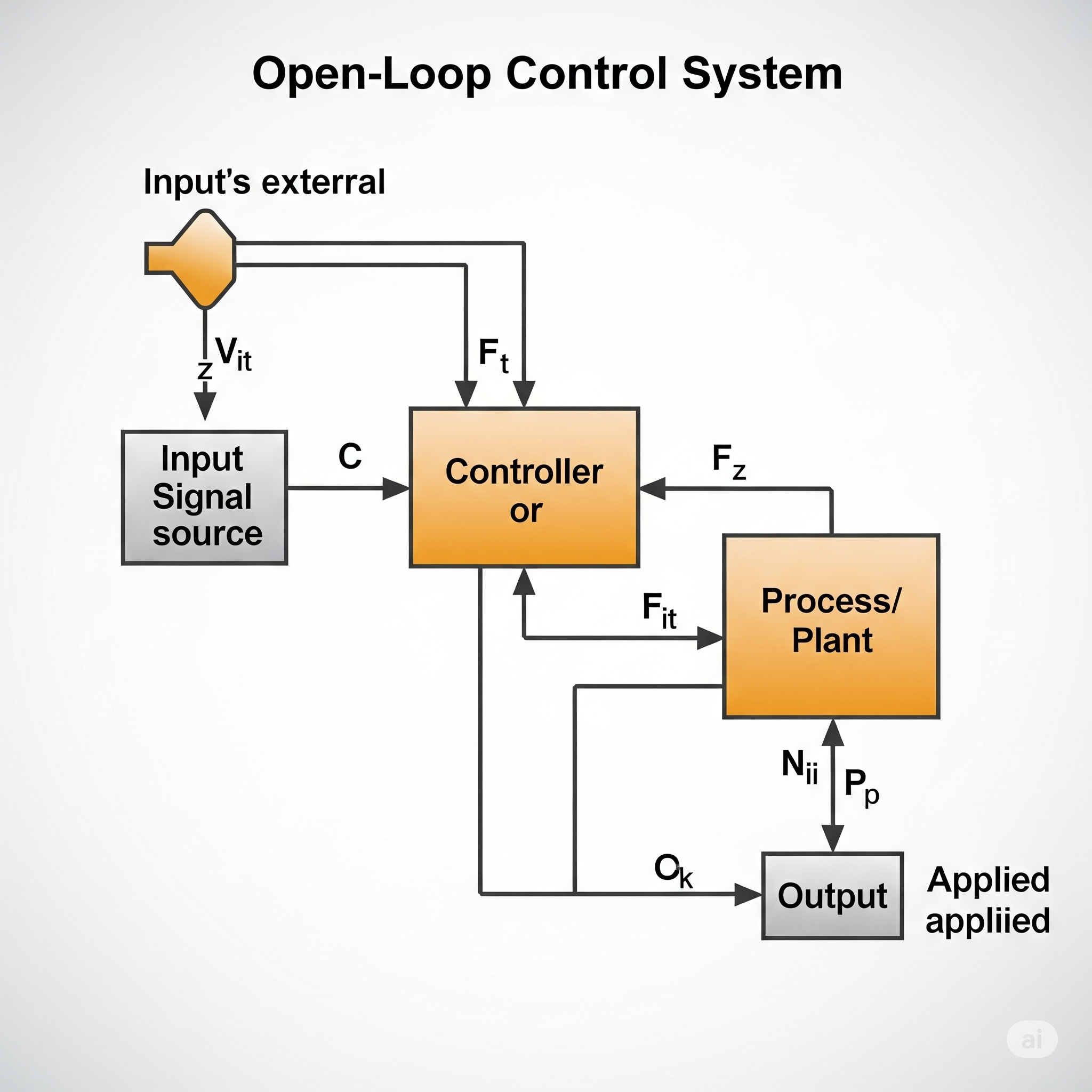
Key features:
Examples include: Washing machines, toasters, or a basic heating system that maintains a fixed temperature without sensing changes.
Closed-loop control systems differ from open-loop systems as they integrate continuous feedback from system outputs into their operation. The sensors measure the controlled variables, sending this data back to the controller, which then takes corrective actions if deviations from the predefined set point are present. Owing to feedback measurements, these systems can promptly adjust to external disturbances and maintain an accurate, stable output.

Key features:
Examples include: Air conditioning systems, automatic pilot systems in aircraft, and thermostatic control systems in reactors.
Among various methodologies belonging to control theory, the PID (Proportional-Integral-Derivative) controller stands out as one of the most widely utilised control algorithms due to its simplicity and effectiveness in numerous applications. A PID controller blends three distinct control actions to produce a corrective action:
The proportional control action is directly proportional to the error signal. It instantly responds to the discrepancy between measured output and desired set point, effectively decreasing error magnitude but typically never reaching a zero-error condition by itself.
The integral control factor deals primarily with system steady-state errors by summing errors over time. This cumulative error counteracts any persisting discrepancies, driving the system output accurately to equal the set input, thus mitigating control offsets.
Derivative control anticipates the system behaviour by overseeing the rate of change of the error. It helps in predicting and mitigating future errors before they occur, significantly improving the system’s reaction speed and stability.
Key advantages of PID controllers:
PID applications: temperature controls in industrial ovens, level control in storage tanks, robotic motion control, automotive cruise-control systems, and numerous other manufacturing processes.
In process controls, feedback and feedforward mechanisms are two essential methods applied to achieve the desired system behaviour:

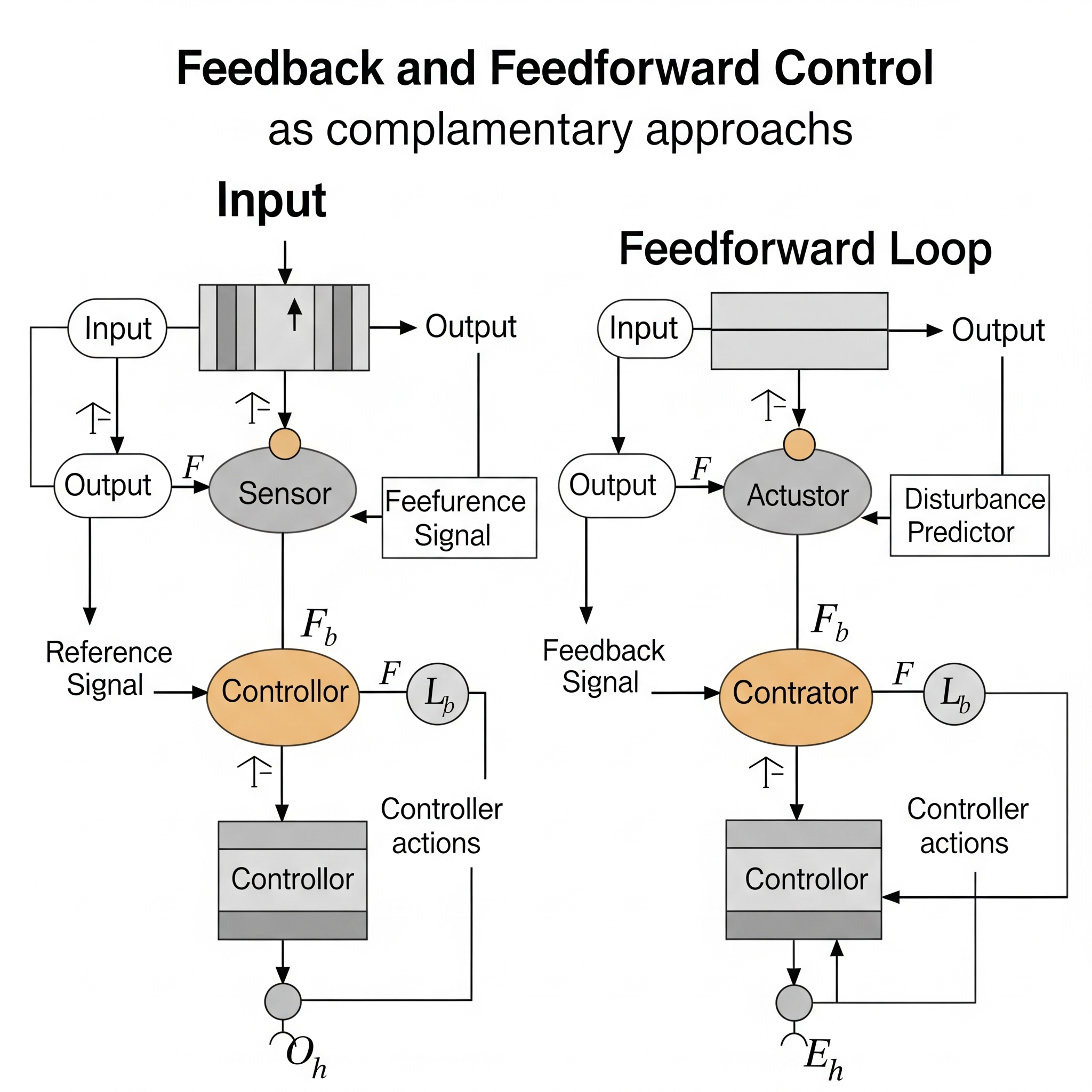
As previously mentioned under closed-loop systems, feedback control continuously monitors the process outputs and compares them with the set point. Variances trigger immediate corrective actions, aiming to minimise future errors.
Strengths:
Limitations:
Feedforward control operates proactively, responding before the disturbance actually affects the process. Through predictive assessments of disturbances or known fluctuations, the feedforward controller anticipates changes and makes pre-emptive corrections. It significantly enhances efficiency by mitigating disturbances prior to their occurrence, minimising process variability.
Strengths:
Limitations:
Combined Use: For optimal performance, many industrial operations integrate both feedforward and feedback strategies simultaneously—feedforward provides anticipatory adjustments, while feedback corrections help refine and stabilise outcomes. This comprehensive approach delivers superior performance and enhances overall operational efficiency.
Process control systems—via open-loop and feedback mechanisms, sophisticated control theories such as PID controllers, and feedforward/feedback strategies—constitute essential components in contemporary industries. Understanding these control strategies and their integration ensures industrial operations achieve exceptional accuracy, efficiency, economic benefit, and safety in modern manufacturing processes.
Keep reading
Educational Resources
In a move underscoring the intersection of education policy and economic reality, the Sindh government h...
Educational Resources
All eyes are on the FIBA World Cup, but we can't help but think about what's to come in the WNBA....
Educational Resources
Portugal finds itself grappling with a multifaceted crisis as severe storms, known as Storm Kristin and ...
TAMFIS NIG LTD
Electrical and instrumentation engineering, bid preparation and consulting, IT and software.