
Educational Resources
Timings for govt schools, colleges across Sindh reduced by an hour
In a move underscoring the intersection of education policy and economic reality, the Sindh government h...
TAMFIS NIG LTDRC 8067447CAC ACTIVEFinima, Bonny Island, Rivers State

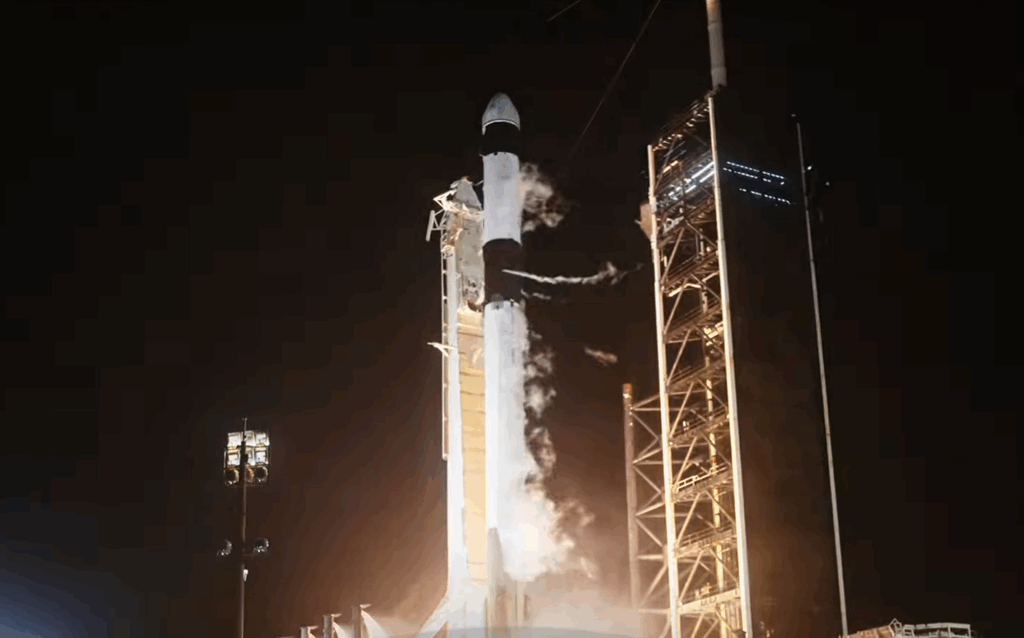
In late August, NASA’s SpaceX-33 mission embarked on a vital journey to the International Space Station (ISS), carrying a suite of pioneering scientific experiments and technology demonstrations. This 33rd commercial resupply mission by SpaceX underscores the continued collaboration between NASA and private industry to support sustained human presence in low Earth orbit. For nearly 25 years, the ISS has been a unique microgravity laboratory, facilitating over 4,000 experiments that have shaped our understanding of science, technology, and human health. The latest research aboard SpaceX-33 ranges from bioprinting implantable medical devices to exploring bone health and advancing metal 3D printing in space, all of which have profound implications for future long-duration missions to the Moon, Mars, and beyond, as well as tangible benefits on Earth.
One of the flagship experiments aboard SpaceX-33 involves the 3D bioprinting of implantable medical devices designed to support nerve regeneration after traumatic injuries. Bioprinting uses living cells and proteins as the raw materials, enabling the creation of tissue-like structures that can potentially bridge nerve gaps, which are challenging to treat with conventional therapies. Such gaps often result in impaired physical functions, and current treatments have limited success in fully restoring nerve connectivity.
The microgravity environment of the ISS offers unique advantages for bioprinting. Without the influence of gravity, tissues can grow in three dimensions more naturally, potentially resulting in higher-quality implants than those produced on Earth. This mission plans to print up to 18 implantable devices, which will later be used in preclinical studies on Earth during 2026 and 2027 to evaluate their effectiveness in nerve repair.
Jacob Koffler, principal investigator at Auxilium Biotechnologies, highlights that this research could pave the way for manufacturing advanced medical devices both in space and on Earth. The ability to produce such implants in orbit would be especially valuable for long-term space missions, where immediate medical interventions might be necessary but resupply is limited.
Another critical investigation focuses on bioprinting liver tissue containing vascular networks, vital for supporting tissue functionality and health. On Earth, creating vascularized tissue remains one of the most significant challenges in regenerative medicine, limiting the development of fully functional organ replacements. The microgravity conditions aboard the ISS provide a unique environment to study how these tissues develop without the constraints of gravity.
This mission builds upon previous experiments that demonstrated the survival and basic function of bioprinted liver tissues in space. The current phase aims to determine whether microgravity accelerates the development of vascular networks within the tissue, which is essential for nutrient transport and tissue viability. Enhanced vascularization could revolutionize organ transplantation and drug testing models on Earth.
James Yoo, principal investigator at the Wake Forest Institute of Regenerative Medicine, emphasizes the importance of this research in accelerating tissue engineering advances. Success in this domain may eventually lead to the production of entire functional organs in space, providing a new frontier for medical science and space healthcare.
Bone density loss is a well-documented challenge faced by astronauts during extended spaceflight, caused by the absence of mechanical loading in microgravity. The SpaceX-33 mission includes a study examining the role of a protein known as interleukin-6 (IL-6) in regulating bone-forming stem cells. IL-6 can influence stem cells to either promote bone formation or accelerate bone loss, making it a key target for understanding bone health in space.
The experiment evaluates whether blocking IL-6 signaling pathways can mitigate bone loss experienced by astronauts. If successful, this approach could lead to new treatments for osteoporosis and other bone-degenerative conditions on Earth, benefiting millions. The study represents a bridge between space medicine and terrestrial healthcare advancements.
Abba Zubair from the Mayo Clinic leads this investigation, noting that as space missions increase in duration and distance, protecting astronaut bone health becomes critical. Insights gained here will inform countermeasures for future deep space exploration and improve quality of life for patients with bone disorders worldwide.
Additive manufacturing, commonly known as 3D printing, is transforming how parts and tools are produced on-demand, a capability that becomes increasingly vital as missions venture farther from Earth. While plastic 3D printing has been well established on the ISS, metal 3D printing presents new challenges and opportunities, particularly for creating durable components needed for spacecraft maintenance and repair.
The European Space Agency’s Metal 3D Printer experiment aboard SpaceX-33 aims to refine techniques for printing metal parts in microgravity. The investigation involves printing several small metal cubes using different strategies to determine the optimal parameters for space-based metal manufacturing. These results will be benchmarked against reference prints made on Earth to assess quality and performance.
Rob Postema, ESA’s technical officer for the project, explains that mastering metal 3D printing in orbit could significantly enhance mission autonomy and reduce reliance on Earth-based supply chains. This technology is expected to play a crucial role in sustaining long-duration crewed missions and establishing lunar or Martian outposts.
The research delivered by SpaceX-33 is not only critical for enhancing our understanding of biological and material sciences in microgravity but also serves as a foundation for future exploration missions to the Moon, Mars, and beyond. As astronauts spend longer periods away from Earth, the ability to manufacture medical devices, study tissue regeneration, and produce essential parts on-demand will be indispensable for mission success and crew health.
Moreover, the experiments aboard the ISS have direct applications on Earth, from developing advanced treatments for nerve injuries and bone diseases to improving organ transplantation methods. The space station continues to be a catalyst for innovation, turning space-based discoveries into practical solutions that benefit society at large.
NASA’s partnership with SpaceX exemplifies how commercial collaboration can accelerate scientific progress and technology development. The continuous flow of research enabled by missions like SpaceX-33 ensures that the ISS remains a vibrant hub for discovery and a stepping stone toward humanity’s future in space.
Since its inception nearly 25 years ago, the ISS has been a cornerstone for international scientific collaboration, hosting researchers from over 110 countries. The station’s microgravity environment offers a unique laboratory setting impossible to replicate on Earth, enabling experiments that yield insights into fundamental physical, biological, and chemical processes.
With more than 4,000 experiments conducted to date, the ISS has contributed to breakthroughs in medicine, materials science, environmental monitoring, and space technology. The continuous resupply missions, including SpaceX-33, are critical for maintaining the station’s research capabilities and supporting astronaut crews.
The station’s role extends beyond research; it serves as a testbed for technologies and life support systems essential for long-duration human spaceflight. The knowledge gained from ISS research forms the backbone of NASA’s Artemis program and other initiatives aimed at sustainable lunar exploration and eventual human missions to Mars.
The experiments on SpaceX-33 underscore a broader trend towards leveraging space as a manufacturing and biomedical research platform. Microgravity offers unparalleled advantages in growing complex tissues and fabricating precision components that are difficult or impossible to produce on Earth. This opens new frontiers for space-based industries that could revolutionize healthcare and manufacturing.
As NASA and its partners continue to develop in-space production capabilities, the vision of manufacturing medical implants, organ tissues, and spacecraft parts on demand becomes increasingly feasible. This will reduce resupply dependency and enhance mission resilience, especially for deep space exploration where timely delivery from Earth is not always possible.
The advancements made through these investigations will also have ripple effects on Earth, enabling novel therapies and manufacturing processes that improve the quality of life. The SpaceX-33 mission thus represents a pivotal step toward a future where space and Earth-based industries are seamlessly integrated through scientific innovation.
NASA’s SpaceX-33 resupply mission marks a significant milestone in advancing space-based research and technology development. By delivering innovative experiments that explore bioprinting medical devices, understanding bone loss mechanisms, and optimizing metal 3D printing in microgravity, this mission strengthens the foundation for future human exploration beyond Earth orbit. The International Space Station continues to be an invaluable laboratory for scientific discovery, fostering innovations that benefit both space travelers and people on Earth. As NASA and its partners push the boundaries of what is possible in space, missions like SpaceX-33 highlight the transformative potential of microgravity research in shaping a sustainable future for humanity on and off our planet.
Originally reported by nasa.gov. Adapted for our readers.
Keep reading
Educational Resources
In a move underscoring the intersection of education policy and economic reality, the Sindh government h...
Educational Resources
All eyes are on the FIBA World Cup, but we can't help but think about what's to come in the WNBA....
Educational Resources
Portugal finds itself grappling with a multifaceted crisis as severe storms, known as Storm Kristin and ...
TAMFIS NIG LTD
Electrical and instrumentation engineering, bid preparation and consulting, IT and software.