
Educational Resources
Timings for govt schools, colleges across Sindh reduced by an hour
In a move underscoring the intersection of education policy and economic reality, the Sindh government h...
TAMFIS NIG LTDRC 8067447CAC ACTIVEFinima, Bonny Island, Rivers State

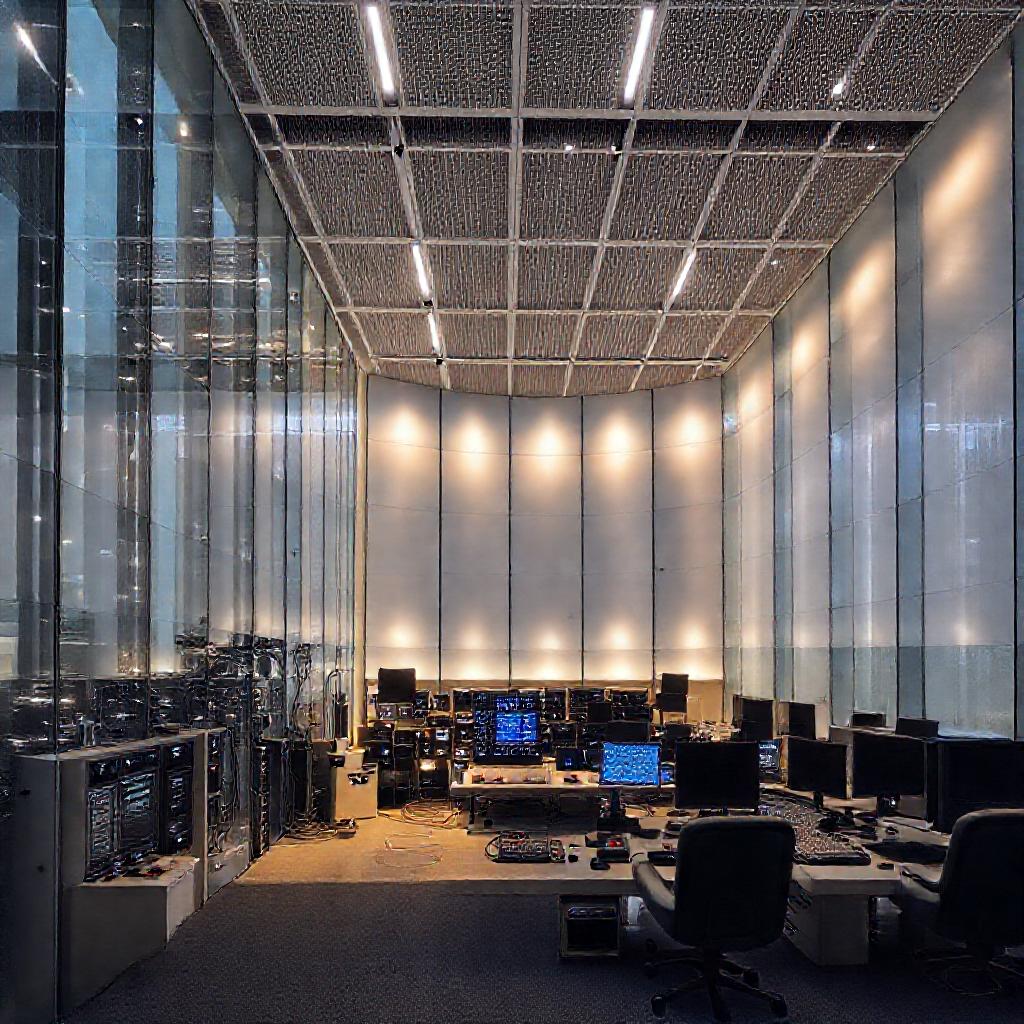
In the vast, intricate machinery of the modern world, from the power plant that illuminates our homes to the refinery that produces our fuel, there exists an unseen nervous system. This is the world of instrumentation and control. It is a domain where physical processes are measured, monitored, and manipulated with breathtaking precision to ensure safety, efficiency, and quality. Understanding the architecture of these systems is fundamental for any engineer, technician, or enthusiast seeking to comprehend how our industrial world operates.
This guide serves as a foundational training document, exploring the core architectural pillars of industrial automation: Distributed Control Systems (DCS), Programmable Logic Controllers (PLC), and Supervisory Control and Data Acquisition (SCADA) systems. Finally, we will decipher the universal language that describes them all: Instrumentation and Control Loop Diagrams.
A Distributed Control System, or DCS, is an industrial control system architecture designed for large-scale, complex, and continuous processes. Imagine a symphony orchestra. A single conductor cannot listen to and individually instruct every musician simultaneously. Instead, the conductor provides high-level direction, whilst section leaders (for strings, brass, etc.) manage the fine details of their respective groups. A DCS operates on a similar principle of distributed intelligence.
Instead of a single, central computer controlling an entire plant, a DCS distributes control functions among multiple controller subsystems located throughout the facility. These controllers are interconnected by a high-speed, often redundant, communication network. This architecture is inherently process-oriented, focusing on the holistic management of an entire production process rather than individual machine control.
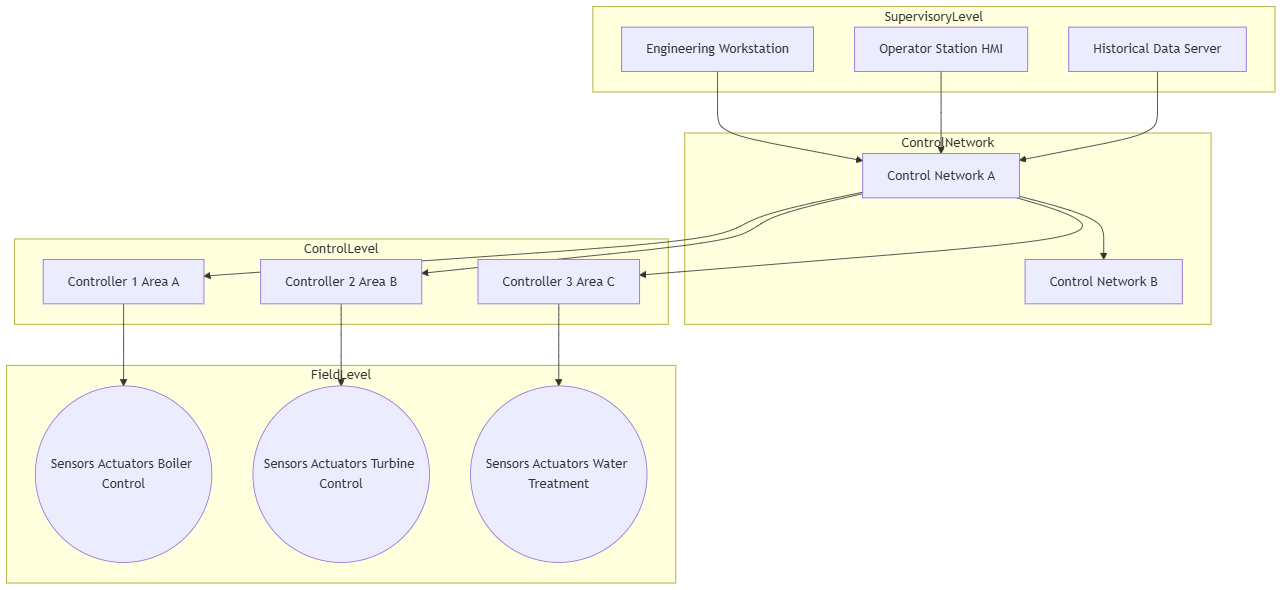
A typical DCS is composed of several integrated layers:
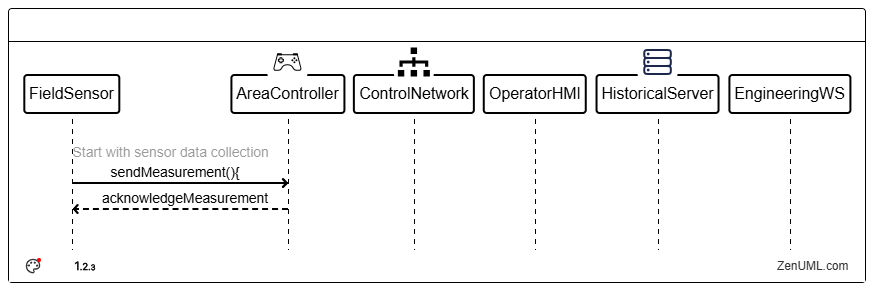
The following diagram illustrates the hierarchical and distributed nature of a typical DCS.
DCSs are the system of choice for continuous or large batch processing industries, including:
The Programmable Logic Controller, or PLC, was born out of the American automotive industry in the late 1960s as a replacement for cumbersome and inflexible electro-mechanical relay panels. A PLC is, at its heart, a ruggedised industrial computer designed for high-speed, logic-based control of individual machines or small processes.
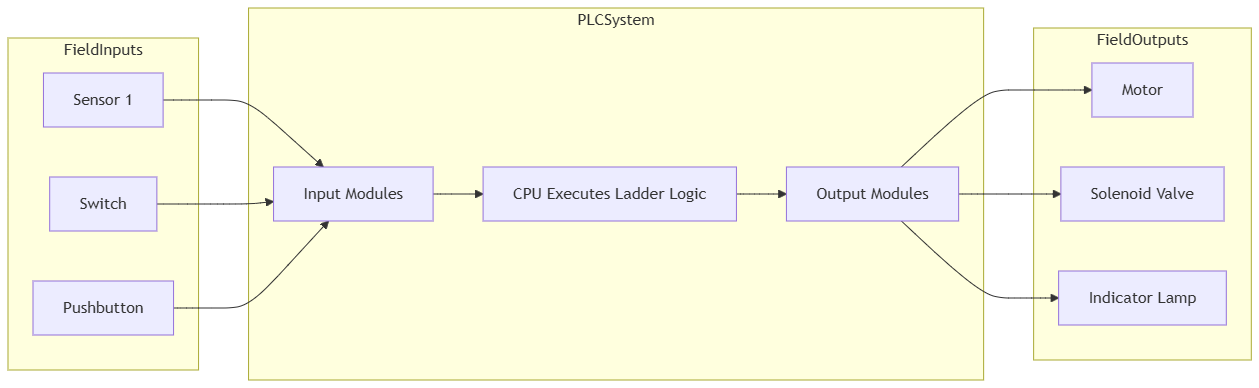
If a DCS is the orchestra conductor, a PLC is the highly efficient factory floor manager for a specific production cell. Its strength lies in executing sequential, discrete (on/off) logic very quickly and reliably. It operates by continuously scanning a user-created program, reading the state of inputs, executing the program logic based on these inputs, and then updating the state of outputs.
PLCs come in various sizes, but their core architecture remains consistent:
The diagram below shows the fundamental scan-based operation of a PLC, processing inputs and controlling outputs.
The most common language for programming PLCs is Ladder Logic (LD), which was designed to be easily understood by electricians already familiar with relay schematic diagrams. However, modern PLCs support other languages defined by the IEC 61131-3 standard, such as Function Block Diagram (FBD) and Structured Text (ST).
PLCs are ubiquitous in discrete manufacturing and standalone machine control:
A SCADA system provides high-level supervision over processes that are distributed across a vast geographical area. The key terms are “Supervisory Control” and “Data Acquisition.” Unlike a DCS or PLC that provides direct, real-time control, a SCADA system’s primary role is to monitor and gather data from remote sites and issue broad commands from a central location.
Think of an air traffic control system. Controllers at a central airport don’t fly the planes directly, but they monitor their positions, altitudes, and speeds, and issue commands (e.g., “change altitude,” “turn to heading…”) to the pilots (the local controllers) to ensure the entire airspace operates safely and efficiently. SCADA is the industrial equivalent for pipelines, power grids, or water networks.
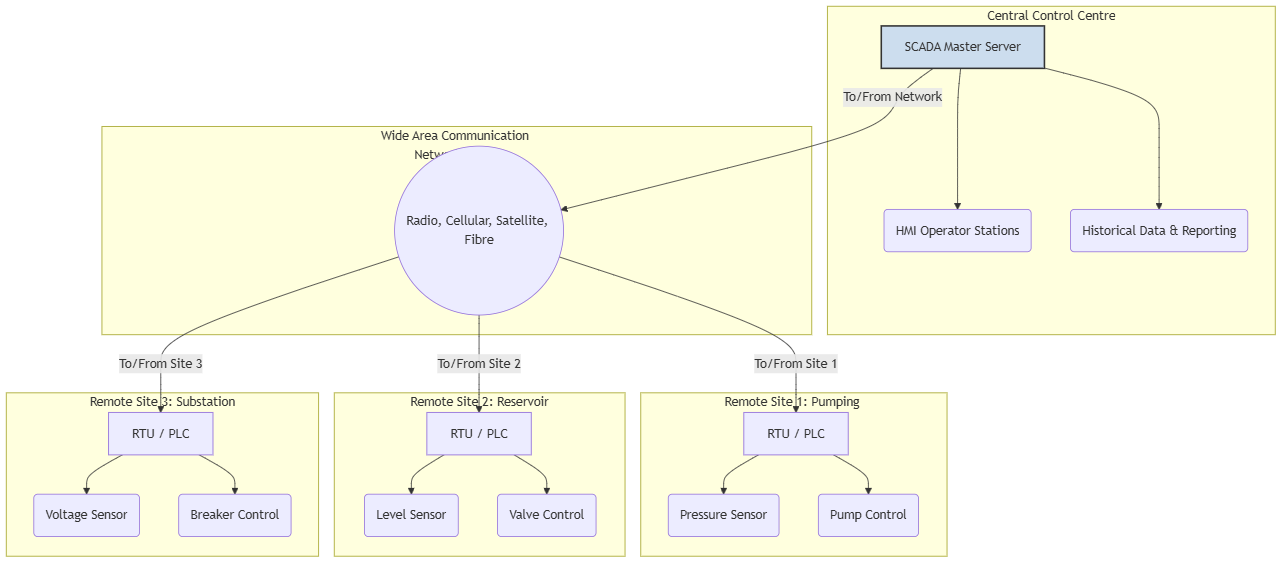
SCADA architecture is defined by its geographical spread:
This diagram illustrates the classic SCADA model of a central master station communicating with multiple remote field sites.
While both are large-scale systems, their philosophies differ. A DCS is process-oriented, providing tight, real-time control within a contained plant. A SCADA system is data-acquisition-oriented, providing supervisory control over a geographically dispersed area where real-time feedback might be subject to communication delays.
SCADA is essential for managing geographically distributed infrastructure:
Regardless of whether the underlying architecture is a DCS, PLC, or SCADA system, engineers and technicians need a universal language to describe how instruments are connected and how control is achieved. This language is the Instrumentation and Control Loop Diagram, often represented in a P&ID (Piping and Instrumentation Diagram).
These diagrams are the essential blueprints for any automated process. They use standardised symbols and conventions (like ISA-S5.1) to schematically show all the equipment, piping, and instrumentation, and how they interact within a control loop.
A simple feedback control loop is the fundamental building block of automation. It consists of four key stages:
Let’s visualise this loop using a diagram to control the temperature of a product leaving a heat exchanger by adjusting the flow of steam.
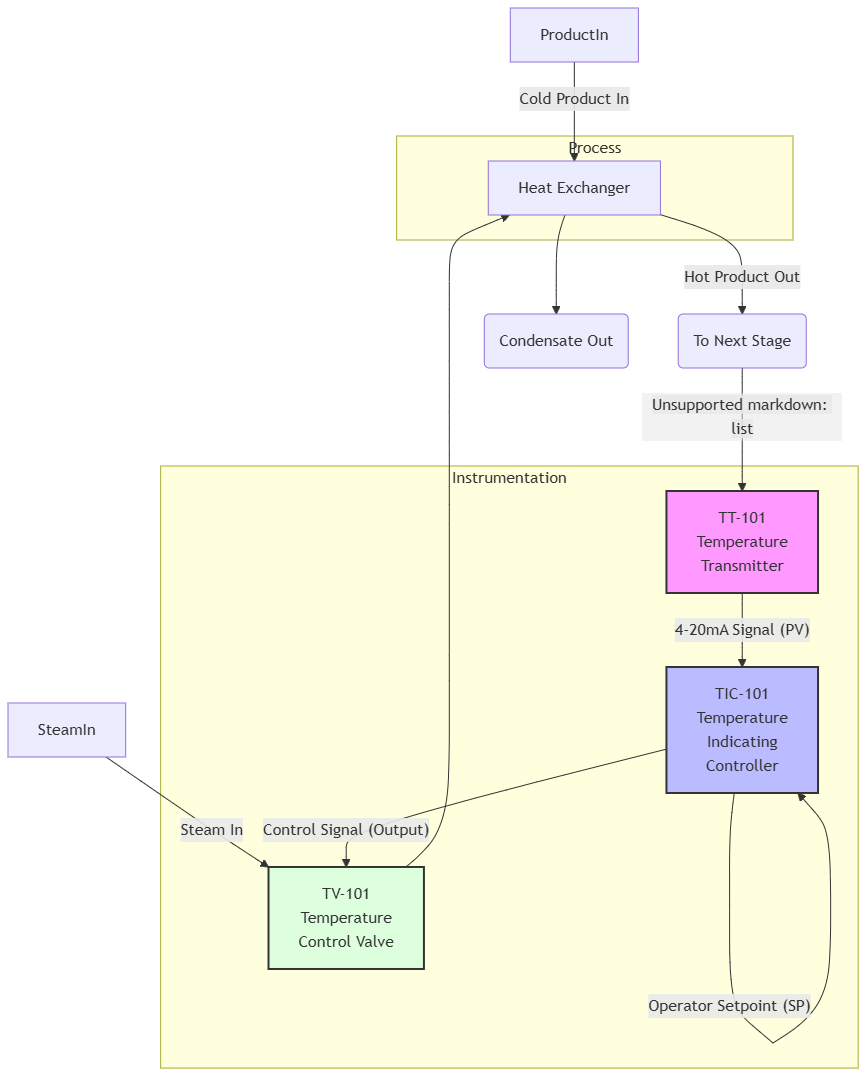
Decoding the Diagram:
This standardised representation is critical. It allows a maintenance technician to quickly understand how the loop works, isolate faults, and perform calibrations, ensuring the process remains safe and efficient.
The worlds of DCS, PLC, and SCADA are not mutually exclusive. Modern industrial facilities are often a hybrid, leveraging the strengths of each architecture. A large refinery (a classic DCS application) will use dozens of PLCs for controlling standalone package units like compressors and boilers. This entire facility might then be monitored remotely via a corporate-level SCADA system.
The lines are blurring as technology evolves. Modern PLCs (often called PACs – Programmable Automation Controllers) have powerful process control capabilities, while modern DCSs have improved their speed for discrete logic. The rise of the Industrial Internet of Things (IIoT) and cloud computing further integrates these systems, enabling unprecedented levels of data analysis and predictive maintenance.
However, the fundamental principles remain. Understanding the process-centric nature of a DCS, the logic-centric speed of a PLC, the geographically-oriented view of SCADA, and the universal language of control diagrams provides a timeless and essential foundation for navigating the complex and fascinating world of instrumentation and control.
Keep reading
Educational Resources
In a move underscoring the intersection of education policy and economic reality, the Sindh government h...
Educational Resources
All eyes are on the FIBA World Cup, but we can't help but think about what's to come in the WNBA....
Educational Resources
Portugal finds itself grappling with a multifaceted crisis as severe storms, known as Storm Kristin and ...
TAMFIS NIG LTD
Electrical and instrumentation engineering, bid preparation and consulting, IT and software.