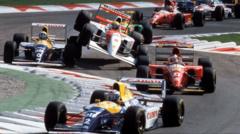
Monza and the Italian Grand Prix: A Historic Pillar of Formula 1 Racing
The Italian Grand Prix at Monza is more than just a race; it is a cornerstone of Formula 1 history. Known as the 'cathedral of speed,' Monza has been the venue for some of the most thrilling, tragic, and defining moments in the sport since the inaugural F1 season in 1950. This article delves into the circuit's legacy, highlighting key events, legendary drivers, and the passionate tifosi who make Monza a spiritual home for Ferrari and Formula 1 alike.
Monza and the Italian Grand Prix: A Historic Pillar of Formula 1 Racing
Monza: The Heart of Formula 1 History
Monza holds the distinction of hosting the Italian Grand Prix more times than any other circuit on the Formula 1 calendar. Since the sport’s inception in 1950, the track has been a nearly constant presence, missing only the 1980 race due to renovations. Nestled within a royal park and surrounded by woodland, Monza’s unique setting complements its reputation as the 'cathedral of speed.'
The circuit is synonymous with Ferrari, Italy’s iconic racing team, and the fervent tifosi who passionately support their home heroes. It is difficult to imagine the Formula 1 landscape without Monza, as it has been the stage for championship-deciding races, record-breaking performances, and unforgettable racing drama.
Monza’s significance extends beyond its frequent appearances on the calendar; it embodies the spirit of Formula 1 itself. The circuit was the venue where the first world championship was decided 76 years ago, and it continues to be a place where history is made, such as when Max Verstappen set the fastest lap in F1 history during qualifying last year.
Iconic Moments and Legendary Drivers
The Italian Grand Prix at Monza has witnessed many historic milestones. In 1950, the circuit hosted the final race of Formula 1’s first season, where Italian driver Giuseppe Farina clinched the inaugural world championship in front of his home crowd—still the only driver to win the title on home soil.
Throughout the 1950s and 1960s, Monza saw legendary figures such as Juan Manuel Fangio, Alberto Ascari, and Stirling Moss battle fiercely on its high-speed straights and challenging corners. The circuit’s steep banking, used until 1961 and still visible today, added a unique dimension to races, emphasizing raw speed and daring.
Monza has also been a site of both triumph and tragedy. The 1961 race was overshadowed by the fatal accident involving Ferrari’s Wolfgang von Trips, whose crash killed him and 14 spectators. Similarly, the 1970 death of Jochen Rindt, who posthumously won the championship that year, and the 1978 fatal injuries sustained by Ronnie Peterson highlight the sport’s inherent dangers during its earlier decades.
The circuit also marked significant firsts, such as Italian Maria Teresa de Filippis becoming the first woman to compete in Formula 1 at Monza in 1958, showcasing the track’s role in the broader history of the sport.
Racing Drama and Close Finishes
Monza’s layout, especially before the introduction of chicanes, fostered intense slipstream battles and frequent position changes. The 1969 race exemplified this, with Jackie Stewart edging out Jochen Rindt and others by mere fractions of a second.
The 1971 Italian Grand Prix produced one of the closest finishes in F1 history, with Peter Gethin winning by just six-tenths of a second over the next four drivers. Such tight competition has been a hallmark of Monza races, thrilling fans and drivers alike.
The circuit has also been pivotal in championship battles. In 1976, Niki Lauda returned to Monza just six weeks after a near-fatal crash, finishing fourth and extending his title lead before ultimately losing the championship by a single point to James Hunt. More recently, the 2021 race featured a dramatic collision between title contenders Max Verstappen and Lewis Hamilton, underscoring Monza’s continuing role in shaping F1 narratives.
Monza’s races often feature dramatic moments at key corners, such as the first chicane, which has been the scene of numerous collisions and overtakes, highlighting the circuit’s blend of high speed and technical challenge.
The Passion of the Tifosi and Ferrari’s Legacy
Monza is the spiritual home of Ferrari, and the tifosi—the passionate Italian fans—create an electric atmosphere unmatched elsewhere on the calendar. Ferrari’s successes at Monza are celebrated with fervor, as seen with Michael Schumacher’s victory in 2000, which was a key step in his run of five consecutive world championships.
The circuit’s importance to Ferrari was poignantly felt in 1988 when the team secured a one-two finish shortly after the death of founder Enzo Ferrari. More recently, Charles Leclerc’s wins in 2019 and 2024 have reignited tifosi enthusiasm, reaffirming Monza’s status as a fortress for the Italian team.
This deep connection between Ferrari, its fans, and Monza elevates the race beyond a sporting event to a cultural phenomenon, where national pride and racing heritage intertwine. The tifosi’s unwavering support adds a unique emotional dimension to the Italian Grand Prix, making victories at Monza especially meaningful for the team and its drivers.
Safety Evolution and Modern Challenges
Monza’s history also reflects the evolution of safety in Formula 1. The tragic accidents of the 1960s and 1970s prompted significant changes in circuit design and car safety standards. The installation of chicanes in the early 1970s was aimed at reducing speeds on the long straights, balancing the thrill of high-speed racing with driver safety.
The 2021 collision between Verstappen and Hamilton highlighted modern safety measures, particularly the halo cockpit protection device, which likely prevented serious injury to Hamilton during their high-impact crash.
Despite these advances, Monza remains a circuit that demands respect. Its high speeds and challenging corners continue to test driver skill and bravery, ensuring it remains a highlight of the F1 season.
The circuit’s ongoing commitment to safety improvements demonstrates Formula 1’s broader evolution, where preserving the excitement of racing goes hand in hand with protecting the lives of drivers and fans alike.
What this means
Monza’s legacy in Formula 1 is unparalleled, blending rich history, passionate fandom, and thrilling racing into a singular experience. As the spiritual home of Ferrari and a stage for some of the sport’s most dramatic moments, Monza continues to captivate fans and challenge drivers. Its enduring presence on the calendar not only honors the past but also shapes the future of Formula 1, ensuring that the cathedral of speed remains a centerpiece of the racing world for years to come.
Originally reported by bbc.co.uk. Adapted for our readers with AI assistance.
Nigeria's women's national team faces a critical two-legged qualifier for the 2028 Los Angeles Olympics without three star players, but interim coach Augustine Eguavoen…