Novak Djokovic’s Emotional US Open Exit Signals Challenges of Aging in Tennis
Novak Djokovic, one of tennis's most decorated champions, faced an unexpected and emotional defeat in the opening round of the 2023 US Open. This loss not only ended his remarkable streak of first-round victories at Flushing Meadows but also underscored the growing challenges posed by age and physical health in the demanding world of professional tennis. As Djokovic battles both opponents and his own body, this match offered a poignant glimpse into the realities faced by aging athletes competing at the highest level.
Novak Djokovic's Emotional US Open Exit Signals Challenges of Aging in Tennis
A Historic Streak Comes to an End
Before this tournament, Djokovic had maintained an impeccable record at the US Open, winning all 19 of his previous first-round matches. His loss to Argentina's Mariano Navone, ranked 49th in the world, marked the first time Djokovic was eliminated in the opening round at Flushing Meadows and the first early Grand Slam exit since 2006.
This defeat abruptly halted Djokovic’s pursuit of a record-breaking 25th Grand Slam singles title, a milestone that would have set him apart even further in tennis history. The loss also impacts his quest to surpass Margaret Court’s record of Grand Slam titles, a goal that has driven much of his recent career.
Djokovic’s defeat to Navone, a 25-year-old who had never advanced past the second round at the US Open before, was unexpected given Djokovic’s dominance at this stage of the tournament. This result highlights the unpredictability of sport and the rising challenge from younger players on the ATP Tour.
Physical Struggles in Humid Conditions
Throughout the match, Djokovic visibly struggled with his physical condition. The humid New York weather appeared to exacerbate a health issue that has affected him in similar conditions over the years. During the match, he was seen vomiting into a towel bin and calling for medical assistance, signaling the severity of his discomfort.
Djokovic’s physical distress was reminiscent of his recent early exit at the Cincinnati Open, where he also suffered under oppressive conditions. He has previously acknowledged a persistent health condition that flares up in such environments, impacting his stamina and performance.
Despite these challenges, Djokovic showed moments of resilience, particularly in the second and third sets, where he managed to level the match and even take the lead. However, his energy waned as the match progressed, ultimately leading to a decisive loss.
The match unfolded amid humid conditions that clearly took a toll on Djokovic’s body. He began strongly, breaking Navone’s serve early, but a lengthy rally appeared to sap his energy. His serve and groundstrokes slowed noticeably, and he called for medical help after the ninth game to manage his symptoms.
The cooler conditions under the roof of Arthur Ashe Stadium provided some relief, allowing Djokovic to rally and win the second set in a tiebreak and take the third set. Yet, the physical toll was evident as he struggled to maintain his usual intensity and movement as the match wore on.
Emotional Impact and Sportsmanship
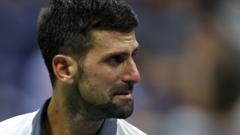
The emotional weight of the defeat was evident as Djokovic broke down in tears during the final set. Known for his mental toughness and fighting spirit, seeing him so visibly affected was a stark reminder of the pressures athletes face, both physically and psychologically.
After the match, Djokovic displayed sportsmanship by congratulating Navone, acknowledging the significance of the victory for the younger player. However, his struggle to maintain composure afterward highlighted the personal disappointment and frustration he felt.
This emotional response also resonated with fans and commentators, who recognized the match as a poignant moment in Djokovic’s career, symbolizing the inevitable challenges that come with aging in professional sports.
Djokovic’s tears and visible distress underscored the human side of elite competition, where even the greatest champions face moments of vulnerability. The crowd’s subdued reaction reflected both respect for Djokovic’s legacy and concern for his well-being.
Implications for Djokovic’s Career and Legacy
Djokovic’s early exit raises questions about his future competitiveness, especially as he approaches 40. While his career has been defined by extraordinary achievements and comebacks, the physical limitations he is currently facing may signal a turning point.
The match also serves as a reminder of the evolving landscape of men’s tennis, where younger players are increasingly challenging established champions. Navone’s victory, his biggest to date, exemplifies this generational shift.
Nevertheless, Djokovic’s legacy remains intact as one of the sport’s all-time greats. His ability to reach at least the semi-finals in six of the last seven Grand Slams before this tournament speaks to his enduring skill and determination.
This loss may also prompt Djokovic and his team to reassess his approach to conditioning and health management, especially in challenging environments. How he adapts to these challenges will be crucial for any future attempts to add to his Grand Slam tally.
The Broader Context of Aging Athletes in Tennis
Djokovic’s experience is not unique in the world of tennis, where the physical demands are immense and the competition relentless. As players age, managing health and fitness becomes increasingly challenging, often influencing performance and career longevity.
The sport has seen several legends face similar struggles, balancing the desire to compete with the realities of a body that no longer recovers as quickly. Djokovic’s situation highlights the importance of adapting training, recovery, and match strategies to prolong careers.
Moreover, his openness about health issues in humid conditions sheds light on the need for better support systems and medical interventions tailored to athletes’ specific needs, especially in extreme weather.
This match also illustrates the broader challenges faced by aging athletes in maintaining elite performance levels amid evolving competition and physical decline. It invites a wider conversation on how the sport can support players in extending their careers while safeguarding their health.
What this means
Novak Djokovic’s early exit from the 2023 US Open serves as a powerful narrative about the intersection of athletic excellence, aging, and health challenges. While his defeat to Mariano Navone was unexpected, it underscores the physical and emotional demands placed on elite athletes competing at the highest level. As Djokovic continues to navigate these challenges, his legacy as one of tennis’s greatest remains secure, even as the sport evolves and new talents emerge. This moment also invites reflection on how athletes and the broader sports community can better support longevity and well-being in the face of inevitable physical decline.
Originally reported by bbc.co.uk. Adapted for our readers with AI assistance.
Nigeria's women's national team faces a critical two-legged qualifier for the 2028 Los Angeles Olympics without three star players, but interim coach Augustine Eguavoen…