
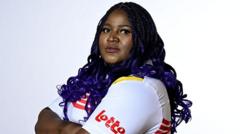
At the 2024 Powerlifting Championships in Lithuania, Belgian athlete Sonita Muluh faced a disqualification that quickly escalated beyond a sporting controversy into a serious allegation of racism. The incident, involving a spotter’s interference during Muluh’s record-breaking squat attempt, has led to a criminal investigation and a wider discussion about racial discrimination and athlete safety within the powerlifting community. This article explores the facts surrounding the event, the responses from involved parties, and the broader implications for the sport.
The Incident: A Controversial Disqualification
During the championships in June, Sonita Muluh attempted a record-setting squat of 334.5 kilograms, which would have been the heaviest ever squat for a female athlete. As she executed the lift, Ernestas Kusinas, a spotter assigned to ensure the validity of lifts and the safety of athletes, inadvertently touched the weights with his knee. This interference was critical because spotters are meant to assist without affecting the lift itself.
Judges disqualified Muluh, citing a separate technical infringement rather than the interference itself as the reason for the disqualification. Initially, Muluh, a Belgian champion of Cameroonian descent, viewed the interference as an unfortunate human error. She refrained from blaming Kusinas directly and even expressed hope that he would not face backlash, emphasizing that she saw no hatred in his actions at the time.
However, the situation took a dark turn when Kusinas posted a message on Instagram stating, "I am racist, and I did it intentionally." This admission transformed what had seemed like a sporting mishap into a serious allegation of racial discrimination.
The Aftermath: Investigation and Sanctions
The Instagram post prompted Lithuanian authorities to launch a criminal investigation focusing both on Kusinas’ message and the events during the championship. Under Lithuanian law, such conduct could carry a maximum penalty of up to two years in prison, reflecting the seriousness with which hate crimes and racially motivated acts are treated.
In response to the incident, the Lithuanian Powerlifting Federation acted swiftly, imposing a lifetime ban on Kusinas from all federation activities. Additionally, Kusinas’ social media accounts were made private. Kusinas later told Reuters that his Instagram comment was written out of anger and intended as sarcasm to mock an accusation of racism rather than as a genuine confession. Despite this explanation, the federation condemned his behavior unequivocally, emphasizing that such conduct contradicts the principles of the sport.
The International Powerlifting Federation (IPF) also issued a strong statement condemning racism, discrimination, and hateful conduct in all forms. The IPF commended the Lithuanian federation for its decisive action and announced plans to enhance the recruitment, screening, accreditation, and oversight of volunteers at IPF events to prevent similar incidents in the future.
Sonita Muluh’s Perspective: Safety and Inclusion Concerns
Muluh expressed profound distress over the incident and its aftermath, stating that she no longer feels safe competing under such conditions. She highlighted the inherent risks in powerlifting, where athletes entrust their safety to spotters who handle extremely heavy weights. The interference with her squat, which she was able to stabilize only by luck, could have caused serious injury.
She criticized the IPF for what she perceives as negligence in safeguarding athletes, particularly minority competitors. Muluh called for more stringent background checks and better protective measures to ensure that those responsible for athlete safety are properly vetted and trained.
Beyond the incident itself, Muluh recounted experiences of feeling unwelcome and discriminated against at competitions. She described being booed and subjected to disrespectful behavior based on her race, including an incident where someone sneezed in her face at an airport in Poland. These experiences underscore the broader challenges minority athletes face in the sport.
Muluh also reflected on the powerlifting community’s response, noting that while many black athletes reached out in support, some prominent figures in the sport remained silent. This disparity has led her to question the sport’s commitment to standing against racism.
Broader Implications for Powerlifting and Sports Governance
This incident highlights the complex challenges sports organizations face in addressing racism and ensuring athlete safety. Powerlifting, often regarded as a niche but close-knit sport, is now confronting uncomfortable questions about inclusivity, athlete welfare, and the adequacy of existing safeguarding protocols.
The IPF’s commitment to reviewing volunteer recruitment and oversight processes is a vital step toward preventing future incidents. However, Muluh’s experience suggests that systemic issues remain, especially in how minority athletes are treated and protected during international competitions.
Moreover, the incident underscores the importance of transparent and timely responses from governing bodies. Delays or perceived inaction can exacerbate harm to athletes and erode trust in the sport’s leadership. The swift ban by the Lithuanian federation contrasts with Muluh’s criticism of the IPF’s slower response, illustrating the need for coordinated and proactive governance.
Community Response and the Path Forward
Muluh emphasized that support from fellow black athletes was a vital source of solidarity during this difficult time, providing emotional strength amid the controversy. However, she lamented the silence from some prominent figures in the sport, highlighting a gap in advocacy and allyship that needs addressing.
Looking ahead, the powerlifting community must balance competitive integrity with a renewed focus on athlete welfare and inclusivity. Creating environments where all athletes feel safe, respected, and valued—regardless of their background—is essential for the sport’s growth and reputation.
Educational initiatives, comprehensive anti-racism policies, and enhanced safeguarding measures will be critical components in rebuilding trust. These efforts should aim not only to prevent incidents like Muluh’s but also to foster a culture of respect and support where excellence is celebrated without prejudice.
What this means
The incident involving Sonita Muluh at the 2024 Powerlifting Championships has exposed critical vulnerabilities in athlete safety and the handling of racism within powerlifting. While decisive actions such as Kusinas’ lifetime ban and the IPF’s commitment to improved safeguards are positive steps, the broader challenge remains creating a sport environment where all athletes, especially minorities, feel safe, respected, and supported. This case serves as a call to action for powerlifting and other sports to confront discrimination head-on and prioritize the welfare and dignity of every competitor.
Source: 'I feel unsafe', says powerlifter over racism row via www.bbc.co.uk.
This article was curated with AI assistance and reviewed according to Tamfis editorial settings.