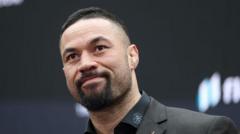
Joseph Parker Cleared to Return to Boxing After Provisional Suspension Lifted
Joseph Parker's return to the ring marks more than a personal reprieve for the 34-year-old New Zealander. It illuminates the intricate web of regulatory bodies that govern anti-doping enforcement in professional boxing — a sport where independent testing agencies, national anti-doping organisations and boxing boards often operate in parallel, sometimes overlapping, sometimes leaving gaps. Parker's case, stemming from a Voluntary Anti-Doping Association (VADA) test conducted on the night of his October 2024 defeat to Fabio Wardley at London's O2 Arena, has traversed a provisional suspension, a denial of knowing ingestion, and now a clearance to fight while investigations by UK Anti-Doping (UKAD) and the British Boxing Board of Control (BBBoC) continue. The outcome will shape not only Parker's career but also the sport's credibility in an era where clean competition is under unprecedented scrutiny.
Career Context and the Wardley Fight
Joseph Parker entered professional boxing in 2012 and rapidly ascended the heavyweight ranks. His career highlight came between 2016 and 2018 when he held the WBO world heavyweight title, a reign ended by a unanimous decision loss to Anthony Joshua in Cardiff. That bout, watched by a global audience, cemented Parker's status as a legitimate world-class operator. Since then, his record has fluctuated: 36 wins against four losses, with victories over respected opponents such as Derek Chisora and Hughie Fury balanced by defeats to Joe Joyce and Zhilei Zhang.
The Wardley fight on 25 October 2024 represented an opportunity to rebuild momentum. Wardley, unbeaten and fighting at home, stopped Parker in the 11th round. On the same night, VADA — an independent, non-profit organisation that administers year-round, unannounced testing for enrolled fighters — collected a sample from Parker. The result returned positive for cocaine, a stimulant prohibited in-competition under the World Anti-Doping Agency (WADA) code. The timing, on fight night itself, placed the result squarely within the in-competition window, triggering an automatic provisional suspension.
The Provisional Suspension and Multi-Agency Response
Parker has consistently denied knowingly taking any banned substance. Following the lifting of his provisional suspension, he expressed relief and gratitude to supporters but declined detailed comment, citing ongoing legal advice and the finalisation of procedural details. The BBBoC confirmed the lifting of the suspension but offered no further statement, emphasising that the matter remains under review. UKAD has yet to publish its findings. This silence is standard practice: investigations are confidential until a final determination is made, at which point a public announcement — including any sanction or exoneration — is issued.
The Nutritionist Contamination Claim
Reports from August 2026 indicate that UKAD's investigation identified a potential source of contamination: Parker's nutritionist. According to multiple outlets, including Al Jazeera, RFI and The Guardian, UKAD accepted that trace amounts of cocaine entered Parker's system through inadvertent contamination linked to his nutritionist's own cocaine use. This explanation, if substantiated, would fall under the WADA code's provisions for 'no significant fault or negligence', potentially reducing or eliminating a period of ineligibility.
Such contamination claims are notoriously difficult to prove. They require a detailed reconstruction of the athlete's environment — food preparation, supplement handling, living arrangements — and a credible timeline linking the third party's conduct to the positive sample. The fact that UKAD appears to have accepted this narrative suggests Parker's team provided compelling evidence, possibly including testimony, communication records and expert toxicology analysis. It also underscores the vulnerability of athletes to their entourage's actions, a recurring theme in anti-doping jurisprudence.
VADA's Role and the Voluntary Testing Landscape
For promoters and broadcasters, VADA enrolment has become a credibility marker. A fight without VADA testing risks being perceived as less legitimate, particularly after high-profile failures in commission-only testing regimes. Yet the voluntary nature means coverage is uneven. Fighters outside championship contention, or those without promotional leverage, may never encounter VADA. This two-tier system — rigorous testing for the elite, minimal testing for the rest — remains a structural weakness in boxing's anti-doping architecture.
Implications for Parker and the Heavyweight Division
There is also a commercial dimension. Parker's marketability in New Zealand and among Polynesian communities worldwide makes him an asset for broadcasters and sponsors. A prolonged ban would have erased that value. The lifting of the provisional suspension restores his earning potential, albeit under a cloud until the final determination. Sponsors will likely await the UKAD outcome before committing to new deals.
Broader Lessons for Boxing's Anti-Doping Framework
Finally, the case highlights the tension between due process and public confidence. A provisional suspension protects the sport's integrity by removing a potentially doped athlete from competition. But it also inflicts reputational and financial harm before a final finding. The ten-month gap between Parker's test and the lifting of his suspension — during which he was effectively presumed guilty in the court of public opinion — raises questions about procedural timelines. Can investigations be expedited? Should provisional suspensions be automatically lifted if a credible contamination defence is presented early? These are policy questions for UKAD, the BBBoC and WADA to address.
What this means
Joseph Parker's clearance to fight again is a pivotal moment for a fighter who has navigated the sport's highest peaks and deepest troughs. Yet the case transcends one man's career. It lays bare the complexities of anti-doping enforcement in a sport governed by overlapping jurisdictions, voluntary testing regimes, and procedural timelines that can stretch for months. The contamination explanation — if formally upheld — offers a resolution that protects both the athlete's rights and the sport's integrity. But it also serves as a warning: in an environment where trace amounts of a banned substance can derail a career, the entourage surrounding a fighter is as critical as the training camp. Boxing's stakeholders — boards, promoters, sanctioning bodies, and anti-doping agencies — would do well to treat this case not as a closed file but as a catalyst for tighter entourage vetting, faster investigations, and a more unified testing framework. Until then, the sport remains one adverse analytical finding away from its next credibility crisis.
Originally reported by bbc.co.uk. Adapted for our readers with AI assistance.
Nigeria's women's national team faces a critical two-legged qualifier for the 2028 Los Angeles Olympics without three star players, but interim coach Augustine Eguavoen…