
AI Trends & News
Surface Laptop Ultra Pre-orders Open: Price, Release Date and AI Features
Microsoft opens Surface Laptop Ultra pre-orders from US$2,599.99. Explore its launch date, NVIDIA RTX Spark features and implications for Nigerian businesses.
TAMFIS NIG LTDRC 8067447CAC ACTIVEFinima, Bonny Island, Rivers State

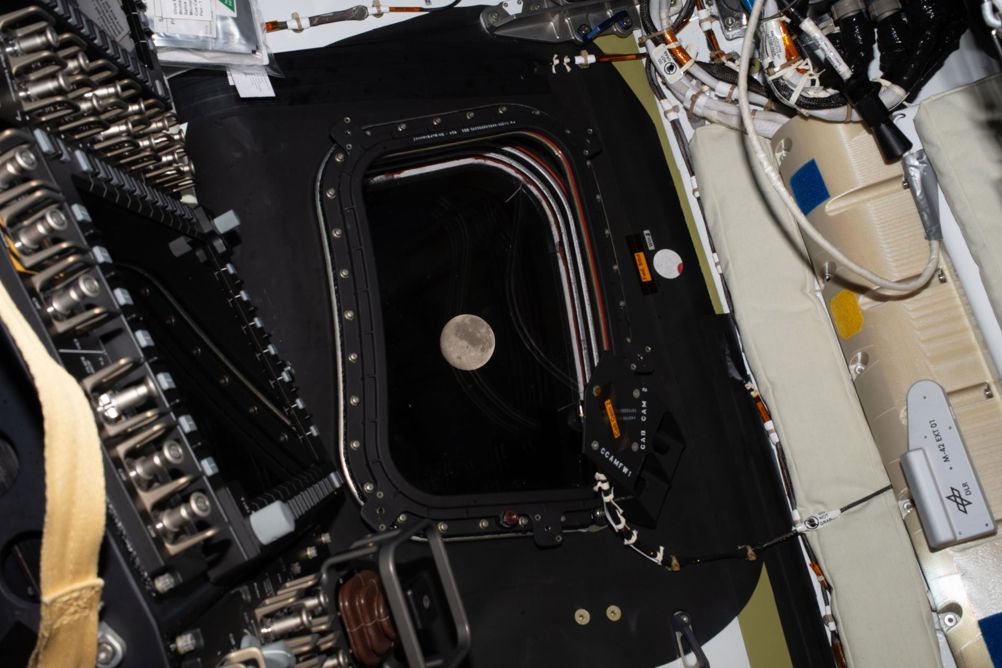
On April 1, 2024, NASA's Artemis II mission launched from Kennedy Space Center, marking a pivotal moment in space exploration. As the first crewed mission in NASA's Artemis program, Artemis II aimed to test crucial systems for future lunar landings while pushing the boundaries of human space travel. After a successful lunar flyby, the Orion spacecraft carrying four astronauts is now en route back to Earth, having broken the record for the furthest distance traveled by humans from our home planet. This article explores the mission's highlights, scientific achievements, and its implications for the future of lunar exploration.
On April 6, 2024, the Artemis II crew aboard the Orion spacecraft achieved a new human spaceflight milestone by traveling 252,756 miles from Earth. This surpassed the previous record set by Apollo 13 in 1970, which stood at 248,655 miles. This feat not only demonstrates the advanced capabilities of modern spacecraft but also symbolizes humanity's enduring spirit of exploration.
The significance of this achievement extends beyond mere numbers. Traveling farther than any humans before, the Artemis II mission paves the way for extended space missions and deeper exploration of the lunar environment. It validates the engineering advancements made since the Apollo era and provides critical data on spacecraft performance in deep space conditions.
CSA astronaut Jeremy Hansen reflected on this momentous occasion, honoring the legacy of past explorers while challenging future generations to continue pushing the boundaries of space travel. The Artemis II team's accomplishment serves as a testament to international collaboration and technological innovation in space exploration.
During its mission, the Orion spacecraft performed a close flyby of the Moon, coming within 4,067 miles of the lunar surface. This proximity allowed the crew to observe and photograph parts of the Moon's far side, regions never directly seen by humans before due to their position out of Earth's line of sight.
The spacecraft entered the Moon's sphere of influence on the fifth day of the mission, where lunar gravity overtook Earth's pull. This gravitational interaction was critical for the trajectory needed to complete the flyby and return journey. The crew experienced approximately 40 minutes of radio blackout as Orion passed behind the Moon, losing communication with NASA's Deep Space Network temporarily.
The lunar flyby provided spectacular views and opportunities to collect imagery and telemetry data. Cameras aboard Orion captured high-resolution images of lunar features, contributing valuable insights that will aid in selecting landing sites for future Artemis missions and potential lunar bases.
The Artemis II crew consists of four astronauts representing NASA and the Canadian Space Agency, each bringing unique expertise to the mission. Commander Reid Wiseman led the team, guiding the spacecraft through complex maneuvers around the Moon and back to Earth.
Canadian astronaut Jeremy Hansen played a crucial role in monitoring spacecraft systems and conducting scientific observations during the mission. His historic participation marks continued international collaboration in deep space exploration efforts.
The crew's professionalism and dedication were evident throughout the mission, especially during critical phases such as the radio blackout and lunar flyby. Their real-time feedback and observations provide invaluable data that will refine future mission planning and execution.
The Orion spacecraft, nicknamed 'Integrity' by the crew, represents the cutting edge of NASA's deep space exploration technology. Designed to support human missions beyond low Earth orbit, it integrates advanced life support, navigation, and communication systems.
During Artemis II, Orion's systems underwent rigorous testing under the demanding conditions of lunar orbit and deep space travel. The spacecraft's ability to maintain life support, execute precise maneuvers, and capture detailed imagery confirms its readiness for upcoming Artemis missions, including Artemis III's planned lunar landing.
Data collected on Orion's performance during the mission will inform future enhancements to spacecraft design. This iterative process ensures that NASA's fleet can safely support astronauts during extended lunar stays and eventual missions to Mars and beyond.
Artemis II's mission extended beyond human spaceflight milestones, contributing valuable scientific data about the Moon and deep space environment. The high-resolution images of the lunar far side captured by Orion offer new perspectives on the Moon's geology and surface features.
Telemetry and environmental data collected during the mission improve understanding of radiation exposure, microgravity effects, and spacecraft-environment interactions. These insights are critical for designing habitats and protective measures for future lunar explorers.
The mission also tested communication protocols and data transmission during the radio blackout period, providing lessons for maintaining contact with spacecraft operating beyond Earth's immediate vicinity.
Artemis II is a stepping stone toward NASA's ambitious goal of establishing a sustainable human presence on the Moon. The mission's success bolsters confidence in plans for Artemis III, which aims to land astronauts on the lunar surface by the mid-2020s, including the first woman and the next man.
Data from Artemis II will guide the selection of landing sites and the design of lunar habitats. NASA envisions a lunar base that supports scientific research, resource utilization, and acts as a launchpad for future missions to Mars.
International and commercial partnerships play a vital role in these efforts. The Artemis program exemplifies a collaborative approach to space exploration, leveraging global expertise and innovation to achieve shared goals.
In a gesture honoring both their mission and personal histories, the Artemis II crew proposed naming two lunar craters. One crater would be named 'Integrity' after their spacecraft, symbolizing the mission's spirit and achievements.
Another crater is proposed to honor Commander Reid Wiseman's late wife, Carroll, who passed away in 2020. This tribute reflects the personal sacrifices and human stories intertwined with space exploration.
These naming proposals will be submitted to the International Astronomical Union, the authority responsible for naming celestial features. If approved, these names will become enduring markers of Artemis II's historic journey.
Following the successful lunar flyby and record-breaking distance, the Artemis II crew began their return journey through cislunar space toward Earth. The spacecraft will re-enter Earth's atmosphere and is scheduled to splash down in the Pacific Ocean off the coast of San Diego at approximately 17:07 PDT on April 10, 2024.
The crew's safe return will mark the completion of a six-day mission that has significantly advanced human spaceflight capabilities. Recovery teams will be on hand to assist the astronauts and retrieve the Orion capsule for post-mission analysis.
The data and experiences gained from Artemis II will be instrumental in shaping the next phases of lunar exploration, ensuring that future missions are safer and more efficient as humanity prepares to establish a lasting presence beyond Earth.
The Artemis II mission represents a monumental achievement in human space exploration, demonstrating advanced capabilities in spacecraft technology, crewed lunar flyby operations, and international collaboration. By breaking distance records and gathering critical scientific data, Artemis II has paved the way for future missions that will return humans to the lunar surface and establish a sustainable presence there. As the crew safely journeys back to Earth, the mission's legacy serves as a beacon of inspiration and a testament to humanity's enduring quest to explore the cosmos. With Artemis II's success, NASA and its partners are one step closer to making the vision of a permanent lunar base—and eventually Mars exploration—a reality.
Keep reading
AI Trends & News
Microsoft opens Surface Laptop Ultra pre-orders from US$2,599.99. Explore its launch date, NVIDIA RTX Spark features and implications for Nigerian businesses.
Science & Technology
DJI’s IBC recognition puts pocket gimbal and panoramic capture in the spotlight. Here is how creators can assess framing, editing effort and recording workflows.
Business News
App store steering is about more than permission to add a link. Explore fees, renewal terms, customer experience and the UK consultation.
TAMFIS NIG LTD
Electrical and instrumentation engineering, bid preparation and consulting, IT and software.