

NASA spacecraft finds solar ‘cannonballs’ may have stripped Mars of its water — proving decades-old theory
Science & Technology

NASA spacecraft finds solar ‘cannonballs’ may have stripped Mars of its water — proving decades-old theory

This artist's concept depicts the early Martian environment (right) with liquid water and a thicker atmosphere versus the cold, dry environment seen today (left).(Image credit: NASA’s Goddard Space Flight Center)After nearly a decade in orbit, NASA's MAVEN spacecraft has, for the first time, directly observed the process that scientists had long suspected was responsible for stripping Mars of its atmosphere. The findings, published May 28 in the journal Science Advancescould help answer a longstanding question about how Mars transformed from a potentially habitable world with rivers and lakes into the mostly-frozen desert we see today. Although Mars today is dry, cold and virtually airless, its surface is carved with unmistakable evidence of a wetter past. Features resembling ancient river valleys, lake beds, and minerals that only form in the presence of water point to long-lived lakes,...
Continue reading
ESA spaceplane project revives bankrupt firm’s hypersonic engine
Science & Technology

ESA spaceplane project revives bankrupt firm’s hypersonic engine

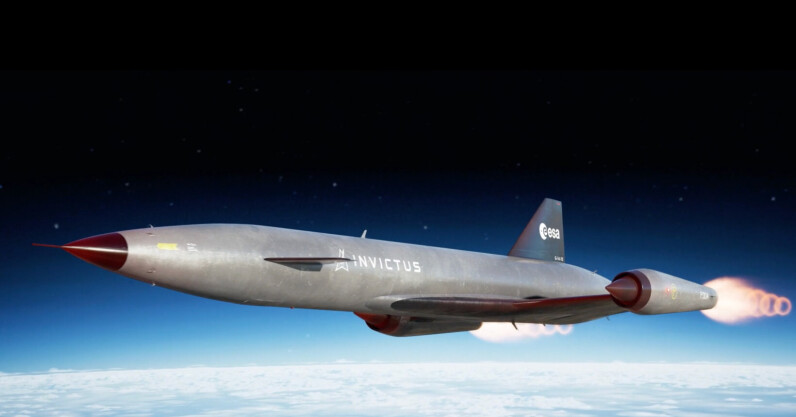
A bankrupt company’s propulsion system for hypersonic planes is being revived by Invictus, a new European Space Agency (ESA)-backed project aiming to build and fly a hydrogen-powered spaceplane by 2031. The proposed engine for the plane is based on so-called pre-cooler technology, developed over decades by UK aerospace firm Reaction Engines, which went bust in November. Many of Reaction Engines’ top engineers found a new home at British aerospace and defence company Frazer-Nash Consultancy, which is now leading the Invictus consortium. Other members of the group include US aircraft maker Spirit AeroSystems and Britain’s Cranfield University. Invictus aims to develop a reusable hypersonic vehicle capable of flying at Mach 5...
Continue reading
This cargo ship is turning its CO2 emissions into green cement
Science & Technology

This cargo ship is turning its CO2 emissions into green cement

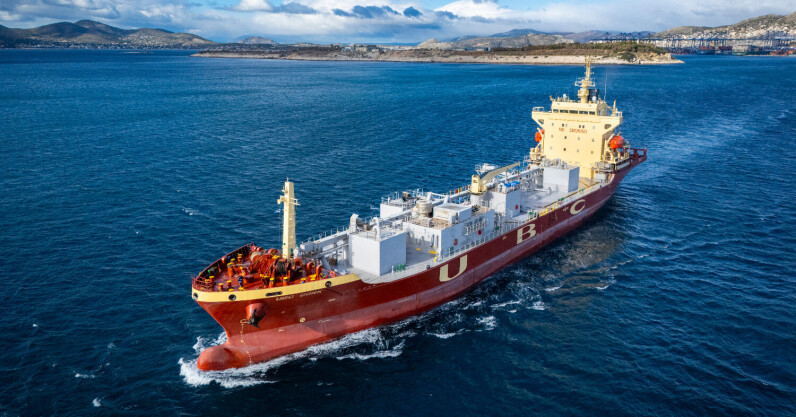
A giant cargo ship is trapping carbon from its exhaust and turning it into cement for use in onshore construction. The technology, developed by UK startup Seabound, is billed as the world’s first commercial carbon capture system for boats. It’s installed on the UBC Cork, a cement carrier owned by Germany’s Hartmann Group. “These are the systems we intend to scale across hundreds, and eventually thousands, of vessels,” Alisha Frediksson, Seabound’s CEO and co-founder, told TNW. “We’re therefore very excited to get them out into the world — to gather valuable data, optimise future iterations, and most importantly, to show the industry that onboard carbon capture is no longer...
Continue reading
Beijing posts 5.5 pct H1 GDP growth
Business News

Beijing posts 5.5 pct H1 GDP growth

Business This photo taken from Jingshan Hill on Aug. 12, 2024 shows the skyscrapers of the central business district on a sunny day in Beijing, capital of China. (Xinhua/Li Xin)BEIJING, July 17 (Xinhua) -- Beijing's gross domestic product (GDP) grew 5.5 percent year on year to over 2.5 trillion yuan (about 350.2 billion U.S. dollars) in the first half of 2025, calculated at constant prices, the city's statistics authorities said Thursday. The primary industry achieved an added value of 4.57 billion yuan, an increase of 1.5 percent; the secondary industry grew 4.7 percent to over 335.6 billion yuan, and the tertiary industry surpassed 2.16 trillion yuan, up 5.6 percent, according to the municipal bureau of statistics. Added value of the city's industrial enterprises above designated size rose 7 percent year on year during the six-month...
Continue reading