
Systematic identification of minor histocompatibility antigens predicts outcomes of allogeneic hematopoietic cell transplantation
Science & Technology

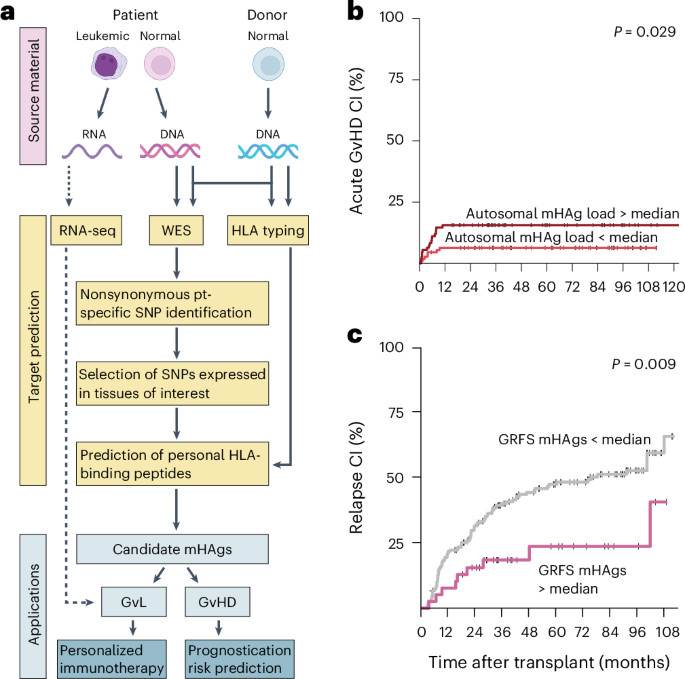
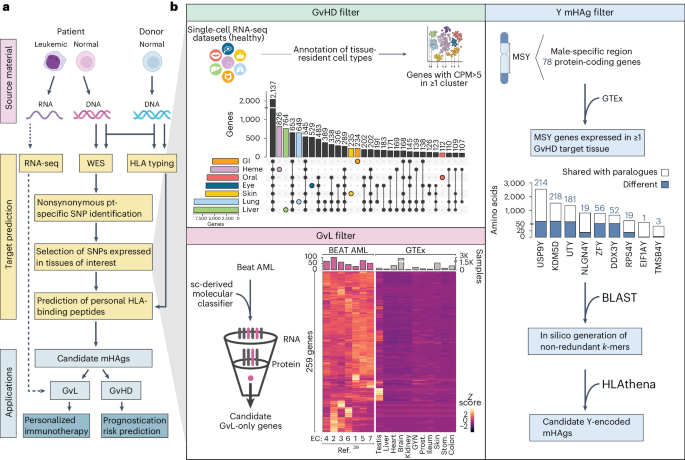
Systematic identification of minor histocompatibility antigens predicts outcomes of allogeneic hematopoietic cell transplantation

Technology tamfitronics Data availability WES and RNA-seq data from the training HCT, DFCI-MRD and HP-MRD cohorts is available through the dbGaP portal (accession phs003394.v1.p1). The original mass spectra, PSMs and protein sequence databases used for searches have been deposited in the public proteomics repository MassIVE (https://massive.ucsd.edu) and are accessible at ftp://massive.ucsd.edu/v08/MSV000095025/. Original mass spectrometry data for the previously published B721.221 monoallelic immunopeptidomes are accessible at ftp://massive.ucsd.edu/MSV000080527. The GI GvHD scRNA-seq dataset is available from the corresponding author upon reasonable request. All external datasets used in this study (identified by reference number) are summarized in Supplementary Fig....
Continue reading
Self-stacked small molecules for ultrasensitive, substrate-free Raman imaging in vivo
Science & Technology

Self-stacked small molecules for ultrasensitive, substrate-free Raman imaging in vivo

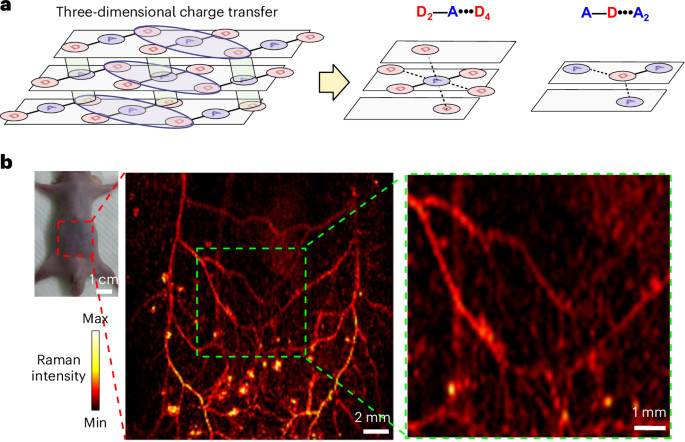
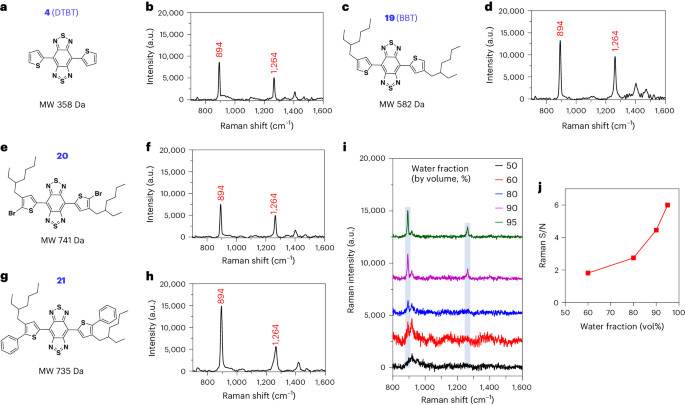
Technology tamfitronics MainRaman spectroscopy has been widely applied in chemical, material and biomedical sciences by detecting the inelastic light scattering of small molecules1. Complementary to fluorescence or other imaging modalities, Raman spectroscopy for bioimaging measures chemical-bond-specific vibrational transitions that unravels chemical information of molecules such as nucleic acids, proteins and lipids, related to the genotype, phenotype and physiological state of the cell2. The ultranarrow spectral peak width of Raman signal offers the opportunity to detect multiple tags simultaneously using a single laser excitation, capable of multiplexed imaging3. Moreover, owing to the extremely short lifetimes of Raman scattering, Raman signals are stable against photobleaching or quenching, which is ideal for imaging studies of prolonged duration4.Despite these...
Continue reading