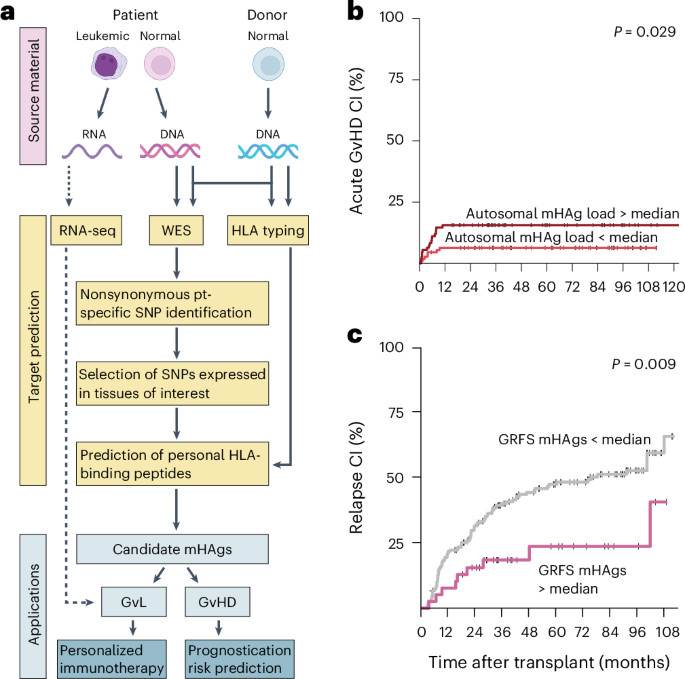
Framework for predicting alloreactivity in hematopoietic cell transplants
Allogeneic hematopoietic cell transplantation (HCT) remains a cornerstone treatment for various hematological malignancies and disorders. The therapeutic efficacy of HCT largely depends on alloreactivity—the immune response of donor cells against recipient antigens. This phenomenon mediates both beneficial graft-versus-tumor (GvT) effects and detrimental graft-versus-host disease (GvHD). Despite its clinical importance, the molecular determinants governing alloreactivity have been poorly understood, limiting precise risk stratification and personalized therapy. Recent advances in genomic technologies and computational biology have paved the way for systematic frameworks capable of predicting alloreactivity from donor-recipient genetic information. This article delves into the components, methodologies, and clinical implications of such predictive frameworks, highlighting their potential to revolutionize transplant outcomes.
Understanding Alloreactivity in Hematopoietic Cell Transplantation
Alloreactivity refers to the immune recognition and response of donor-derived immune cells to genetically disparate recipient antigens following allogeneic hematopoietic cell transplantation. This immune recognition drives two critical clinical phenomena: the graft-versus-tumor (GvT) effect that eradicates residual malignant cells, and graft-versus-host disease (GvHD), an often severe complication where donor cells attack healthy recipient tissues. Balancing these outcomes is essential for transplant success.
The primary mediators of alloreactivity are T cells responding to disparities in major histocompatibility complex (MHC) molecules and minor histocompatibility antigens (mHAgs). While MHC matching has long been a focus in donor selection, variations in mHAgs—peptides derived from polymorphic proteins presented by MHC molecules—also significantly influence immune responses. Thus, understanding the full antigenic landscape is vital to predicting clinical outcomes.
Recent studies emphasize that alloreactivity is a complex, multifactorial process influenced by genetic variation, antigen presentation, and immune repertoire dynamics. Dissecting these molecular determinants requires integrative approaches combining genomics, immunology, and computational modeling to capture the nuanced interplay between donor and recipient immune systems.
The Role of Minor Histocompatibility Antigens in Alloreactivity
Minor histocompatibility antigens (mHAgs) are polymorphic peptides derived from normal cellular proteins that differ between donor and recipient due to genetic variation. Presented by MHC molecules on the cell surface, mHAgs can trigger donor T cell alloreactivity even in fully HLA-matched transplants. Their diversity contributes significantly to both beneficial GvT effects and harmful GvHD.
The identification and characterization of mHAgs have historically been challenging due to their vast heterogeneity and subtle genetic differences. However, advances in whole-exome sequencing and bioinformatics now enable systematic discovery of mHAgs by comparing donor-recipient genetic variants with peptide-binding predictions to MHC molecules, thereby revealing candidate immunogenic peptides.
Understanding the specific mHAg landscape in a donor-recipient pair allows for more precise prediction of alloreactivity risk. It opens avenues for personalized transplantation strategies that maximize anti-tumor immunity while minimizing adverse immune reactions, tailoring immunosuppression and donor selection accordingly.
Whole-Exome Sequencing as a Tool for Alloreactivity Prediction
Whole-exome sequencing (WES) analyzes the protein-coding regions of the genome, capturing the genetic variants that can give rise to immunogenic peptides. In the context of HCT, WES of donor-recipient pairs provides comprehensive data on nonsynonymous single nucleotide polymorphisms and insertions/deletions that differentiate the two genomes, forming the basis for mHAg prediction.
By integrating WES data with HLA typing, computational pipelines can predict which variant-derived peptides are likely to be presented by recipient MHC molecules and recognized by donor T cells. This personalized antigenic map informs the expected magnitude and specificity of alloreactive responses, enhancing risk assessment beyond classical HLA matching.
The implementation of WES-based prediction frameworks in clinical workflows promises improved stratification of relapse risk and immune complications. It also facilitates the development of targeted immunotherapies and selective depletion of alloreactive clones, ultimately improving transplant safety and efficacy.
Computational Frameworks for Systematic Minor Histocompatibility Antigen Discovery
Recent research has developed analytical frameworks that systematically identify mHAgs by combining genomic data, peptide-MHC binding predictions, and immunogenicity scoring. These frameworks utilize algorithms to filter donor-recipient genetic variants, predict peptide processing and MHC binding affinity, and estimate T cell recognition likelihood, creating a ranked list of candidate mHAgs.
Such computational models incorporate machine learning and immunoinformatics tools to enhance prediction accuracy. They also consider the expression patterns of source proteins, allowing prioritization of clinically relevant antigens that may drive immune responses post-transplantation.
By enabling personalized profiling of the alloantigenic landscape, these frameworks support prognostication of transplant outcomes, guide donor selection, and inform the design of novel immunomodulatory therapies. Their modular architecture allows continuous refinement as new biological insights and datasets become available.
Clinical Implications and Prognostication of Transplant Outcomes
The ability to predict alloreactivity at the molecular level has profound clinical implications. Accurate assessment of mHAg disparities can identify patients at higher risk of GvHD or relapse, enabling proactive management strategies such as tailored immunosuppression or donor selection optimization.
Moreover, understanding the balance between GvT and GvHD mediated by specific mHAgs can help harness beneficial immune responses while limiting toxicity. This precision approach aligns with the goals of personalized medicine, improving long-term survival and quality of life for transplant recipients.
Emerging evidence suggests that integrating alloreactivity prediction frameworks into clinical decision-making enhances prognostication and therapeutic outcomes. Ongoing clinical trials are evaluating the utility of these tools in guiding transplant protocols, marking a paradigm shift in hematopoietic cell transplantation.
Challenges and Future Directions in Alloreactivity Prediction
Despite promising advances, several challenges remain in translating alloreactivity prediction frameworks into routine clinical practice. These include the complexity of immune interactions, incomplete knowledge of antigen processing, and variability in T cell receptor repertoires that influence immune recognition.
Technical limitations such as sequencing depth, bioinformatic standardization, and the need for robust validation cohorts must be addressed to ensure reproducibility and clinical relevance. Additionally, ethical considerations around genomic data privacy require careful management.
Future research aims to integrate multi-omics data, including transcriptomics and proteomics, alongside functional immunological assays to refine prediction models. Machine learning and artificial intelligence will play pivotal roles in deciphering complex datasets, ultimately enabling dynamic and adaptive prediction of alloreactivity.
Integrating Predictive Frameworks into Clinical Transplantation Practice
For predictive frameworks to impact patient care, seamless integration into clinical workflows is essential. This involves developing user-friendly software tools that provide actionable insights to transplant physicians, alongside training and support for interpreting genomic data.
Collaboration between clinicians, bioinformaticians, and immunologists is critical to ensure that prediction outputs align with clinical needs and improve decision-making. Standardized reporting and incorporation into electronic health records can facilitate real-time risk assessment and personalized treatment planning.
As these frameworks mature, they hold potential to transform donor selection processes, optimize conditioning regimens, and guide post-transplant monitoring. Ultimately, their adoption promises to enhance transplant precision, reduce complications, and improve patient outcomes in hematopoietic cell transplantation.
Conclusion
The development of robust frameworks for predicting alloreactivity in hematopoietic cell transplantation marks a significant advancement in transplant immunology and personalized medicine. By harnessing whole-exome sequencing and sophisticated computational analyses, these approaches provide unprecedented insights into the antigenic disparities driving immune responses. This knowledge enables clinicians to better stratify risk, tailor therapies, and optimize donor selection, ultimately improving transplant efficacy and safety. Although challenges persist, ongoing research and technological innovations promise to refine these predictive tools further, heralding a new era of precision transplantation that maximizes therapeutic benefit while minimizing complications.
Originally reported by nature.com. Adapted for our readers.
Author of the article: Published Sep 18, 2026 11 minute read Article content Kyndryl Canada has been engaged to deliver a commercialization strategy and…
The National Agency for Science and Engineering Infrastructure (NASENI) on Friday 4th September 2026, marked three years of institutional transformation under its Executive Vice…
Municipal Administration Minister P. Narayana speaks to residents after laying the foundation stone for the slum redevelopment project at Velampeta, near Lakshmi Nagar in…