
Business
Beyond the Digital Shelf: How AI Agents Are Reshaping Product Discovery for Nigerian Consumers
Nigerian shoppers are increasingly turning to AI assistants like ChatGPT, Claude and Gemini for product ...
TAMFIS NIG LTDRC 8067447CAC ACTIVEFinima, Bonny Island, Rivers State

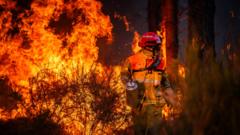
In the summer of 2023, France experienced an unprecedented wildfire season, with flames devastating more land than at any time since World War Two. The scale and intensity of these fires have raised urgent questions about their causes, the adequacy of government responses, and the future of forest management in a warming climate. While rising temperatures linked to climate change have created conditions ripe for wildfires, human actions—both accidental and deliberate—are responsible for the majority of fire ignitions. This article examines the multifaceted factors behind the wildfires, the legal crackdown on alleged arsonists, and the broader implications for France’s environment and society.
France’s wildfires in 2023 have been exacerbated by a changing climate. Scientists widely agree that global warming, driven by the burning of fossil fuels, has increased average temperatures and altered weather patterns. These shifts have led to prolonged droughts and higher heat levels, creating ideal conditions for wildfires to ignite and spread rapidly.
President Emmanuel Macron described the fires as "completely unprecedented," underscoring the severity of the situation. The combination of heatwaves and dry conditions has made forests more vulnerable than ever, challenging traditional firefighting and forest management strategies.
Experts warn that such extreme fire seasons are likely to become more frequent as climate change progresses, necessitating a reevaluation of how forests are maintained and protected.
Despite the environmental backdrop, human actions are the main cause of wildfires in France. Official records indicate that approximately 90% of wildfires are started by people, either accidentally or intentionally. This stark statistic has prompted the French government to focus on identifying and prosecuting those responsible.
The Interior Ministry has reported 420 arrests related to wildfire ignitions during this season, including 166 minors. Charges range from careless behavior, such as improperly discarded cigarette butts, to deliberate arson. One notable case involves a 23-year-old accused of setting ten fires within five days, facing potentially severe penalties including 15 years in prison and a substantial fine.
However, the rapid pace and scale of arrests have raised concerns among legal experts and human rights advocates. Some argue that the authorities’ approach may be overly harsh, citing cases where vulnerable individuals, including a homeless person and someone with severe autism, received jail sentences for minor infractions like throwing cigarette butts.
Determining the exact cause of a wildfire is a complex and time-consuming process. Fire investigators, like Eric Dufayet, rely on analyzing the burn patterns—often forming a 'V' shape—to trace the fire’s origin. They also look for physical evidence such as DNA or fingerprints on ignition devices.
While deliberate arson accounts for some fires, experts believe most are accidental. Potential ignition sources include construction sparks, electrical faults, cigarettes, and barbecues. The conditions required for a cigarette to ignite a wildfire are specific but easier to meet during droughts, with factors like temperature, humidity, wind speed, and the amount of cigarette remaining all playing a role.
Legal professionals caution that many arrests may not lead to convictions due to insufficient evidence or the difficulty in proving intent. The newspaper Le Monde has questioned whether the police have conducted thorough investigations given the short time frame and lack of detailed public information about charges.
Psychiatric and legal experts categorize those who start fires into three groups: careless individuals, those who gain materially (such as through insurance claims), and pyromaniacs—people with a rare psychiatric disorder who derive pleasure from setting fires without clear motive.
Michel Lejoyeux, a professor of psychiatry, notes that pyromania is uncommon and difficult to diagnose, making it a rare cause of wildfires. Meanwhile, some cases involving firefighters accused of arson suggest complex motives. Some may seek to be seen as heroes by starting fires they then help extinguish, while others, particularly volunteers, might be financially motivated by overtime pay.
These varied motivations complicate efforts to prevent fires, as strategies must address both accidental behavior and intentional acts.
The French government’s response has involved a mix of legal action and emergency firefighting efforts. Authorities have deployed extensive resources to contain the blazes and have taken a tough stance on suspected arsonists to deter future incidents.
Nonetheless, critics argue that France was underprepared for the scale of the wildfires, pointing to insufficient forest management and a lack of adaptation to climate change realities. President Macron has acknowledged the need to rethink forestry practices, emphasizing the importance of replanting and building resilience against future fires.
Public concern remains high, with many questioning how homes, local economies, and ecosystems will recover. The fires have damaged hundreds of homes, disrupted tourism, and degraded air quality, underscoring the wide-ranging impacts beyond immediate fire damage.
Looking ahead, meteorological forecasts suggest that another heatwave is imminent, raising fears of continued wildfire threats.
France’s devastating wildfire season of 2023 highlights the complex interplay between climate change and human behavior in driving natural disasters. While rising temperatures and prolonged droughts have created a tinderbox environment, human actions remain the primary ignition source. The government’s aggressive legal response reflects the urgency of the crisis but also raises questions about due process and the best ways to prevent future fires. As France confronts the realities of a warming world, it must balance immediate firefighting needs with long-term strategies for forest resilience, public education, and climate adaptation. The lessons learned from this season will be crucial in shaping policies that protect both people and the environment from increasingly frequent and severe wildfires.
Originally reported by bbc.co.uk. Adapted for our readers with AI assistance.
Keep reading
Business
Nigerian shoppers are increasingly turning to AI assistants like ChatGPT, Claude and Gemini for product ...
Business
The global developer workforce has undergone a transformative expansion over the past five years, fundam...
Business
Neighborhood Intelligence, the entity formed from Bed Bath & Beyond Inc.'s restructuring, has r...
TAMFIS NIG LTD
Electrical and instrumentation engineering, bid preparation and consulting, IT and software.