
Business News
NDLEA Intensifies Operations Against Narcotic Trade and Illegal Trafficking
The National Drug Law Enforcement Agency has arrested multiple suspects and seized significant drug consignments in recent operations across Nigeria.
TAMFIS NIG LTDRC 8067447CAC ACTIVEFinima, Bonny Island, Rivers State

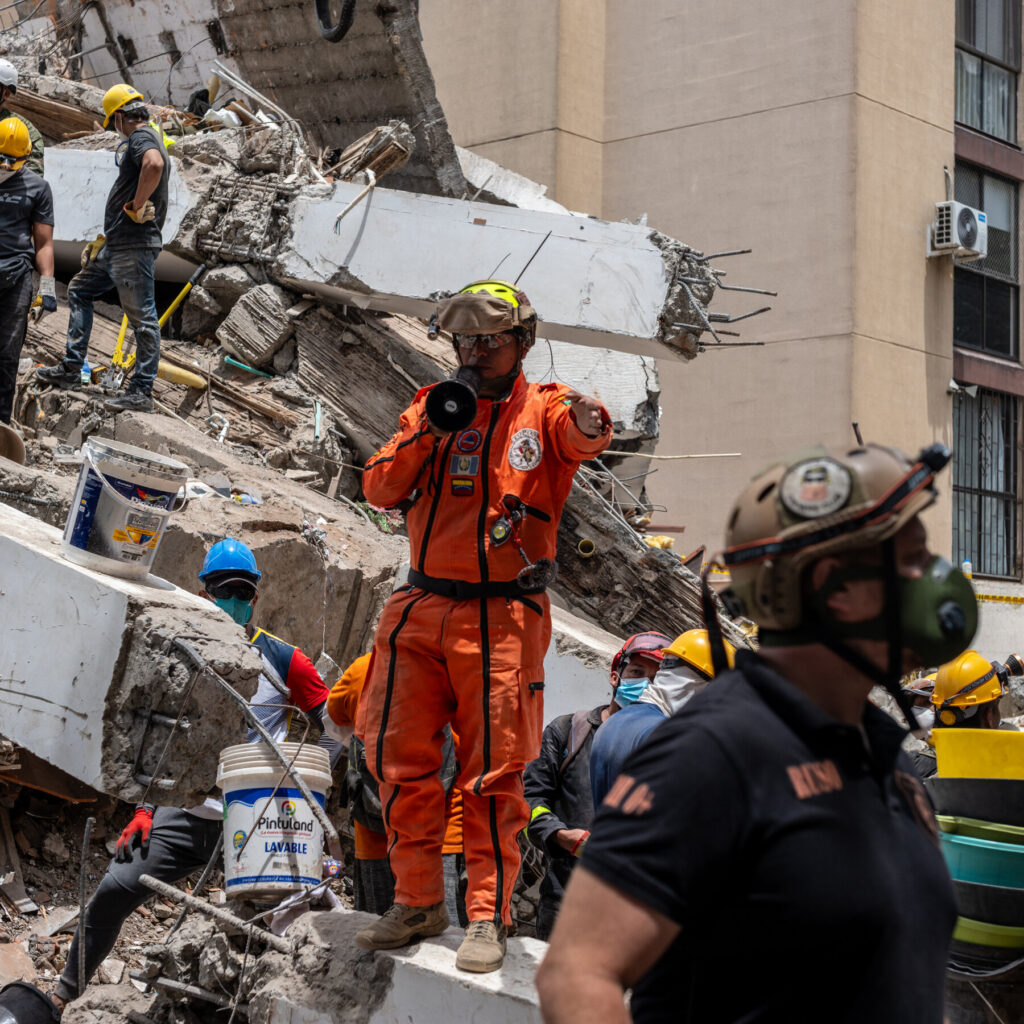
Natural disasters demand rapid and skilled responses to save lives and mitigate damage. In the wake of a recent earthquake in Colombia, the Mexican volunteer rescue group Topos Azteca has stepped in to provide vital assistance. With a history of international deployments, including their notable role after the September 11 attacks in the United States, Topos Azteca exemplifies the power of volunteerism and cross-border cooperation in disaster relief. This article explores their mission in Colombia, their expertise, and the broader significance of such volunteer groups in global emergency response.
Topos Azteca is a renowned Mexican volunteer rescue organization specializing in urban search and rescue operations. Founded in Mexico, the group has built a reputation for its rapid response and skilled personnel who operate in disaster zones worldwide. Their volunteers are trained in locating and extracting survivors trapped under rubble after earthquakes, building collapses, and other emergencies.
The group’s international profile was notably elevated after their involvement in the rescue efforts following the September 11 attacks in New York City. Their experience in such a high-profile and complex disaster showcased their capabilities on a global stage. Since then, Topos Azteca has continued to participate in disaster response missions across the globe, demonstrating a steadfast commitment to humanitarian aid beyond national borders. Their work spans multiple continents and includes diverse emergencies, reflecting their adaptability and dedication.
In the aftermath of a significant earthquake in Colombia, Topos Azteca was deployed to assist local authorities and emergency services. Prior to arriving in Colombia, the team had been engaged in search efforts in Venezuela, showcasing their operational flexibility and regional reach within Latin America.
Their arrival in Colombia brings specialized skills and equipment crucial for effective search and rescue operations. The team’s expertise in navigating unstable structures and using advanced detection technology enhances the chances of finding survivors trapped beneath debris. This technology includes acoustic and seismic sensors that can detect faint sounds or movements, critical in the chaotic aftermath of an earthquake.
The deployment also highlights the importance of international cooperation in disaster response, as countries often face overwhelming challenges that require additional resources and expertise. By sharing knowledge and manpower, volunteer groups like Topos Azteca help bolster local capacities and accelerate rescue efforts when time is most critical.
Volunteer rescue groups like Topos Azteca play an essential role in supplementing official emergency response mechanisms. Their volunteers often bring specialized training, equipment, and experience that can be pivotal during the critical hours following a disaster.
These groups operate on principles of solidarity and humanitarianism, frequently mobilizing quickly to areas affected by natural or man-made catastrophes. Their ability to work alongside local responders enhances overall coordination and effectiveness in rescue missions, ensuring that efforts are well-organized and resources are optimally utilized.
Moreover, volunteer groups contribute to building resilience by raising awareness, training local communities, and advocating for improved disaster preparedness. Their presence often inspires local authorities and citizens to invest in preventive measures, which can reduce the impact of future disasters and save lives.
Despite their vital contributions, volunteer rescue teams encounter several challenges. Logistics and coordination with local authorities can be complex, especially in regions with limited infrastructure or ongoing crises. Efficient communication and integration into existing emergency frameworks are essential but sometimes difficult to achieve promptly.
Safety is another concern, as rescue operations often take place in hazardous environments with unstable buildings and aftershocks. Volunteers must maintain rigorous training and adhere to strict protocols to minimize risks to themselves and survivors. The unpredictable nature of disaster zones demands constant vigilance and adaptability.
Funding and resource constraints can also limit the scope and duration of their deployments. Many volunteer groups rely on donations, partnerships, and community support to sustain their operations. Securing consistent financial and material resources remains a continuous challenge, particularly when responding to multiple disasters in close succession.
Topos Azteca’s involvement in Colombia not only aids immediate rescue efforts but also strengthens regional ties and disaster response networks. Their presence encourages knowledge exchange and capacity building among local responders, fostering a collaborative environment that benefits future emergency preparedness.
The group’s commitment exemplifies how volunteerism transcends national boundaries, fostering a spirit of cooperation essential in addressing the increasing frequency of natural disasters worldwide. Climate change and urban expansion have heightened the risk and impact of such events, making international solidarity more crucial than ever.
Their work also inspires communities and governments to invest in preparedness and resilience, emphasizing that saving lives requires both rapid response and long-term planning. By highlighting the effectiveness of coordinated volunteer efforts, Topos Azteca helps promote policies and initiatives that strengthen disaster management frameworks globally.
The deployment of Topos Azteca to Colombia following a devastating earthquake illustrates the crucial role that volunteer rescue groups play in global disaster response. Their expertise and commitment significantly enhance rescue operations, often making the difference between life and death for trapped survivors. While challenges remain in coordinating and sustaining such efforts, the spirit of international solidarity embodied by Topos Azteca offers a powerful model for humanitarian aid. As natural disasters continue to impact communities worldwide, fostering and supporting volunteer rescue organizations will be essential for effective and timely emergency response. Their work not only saves lives in the immediate aftermath but also strengthens the resilience of communities facing future crises.
Originally reported by nytimes.com. Adapted for our readers with AI assistance.
Keep reading
Business News
The National Drug Law Enforcement Agency has arrested multiple suspects and seized significant drug consignments in recent operations across Nigeria.
Business
Nigerian shoppers are increasingly turning to AI assistants like ChatGPT, Claude and Gemini for product ...
Business
The global developer workforce has undergone a transformative expansion over the past five years, fundam...
TAMFIS NIG LTD
Electrical and instrumentation engineering, bid preparation and consulting, IT and software.