
News
RUSSIA versus NATO and BRICS vs. NATO Military SWOT
Recall that Poland’s Minister Sikorski’s core claim is partially supported by the numbers, but the framing “quite quickly” and “without the U.S.” does not…
TAMFIS NIG LTDRC 8067447CAC ACTIVEFinima, Bonny Island, Rivers State

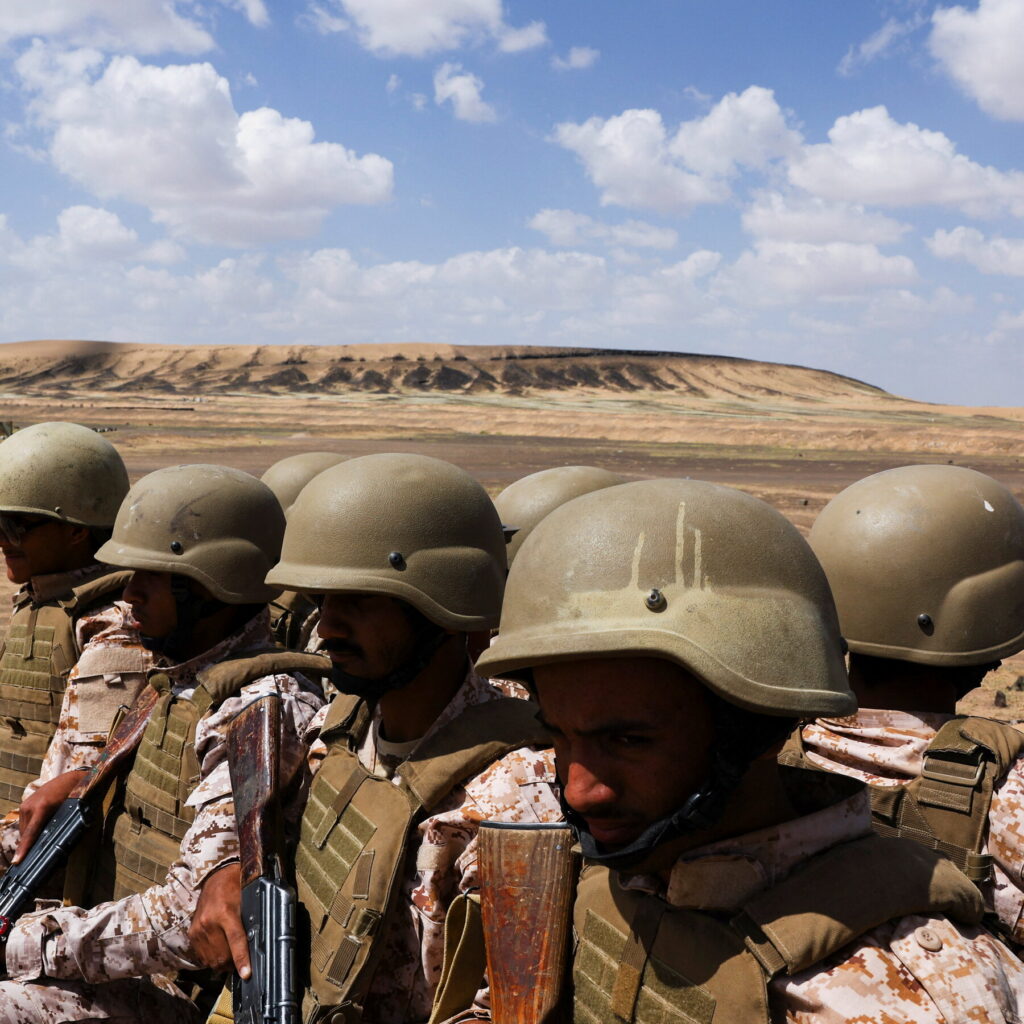
Yemen’s fragile peace is under renewed threat as the Iran-backed Houthi militia launched targeted attacks against the Yemeni armed forces in two key provinces rich in natural resources. These developments come amid escalating violence that jeopardizes a tenuous truce aimed at ending years of devastating conflict. The resurgence of hostilities raises serious concerns about the stability of Yemen and the broader Middle East region.
Yemen has been engulfed in a brutal civil war since 2014, when the Houthi movement seized control of the capital, Sana’a, and large portions of the country. This conflict has evolved into a complex proxy war, with Iran backing the Houthis and a Saudi-led coalition supporting the internationally recognized Yemeni government. The war has devastated Yemen’s infrastructure, economy, and civilian population, leading to one of the world’s worst humanitarian crises.
After years of intense fighting, international actors brokered a fragile truce intended to halt hostilities and create space for peace negotiations. While this ceasefire has been intermittently observed, it remains vulnerable to violations due to deep-rooted political, sectarian, and regional tensions that continue to fuel the conflict.
The recent Houthi attacks represent a significant escalation, undermining the fragile peace and threatening to reignite widespread violence. This development highlights the persistent challenges in enforcing ceasefires in Yemen’s complex conflict landscape, where multiple factions and external influences complicate efforts to maintain stability.
The Iran-backed Houthi militia announced that they had carried out targeted strikes against Yemeni military forces in two provinces known for their abundant natural resources. These provinces are strategically vital, as control over them provides significant economic leverage and influence over critical infrastructure, including oil and gas facilities.
The attacks reportedly involved precision targeting of military installations and personnel, indicating a calculated effort by the Houthis to weaken government forces and assert control over contested territories. Such tactics suggest a strategic intent to disrupt the Yemeni government’s hold on economically important areas, thereby strengthening the Houthis’ bargaining position in any future negotiations.
While the full extent of casualties and material damage remains unclear, these strikes have heightened tensions on the ground and prompted warnings from international observers about the risk of a full-scale resumption of hostilities. The targeted nature of the attacks also signals the Houthis’ continued military capabilities despite the truce, underscoring their resilience and operational reach.
The resurgence of violence threatens to unravel the limited progress achieved under the truce, which, despite its fragility, had offered a glimmer of hope for ending Yemen’s prolonged conflict. Renewed fighting could quickly escalate, reversing gains made towards peace and stability.
Control over resource-rich provinces is a critical strategic priority for both the Houthis and the Yemeni government. These areas provide vital economic resources that can finance military operations and governance, making them key assets in the ongoing power struggle. The competition for these provinces thus intensifies the conflict’s stakes, as dominance over such resources translates to increased leverage.
An escalation in hostilities would further exacerbate Yemen’s already dire humanitarian crisis. Millions of Yemenis face food insecurity, displacement, and lack of access to basic services such as healthcare and clean water. Renewed conflict would likely disrupt humanitarian aid delivery and worsen civilian suffering, compounding the challenges faced by aid organizations operating in the region.
Moreover, renewed fighting risks drawing regional powers more deeply into the conflict, potentially destabilizing the broader Middle East. The involvement of Iran and the Saudi-led coalition complicates diplomatic efforts and raises the stakes for regional security, as proxy dynamics intensify. This could lead to wider geopolitical ramifications, affecting neighboring countries and international interests.
International actors have expressed serious concern over the recent Houthi attacks and the escalating violence. The United Nations and various governments have urged all parties to exercise restraint and return to dialogue to preserve the fragile truce and prevent further deterioration of the situation.
However, the complex web of alliances and rivalries in Yemen poses significant challenges to achieving lasting peace. The Houthis’ close ties to Iran and the Saudi-led coalition’s vested interests in the region contribute to a protracted stalemate, making negotiations difficult. These external influences often exacerbate internal divisions and complicate conflict resolution efforts.
Efforts to revive peace talks will need to extend beyond military ceasefires. Sustainable resolution requires addressing political inclusion, economic reconstruction, and ensuring humanitarian access. Only through comprehensive engagement on these fronts can a durable peace be established, one that addresses the root causes of the conflict rather than merely its symptoms.
The international community’s role remains crucial in facilitating dialogue, providing humanitarian assistance, and supporting initiatives aimed at rebuilding Yemen’s fractured society. Coordinated diplomatic efforts and sustained aid are essential to prevent further deterioration and to lay the groundwork for long-term stability.
The recent Houthi strikes on Yemeni military targets underscore the precarious nature of the country’s fragile peace. With control over resource-rich provinces at stake, the risk of renewed full-scale conflict looms large, threatening to deepen Yemen’s humanitarian catastrophe and regional instability. While international efforts continue to push for dialogue and ceasefires, the path to lasting peace remains fraught with challenges. Achieving a sustainable resolution will require addressing the underlying political, economic, and sectarian issues fueling the conflict, alongside robust humanitarian support to alleviate the suffering of Yemen’s population. The international community’s continued engagement is vital to prevent further escalation and to foster an environment conducive to lasting peace.
Originally reported by nytimes.com. Adapted for our readers with AI assistance.
Keep reading
News
Recall that Poland’s Minister Sikorski’s core claim is partially supported by the numbers, but the framing “quite quickly” and “without the U.S.” does not…
News
By Engr. Tamunofiniarisa BrownReading Time: 6 Minutes The conflict between Russia and Ukraine is often framed in the media as a simple battle between…
World News
Following a tragic crash on the A66 near Middlesbrough that killed two police officers and five young men, Cleveland Police have arrested three more…
TAMFIS NIG LTD
Electrical and instrumentation engineering, bid preparation and consulting, IT and software.