
News
RUSSIA versus NATO and BRICS vs. NATO Military SWOT
Recall that Poland’s Minister Sikorski’s core claim is partially supported by the numbers, but the framing “quite quickly” and “without the U.S.” does not…
TAMFIS NIG LTDRC 8067447CAC ACTIVEFinima, Bonny Island, Rivers State

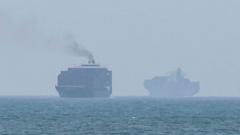
The Strait of Hormuz, a strategic chokepoint through which nearly 20% of the world's oil and gas passes, has become a focal point of geopolitical tension in recent months. Talks between Iran and Oman to establish an agreement securing this vital shipping route have generated cautious optimism. However, Tehran insists that reopening the strait hinges on meeting several conditions, including addressing grievances with the United States. This article examines the current state of negotiations, the complexities involved, and the broader implications for regional security and global energy markets.
The Strait of Hormuz is a narrow waterway connecting the Persian Gulf to the Gulf of Oman and the Arabian Sea. It serves as a critical transit route for global energy supplies, with approximately one-fifth of the world’s oil and natural gas shipments passing through it. Any disruption in this maritime corridor can have significant repercussions on global energy prices and geopolitical stability.
Since late February, the strait has effectively been blockaded by Iran, following a series of attacks attributed to the United States and Israel. This blockade has heightened tensions in the region, prompting urgent diplomatic efforts to restore safe passage for commercial vessels.
Oman has reported positive developments in discussions with Iran aimed at securing the Strait of Hormuz. Both countries are exploring a joint agreement to manage a new shipping route through the strait, which they would jointly oversee. Such an arrangement is hoped to facilitate the resumption of commercial shipping traffic and reduce the risk of maritime incidents.
Iranian Foreign Minister Abbas Araghchi described the talks as being in their final stages but emphasized that reopening the strait would depend on additional conditions. These conditions remain vaguely defined but are understood to involve broader geopolitical and diplomatic issues.
Despite the progress, no clear timeline has been established for finalizing the agreement, reflecting the complexity and sensitivity of the negotiations.
Iran has articulated several demands that must be met before it will fully reopen the Strait of Hormuz. These include compensation from the United States for alleged violations of a June ceasefire agreement, which was intended to halt hostilities but quickly collapsed amid renewed attacks.
Mohammad Baqer Zolqadr, Iran’s security chief, outlined six key demands directed at the US. These include ending threats against Iran, lifting the naval blockade on Iranian ports, and releasing frozen Iranian assets. Until these conditions are addressed, Iran maintains that the strait will remain effectively closed to unrestricted shipping.
This stance underscores the broader geopolitical context in which the maritime negotiations are unfolding, where regional security concerns and diplomatic disputes intersect.
US President Donald Trump expressed optimism that a deal with Iran could be reached soon, signaling a potential breakthrough. However, Vice-President JD Vance tempered expectations by emphasizing that significant work remains. Vance highlighted the use of a combination of diplomatic, economic, and military tools to secure a favorable outcome for the United States.
Vance also addressed concerns over Iran’s reported intention to impose transit fees on vessels passing through the strait. He dismissed these reports, stating that Iran had indicated no plans to toll the passage, which would have complicated international shipping and escalated tensions further.
Meanwhile, Oman has warned against attacks on shipping vessels, emphasizing the importance of maintaining safe navigation through the strait. This warning comes amid recent hostile incidents, including a missile strike on a tanker affiliated with the United Arab Emirates’ state oil company, Adnoc, as it transited the strait.
The security situation in and around the Strait of Hormuz remains volatile. The UAE reported that one of its tankers was struck by a missile while passing through the strait, an attack it attributed to Iran. Fortunately, no casualties were reported.
Additionally, the UK Maritime Trade Operations agency reported a separate incident involving a vessel hit by an unknown projectile off the coast of Oman. The resulting fire was extinguished, and no injuries occurred. It remains unclear if these incidents involved the same ship or were separate events.
These attacks underscore the ongoing risks to commercial shipping and the fragile security environment in the region, complicating efforts to establish a stable and secure traffic scheme for vessels.
While the talks between Iran and Oman represent a positive step toward stabilizing the Strait of Hormuz, several challenges remain. Iran’s insistence on linking the reopening of the strait to broader political and economic demands complicates the negotiation process.
The breakdown of the June ceasefire agreement and the resumption of tit-for-tat attacks highlight the fragility of regional diplomacy. Furthermore, the involvement of multiple actors—including the US, Israel, Yemen’s Iran-backed Houthis, and Gulf states—adds layers of complexity to resolving the crisis.
Establishing a safe and reliable maritime traffic scheme will require not only bilateral cooperation between Iran and Oman but also broader regional and international engagement to address underlying security concerns and build trust.
The ongoing negotiations between Iran and Oman over the Strait of Hormuz offer a glimmer of hope for restoring safe passage through one of the world’s most vital maritime corridors. However, the path to reopening the strait is fraught with geopolitical complexities and security challenges. Iran’s conditional stance, coupled with recent hostile incidents, highlights the fragile nature of the situation. Achieving a durable solution will demand sustained diplomatic engagement, confidence-building measures, and a comprehensive approach that addresses the broader regional dynamics. Until then, the Strait of Hormuz will remain a critical flashpoint with significant implications for global energy markets and international security.
Originally reported by bbc.co.uk. Adapted for our readers with AI assistance.
Keep reading
News
Recall that Poland’s Minister Sikorski’s core claim is partially supported by the numbers, but the framing “quite quickly” and “without the U.S.” does not…
News
By Engr. Tamunofiniarisa BrownReading Time: 6 Minutes The conflict between Russia and Ukraine is often framed in the media as a simple battle between…
World News
Following a tragic crash on the A66 near Middlesbrough that killed two police officers and five young men, Cleveland Police have arrested three more…
TAMFIS NIG LTD
Electrical and instrumentation engineering, bid preparation and consulting, IT and software.