
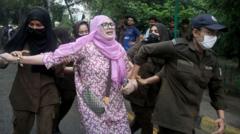
In recent months, Pakistan has introduced stringent new regulations aimed at controlling international media reporting within its borders. These measures have raised alarm among journalists, human rights organizations, and global observers who view them as a significant threat to press freedom. This article provides a comprehensive analysis of the newly imposed restrictions, their motivations, and their potential consequences for independent journalism and democratic engagement in Pakistan. By examining the legal framework, the government's stance, and reactions from both domestic and international communities, we aim to present a nuanced understanding of this evolving situation.
Overview of the New Restrictions on International Media
Pakistan's government has recently enacted a series of regulations targeting international media outlets operating within the country. These restrictions encompass stringent accreditation requirements, mandatory government approval for reporting certain topics, and increased surveillance of foreign journalists. The official rationale emphasizes national security and the prevention of misinformation, but critics argue that these measures are a veiled attempt to curb dissent and control the narrative.
Under the new framework, international media organizations must now adhere to a more rigorous registration process with the Pakistan Electronic Media Regulatory Authority (PEMRA). This includes providing detailed information about their editorial policies, funding sources, and personnel. Failure to comply can result in hefty fines, suspension, or outright bans, effectively limiting foreign media presence and influence.
Additionally, reporting on sensitive issues such as the military, judiciary, and religious matters now requires prior approval from government authorities. Journalists face increased scrutiny, with some reports indicating that foreign correspondents are being closely monitored and questioned about their sources and intentions. These developments have created an environment of uncertainty and self-censorship among international media professionals.
Historical Context of Media Regulation in Pakistan
Pakistan's media landscape has historically been marked by fluctuating degrees of freedom and state control. Since its independence in 1947, the country has experienced periods of military rule and civilian governance, each influencing media policies differently. During military regimes, censorship and restrictions were notably stringent, while civilian governments have generally allowed more freedom, albeit with limitations.
The rise of private electronic media in the early 2000s heralded a new era of journalistic vigor, with international media also gaining greater access. However, concerns over national security, particularly related to terrorism and regional conflicts, have periodically prompted the government to tighten controls. The current restrictions represent one of the most comprehensive regulatory shifts in recent years.
Understanding this historical backdrop is crucial to contextualize the present measures. They are not isolated but part of a broader pattern where state interests often override media independence, especially when international reporting is perceived to challenge official narratives or expose sensitive issues.
Legal Framework Governing Media in Pakistan
Pakistan’s media operates under a complex legal framework that includes constitutional provisions, statutory laws, and regulatory bodies. The Constitution guarantees freedom of speech and expression but also allows for reasonable restrictions in the interest of sovereignty, security, and public order. These provisions have been interpreted broadly, often to justify media censorship.
The Pakistan Electronic Media Regulatory Authority (PEMRA) is the principal body overseeing electronic media, responsible for licensing, regulation, and enforcement of media laws. Recent amendments to PEMRA rules have expanded its authority over international media, including the power to revoke licenses and impose penalties without transparent judicial review.
Moreover, laws such as the Official Secrets Act, Anti-Terrorism Act, and cybercrime legislation provide additional tools for the government to regulate and sometimes intimidate journalists. The new restrictions on international media reporting build upon this legal infrastructure, further constraining the operational freedom of foreign correspondents and media houses.
Impact on International Journalists and Media Organizations
The newly imposed restrictions have directly affected the working conditions of international journalists in Pakistan. Many correspondents report increased difficulties in obtaining visas, accreditation, and access to sources. The heightened surveillance and bureaucratic hurdles have led to delays and cancellations of important investigative projects.
International media organizations are now compelled to navigate a more restrictive environment, balancing compliance with local laws and the ethical demands of independent journalism. Some outlets have expressed concerns about self-censorship to avoid governmental reprisals, which undermines the quality and impartiality of their reporting.
Furthermore, these constraints have led to a reduction in foreign media presence in Pakistan. Several international journalists have curtailed their assignments or relocated to neighboring countries to continue their coverage remotely, limiting on-the-ground reporting and the diversity of perspectives available to global audiences.
Reactions from Domestic and International Stakeholders
The imposition of new media restrictions has elicited strong reactions from various domestic stakeholders, including journalist unions, civil society organizations, and opposition political parties. Many have condemned the measures as an infringement on fundamental freedoms and a step backward for democratic values in Pakistan.
Internationally, human rights organizations such as Reporters Without Borders and Amnesty International have criticized the government for undermining press freedom and restricting access to unbiased information. Some foreign governments and diplomatic missions have expressed concern over the potential impact on bilateral relations and media cooperation.
These reactions highlight the broader implications of Pakistan’s media policies, not only for local democracy but also for the country’s international image and its commitments under global human rights frameworks. The debate continues as stakeholders call for dialogue and reforms to ensure a free and fair media environment.
Broader Implications for Press Freedom and Democracy
Press freedom is a cornerstone of democratic societies, enabling transparency, accountability, and informed citizenry. The new restrictions on international media reporting in Pakistan threaten these democratic principles by limiting independent scrutiny of government actions and societal issues.
When foreign journalists are constrained, the flow of information becomes more controlled, potentially leading to biased or incomplete narratives. This restricts public debate and diminishes the ability of citizens to make informed decisions, thereby weakening democratic processes.
Moreover, such restrictions can embolden domestic censorship and create a chilling effect across all media platforms. The long-term consequences may include reduced media plurality, erosion of journalistic standards, and increased polarization, which collectively undermine the health of Pakistan’s democracy.
Potential Future Developments and Recommendations
Looking ahead, the trajectory of media freedom in Pakistan will depend on various factors, including political will, judicial interventions, and pressure from civil society and international actors. There is potential for reform if constructive dialogue between the government and media stakeholders is prioritized.
Recommendations to improve the situation include revising restrictive regulations to align with international press freedom standards, ensuring transparent accreditation processes, and safeguarding journalists from harassment and undue surveillance. Strengthening independent regulatory bodies and judicial oversight can also enhance media independence.
International cooperation and support for Pakistani journalists, including training and legal assistance, can empower the media community to navigate challenges. Ultimately, fostering an environment where diverse voices can thrive is essential for Pakistan’s democratic resilience and global standing.
Conclusion
Pakistan’s new restrictions on international media reporting represent a critical juncture for press freedom in the country. While the government cites national security and misinformation concerns, the broad and stringent nature of these measures undermines independent journalism and democratic accountability. The resulting challenges for international journalists, coupled with domestic and global condemnation, underscore the urgent need for a balanced approach that respects both sovereignty and fundamental freedoms. Ensuring a free and vibrant media environment is essential not only for Pakistan’s democratic health but also for maintaining its credibility on the international stage. Moving forward, constructive engagement, legal reforms, and robust protections for journalists will be vital to reversing the current trend and fostering an inclusive media landscape.