
News
RUSSIA versus NATO and BRICS vs. NATO Military SWOT
Recall that Poland’s Minister Sikorski’s core claim is partially supported by the numbers, but the framing “quite quickly” and “without the U.S.” does not…
TAMFIS NIG LTDRC 8067447CAC ACTIVEFinima, Bonny Island, Rivers State

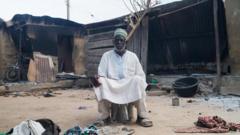
Nigeria has been grappling with a surge in insecurity, characterized by kidnappings, banditry, and insurgency activities. Recently, the nation witnessed a significant breakthrough when security agencies conducted the largest single-day rescue operation, liberating more than 300 abductees from various militant and criminal groups. This operation not only underscores the escalating security challenges but also showcases the commitment and strategic capabilities of Nigeria’s security forces in restoring peace and safety to vulnerable communities.
Nigeria has been facing a multifaceted security crisis marked by insurgencies, banditry, and kidnappings across different regions. The northern parts of the country, in particular, have become hotspots for armed groups exploiting socio-economic vulnerabilities and weak governance.
Kidnapping for ransom has surged dramatically, targeting schoolchildren, travelers, and residents alike. These criminal activities have destabilized local economies, disrupted education, and instilled widespread fear among communities.
The government and security agencies have been under intense pressure to curb these threats, leading to intensified military operations, community policing initiatives, and strategic partnerships aimed at restoring order and safety.
The recent rescue mission, conducted by a joint task force comprising the Nigerian Army, Police, and Civilian Joint Task Force, marked the largest single-day effort to free abductees in the country’s history. Over 300 individuals were liberated from various criminal camps in a coordinated series of raids.
The operation involved meticulous intelligence gathering, tactical planning, and swift execution to minimize casualties and ensure the safe release of the abductees. The rescued individuals included men, women, and children who had been held captive for weeks or months.
This mission not only disrupted the operational capabilities of the kidnappers but also sent a strong message regarding the determination of Nigerian security forces to protect citizens and dismantle criminal networks.
Intelligence played a pivotal role in the success of the rescue operation. Security agencies relied heavily on actionable intelligence sourced from local communities, informants, and technological surveillance to identify the locations of abductees.
Community collaboration was instrumental, as locals provided timely information about movements and hideouts of kidnappers. This partnership fostered trust and enhanced the effectiveness of security responses.
The integration of community insights with military intelligence created a comprehensive approach, enabling precision strikes that minimized collateral damage and maximized the safety of the rescued individuals.
The liberation of over 300 abductees brought immense relief to families who had endured anxiety and uncertainty. Many abductees were reunited with their loved ones after prolonged periods of captivity under harsh conditions.
Psychological support and medical care were promptly provided to the rescued individuals to address trauma and physical injuries sustained during captivity. Rehabilitation programs have also been initiated to facilitate their reintegration into society.
The operation’s success has renewed hope among affected communities, reinforcing the belief that concerted efforts can overcome the menace of kidnappings and restore normalcy.
Following the operation, government officials lauded the security forces for their bravery and professionalism. Statements emphasized the administration’s commitment to enhancing security infrastructure and intelligence capabilities.
Security agencies have pledged to sustain pressure on criminal networks through continuous operations and increased patrols, particularly in vulnerable regions. There is also a focus on capacity building and inter-agency coordination to improve response times.
The government is also exploring legislative and policy reforms aimed at addressing root causes of insecurity, including poverty, unemployment, and weak law enforcement in remote areas.
Despite its success, the operation encountered significant challenges, including difficult terrain, limited access routes, and the risk of ambushes by heavily armed kidnappers. These factors required careful navigation and strategic planning.
Ensuring the safety of abductees during extraction was complex, as kidnappers often use hostages as human shields. The security forces had to balance aggressive tactics with precautionary measures to avoid casualties.
Logistical constraints, such as communication gaps and resource limitations in remote areas, also posed hurdles. Nevertheless, adaptive strategies and teamwork helped overcome these obstacles.
The successful rescue operation marks a pivotal moment in Nigeria’s ongoing battle against insecurity, demonstrating that coordinated efforts can yield tangible results against kidnappers and insurgents.
It highlights the importance of intelligence-led operations and community engagement in combating complex security threats. This approach may serve as a model for future missions targeting criminal networks.
However, the operation also underlines the persistence of security challenges, necessitating sustained commitment, resource allocation, and reforms to address systemic issues fueling insecurity.
Moving forward, Nigeria aims to enhance its counter-kidnapping strategies through improved intelligence sharing, advanced surveillance technologies, and greater regional cooperation among security agencies.
Community empowerment programs are being prioritized to build resilience against criminal infiltration, including education, economic opportunities, and local security initiatives.
Furthermore, addressing socio-economic disparities and governance deficits remains crucial to undermining the root causes of insecurity and fostering long-term peace and stability across affected regions.
Nigeria’s largest single-day rescue operation represents a significant achievement in the fight against the country’s escalating insecurity. By liberating over 300 abductees, security forces have demonstrated their capacity to respond effectively to complex threats. However, this victory also highlights the ongoing challenges posed by kidnappings and banditry, underscoring the necessity for sustained efforts, strategic reforms, and community partnerships. Moving forward, Nigeria’s commitment to enhancing intelligence, strengthening security frameworks, and addressing underlying socio-economic issues will be crucial in securing lasting peace and safety for its citizens.
Originally reported by bbc.co.uk. Adapted for our readers with AI assistance.
Keep reading
News
Recall that Poland’s Minister Sikorski’s core claim is partially supported by the numbers, but the framing “quite quickly” and “without the U.S.” does not…
News
By Engr. Tamunofiniarisa BrownReading Time: 6 Minutes The conflict between Russia and Ukraine is often framed in the media as a simple battle between…
World News
Following a tragic crash on the A66 near Middlesbrough that killed two police officers and five young men, Cleveland Police have arrested three more…
TAMFIS NIG LTD
Electrical and instrumentation engineering, bid preparation and consulting, IT and software.