
News
Beyond the Rhetoric: A Neutral Analysis of the Russia-Ukraine Conflict
By Engr. Tamunofiniarisa BrownReading Time: 6 Minutes The conflict between Russia and Ukraine is often framed in the media as a simple battle between…
TAMFIS NIG LTDRC 8067447CAC ACTIVEFinima, Bonny Island, Rivers State

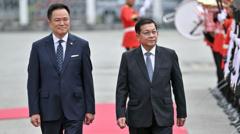
In a notable development within Southeast Asia’s complex geopolitical environment, Myanmar’s military chief Min Aung Hlaing conducted his first official visit to Thailand. This event marks an important milestone amid ongoing regional diplomatic shifts, as countries in the Association of Southeast Asian Nations (ASEAN) recalibrate their approaches toward Myanmar following the 2021 military coup. The visit underscores Thailand’s strategic balancing act between fostering regional stability and addressing international concerns about Myanmar’s political situation. This article delves into the context, significance, and potential outcomes of Min Aung Hlaing’s visit to Thailand, analyzing its impact on bilateral ties and broader regional diplomacy.
Myanmar and Thailand share a long and intricate history marked by cultural ties, trade, and political interactions. Their geographical proximity has fostered extensive cross-border exchanges, but relations have also been influenced by political upheavals in Myanmar, including the military coup of February 2021. Thailand has historically maintained a pragmatic approach toward Myanmar, balancing economic interests with regional security concerns.
Following the coup, Thailand initially adopted a cautious stance, emphasizing dialogue and ASEAN-led mediation efforts. The military takeover in Myanmar complicated bilateral relations, especially as international actors imposed sanctions and criticized the junta’s human rights record. Despite these challenges, Thailand remained one of the few neighbors maintaining open channels with Myanmar’s military leadership.
The evolving political landscape in Myanmar, coupled with Thailand’s own strategic interests, set the stage for Min Aung Hlaing’s official visit. This event reflects Thailand’s intent to engage directly with Myanmar’s ruling authorities and potentially influence the trajectory of Myanmar’s political crisis through diplomatic means.
Min Aung Hlaing’s visit to Thailand marked his first official trip abroad since the military coup, highlighting its diplomatic significance. The timing of the visit coincides with shifting regional dynamics, including ASEAN’s efforts to re-engage with Myanmar and address the ongoing conflict and humanitarian challenges within the country.
The visit followed months of dialogue between ASEAN member states aimed at promoting peace and stability in Myanmar. Thailand, as a key ASEAN member sharing a long border with Myanmar, plays a pivotal role in these discussions. Min Aung Hlaing’s presence in Bangkok symbolizes a potential thaw in relations and a willingness to participate in regional diplomatic frameworks.
Moreover, the visit occurred amid increasing international scrutiny and sanctions against Myanmar’s military regime. Thailand’s decision to host Min Aung Hlaing reflects a nuanced diplomatic posture, balancing international pressure with regional pragmatism and concerns over cross-border security and refugee flows.
During his visit, Min Aung Hlaing engaged in high-level talks with Thai officials, focusing on enhancing bilateral cooperation and addressing regional security issues. Discussions reportedly included border management, counterterrorism efforts, and economic collaboration, reflecting shared interests in maintaining stability along their extensive border.
Thailand sought to use this opportunity to encourage Myanmar’s military leadership to commit to ASEAN’s Five-Point Consensus, which calls for an immediate cessation of violence, dialogue among all parties, humanitarian assistance, and the appointment of a special ASEAN envoy. These points remain central to ASEAN’s strategy to resolve the Myanmar crisis peacefully.
Economic ties also featured prominently in the talks, as both countries are keen to sustain trade and investment despite political uncertainties. Thailand’s role as a regional economic hub positions it as a critical partner for Myanmar’s recovery and future development, making the visit a platform to explore avenues for cooperation.
Min Aung Hlaing’s visit to Thailand must be understood within the broader context of ASEAN’s evolving approach to Myanmar. Initially criticized for its limited response to the coup, ASEAN has gradually intensified efforts to engage Myanmar’s military leaders and facilitate dialogue among conflicting parties.
Thailand, as ASEAN’s second-largest economy and a key regional player, has been instrumental in shaping the bloc’s policy toward Myanmar. Its hosting of Min Aung Hlaing signals a strategic attempt to assert leadership in managing the crisis while preserving ASEAN’s principle of non-interference and regional solidarity.
The visit also reflects the shifting diplomatic landscape in Southeast Asia, where regional powers are increasingly seeking to address security challenges and political instability through dialogue and cooperation rather than external intervention. This approach aims to maintain regional cohesion amid growing global geopolitical competition.
Min Aung Hlaing’s engagement with Thailand could have significant implications for Myanmar’s internal political dynamics. The visit may embolden the military regime by signaling regional acceptance and support, potentially influencing its approach to negotiations and governance.
Conversely, increased diplomatic engagement might open channels for dialogue with opposition groups and civil society actors, fostering conditions conducive to conflict resolution. Thailand’s proximity and influence could facilitate mediation efforts, although challenges remain given the entrenched positions of Myanmar’s political factions.
The visit also raises questions about the international community’s role, as regional diplomacy may diverge from Western-led approaches emphasizing sanctions and isolation. Myanmar’s military might leverage regional support to resist external pressure, complicating efforts to restore democratic governance.
Economic cooperation between Myanmar and Thailand remains a critical dimension of their bilateral relationship. Despite political uncertainties, trade and investment flows continue, particularly in sectors such as energy, agriculture, and manufacturing. Min Aung Hlaing’s visit aimed to reaffirm and possibly expand these economic ties.
Security concerns along the Myanmar-Thailand border are paramount, especially regarding insurgent activities, refugee movements, and illicit trade. Both governments have a vested interest in enhancing border security and intelligence sharing to mitigate these challenges and promote stability in the region.
Thailand’s engagement with Myanmar’s military leadership also reflects concerns about spillover effects from Myanmar’s internal conflicts. By fostering cooperation, Thailand hopes to manage potential risks and maintain peace in border areas, which are home to diverse ethnic communities affected by ongoing violence.
Min Aung Hlaing’s visit to Thailand elicited varied responses internationally. Western governments and human rights organizations expressed skepticism, emphasizing that engagement should not translate into legitimizing the military regime’s actions or overlooking human rights abuses.
However, some regional actors view the visit as a pragmatic step toward reintegrating Myanmar into ASEAN and fostering dialogue. The challenge lies in balancing constructive engagement with accountability, ensuring that diplomatic efforts contribute to meaningful progress on peace and democracy.
Looking ahead, the visit may set a precedent for increased regional diplomacy involving Myanmar’s military leadership. Continued dialogue and cooperation with neighboring countries like Thailand could influence the trajectory of Myanmar’s crisis, but sustained international pressure and inclusive political solutions remain essential for lasting stability.
Min Aung Hlaing’s first official visit to Thailand represents a pivotal moment in Southeast Asia’s diplomatic landscape, reflecting both the challenges and opportunities inherent in engaging Myanmar’s military regime. Thailand’s role as a regional interlocutor underscores the importance of pragmatic diplomacy amid complex political realities.
While the visit may facilitate dialogue and cooperation, it also highlights the delicate balance between regional interests and international norms concerning governance and human rights. The path forward requires careful navigation to ensure that diplomatic engagement supports peace, stability, and the restoration of democratic processes in Myanmar.
Ultimately, the evolving relationship between Myanmar and Thailand will continue to shape broader regional dynamics, with implications for ASEAN’s cohesion and Southeast Asia’s geopolitical future. The international community will be watching closely as these diplomatic efforts unfold.
Min Aung Hlaing’s inaugural official visit to Thailand marks a critical juncture in Southeast Asia’s diplomatic efforts to address the ongoing crisis in Myanmar. Thailand’s engagement with Myanmar’s military leadership reflects a pragmatic approach aimed at fostering regional stability, economic cooperation, and conflict mitigation. However, this diplomacy exists within a complex framework of international scrutiny and human rights concerns. Moving forward, the success of such diplomatic initiatives will depend on their ability to promote inclusive dialogue, uphold democratic principles, and contribute to sustainable peace in Myanmar and the broader region.
Originally reported by bbc.co.uk. Adapted for our readers with AI assistance.
Keep reading
News
By Engr. Tamunofiniarisa BrownReading Time: 6 Minutes The conflict between Russia and Ukraine is often framed in the media as a simple battle between…
World News
Following a tragic crash on the A66 near Middlesbrough that killed two police officers and five young men, Cleveland Police have arrested three more…
World News
When floodwaters surged toward a school in Nepal, Principal Rajendra Dawadi had mere minutes to act. His rapid response and evacuation plan ensured the…
TAMFIS NIG LTD
Electrical and instrumentation engineering, bid preparation and consulting, IT and software.