News
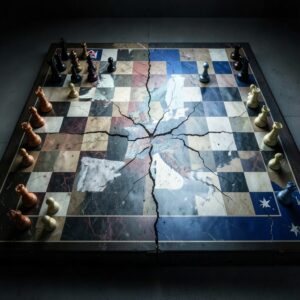
RUSSIA versus NATO and BRICS vs. NATO Military SWOT
Recall that Poland’s Minister Sikorski’s core claim is partially supported by the numbers, but the framing “quite quickly” and “without the U.S.” does not…
TAMFIS NIG LTDRC 8067447CAC ACTIVEFinima, Bonny Island, Rivers State


In a remote area south-west of Sydney, a seemingly grim discovery prompted a swift police response and a brief murder investigation. What appeared to be a human body inside a suitcase was later identified as a highly realistic doll, complete with fake bruises, hair, and a nose piercing. This unusual case underscores the complexities involved in crime scene assessments and the critical role of forensic science in confirming facts before drawing conclusions.
On a quiet Sunday afternoon near the small village of Oallen, approximately 230 kilometers south-west of Sydney, two men on a weekend drive made a startling find: a suitcase left by the roadside containing what they believed to be a human body. The men, understandably alarmed, immediately contacted local authorities, triggering a rapid police response.
Police promptly dispatched forensic teams and investigators to the scene to examine the suitcase and its contents. Given the apparent evidence, authorities launched a murder investigation, which quickly attracted significant public and media attention due to the disturbing nature of the discovery.
Superintendent Linda Bradbury of the Hume Police District described the initial finding as "quite a shocking discovery" for the men. She praised their responsible decision to report the suspicious item rather than dismissing it, emphasizing the importance of public vigilance in such situations.
Despite initial appearances, forensic testing soon revealed that the contents of the suitcase were not human remains. Instead, the item was identified as a lifelike doll designed to closely mimic the appearance of a human body.
The doll was dressed in clothing and featured realistic details such as hair, a nose piercing, and markings resembling bruises and grazes. These features contributed significantly to the initial confusion, making it difficult to distinguish the doll from an actual body at first glance.
Superintendent Bradbury acknowledged the extraordinary realism of the doll, noting, "The contents in the suitcase were mistaken for a human originally, so they are very realistic in terms of looking like human remains." She emphasized that all investigative protocols had been rigorously followed to preserve the integrity of the scene and ensure a thorough examination.
This incident highlights a growing challenge for law enforcement agencies: differentiating between genuine human remains and increasingly realistic replicas. Advances in manufacturing and design have made dolls and mannequins more lifelike, sometimes leading to false alarms and misdirected investigations.
Such situations require careful, methodical investigation to avoid misinterpretation and unnecessary public alarm. Forensic teams rely on a combination of visual inspection, scientific testing, and expert analysis to confirm the nature of suspicious items. This process can be time-consuming but is essential to maintain public trust and allocate resources effectively.
The Oallen case demonstrates the importance of maintaining a cautious but thorough approach. While the initial reaction was to treat the discovery as a potential crime scene, the subsequent forensic work ensured that resources were appropriately allocated and the public accurately informed. This balance is crucial in managing both the investigation and community response.
The discovery and ensuing investigation understandably caused distress for the individuals involved and the local community. Superintendent Bradbury noted the emotional impact on the two men who found the suitcase and assured that police would keep in contact to update them on the findings and provide reassurance.
Clear communication from law enforcement played a crucial role in managing public concern. After confirming the item was not human remains, police promptly closed the investigation and provided transparent explanations to the media and community, helping to alleviate fears and prevent misinformation.
This case serves as a reminder of the importance of public vigilance and cooperation with authorities. The men’s decision to report the suspicious item was instrumental in ensuring a timely and professional response, highlighting how community involvement is vital in maintaining public safety.
The Oallen incident offers valuable lessons for both law enforcement and the public. For police, it underscores the need for meticulous forensic procedures and the readiness to adapt investigations as new information emerges, especially when dealing with increasingly realistic replicas.
For the public, it highlights the importance of reporting suspicious findings without delay, even if the situation ultimately turns out to be a false alarm. Prompt reporting allows authorities to respond appropriately and maintain community safety, preventing potential threats from going unnoticed.
Moreover, this event may prompt discussions about the regulation or labeling of lifelike dolls and replicas to prevent similar misunderstandings in the future. As these items become more prevalent, establishing guidelines could help reduce unnecessary investigations and public distress.
In addition, the case illustrates the value of maintaining a balanced approach that respects both the urgency of potential crime scenes and the need to avoid premature conclusions. This balance helps preserve investigative integrity while minimizing disruption to communities.
The unusual case of a lifelike doll mistaken for a human body near Oallen, Australia, illustrates the complexities of modern forensic investigations and the challenges posed by realistic replicas. While the initial discovery understandably raised alarm, the careful work of forensic teams ensured a swift and accurate resolution. This incident reinforces the importance of public vigilance, timely reporting, and transparent communication by authorities. As lifelike replicas become more common, law enforcement agencies may need to develop new strategies to differentiate between genuine threats and false alarms, ensuring resources are used effectively and communities remain safe.
Originally reported by bbc.co.uk. Adapted for our readers with AI assistance.
Keep reading
News
Recall that Poland’s Minister Sikorski’s core claim is partially supported by the numbers, but the framing “quite quickly” and “without the U.S.” does not…
News
By Engr. Tamunofiniarisa BrownReading Time: 6 Minutes The conflict between Russia and Ukraine is often framed in the media as a simple battle between…
World News
Following a tragic crash on the A66 near Middlesbrough that killed two police officers and five young men, Cleveland Police have arrested three more…
TAMFIS NIG LTD
Electrical and instrumentation engineering, bid preparation and consulting, IT and software.