
News
Beyond the Rhetoric: A Neutral Analysis of the Russia-Ukraine Conflict
By Engr. Tamunofiniarisa BrownReading Time: 6 Minutes The conflict between Russia and Ukraine is often framed in the media as a simple battle between…
TAMFIS NIG LTDRC 8067447CAC ACTIVEFinima, Bonny Island, Rivers State

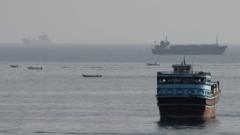
The Strait of Hormuz, a narrow but vital waterway through which roughly one-fifth of the world’s oil and liquefied natural gas transit, has become a flashpoint in the ongoing conflict between Iran and the United States. Recently, Iran announced it has reached an agreement with Oman on a proposed shipping route through the strait, signaling a potential easing of tensions in the region. However, the deal remains in its final stages, and significant security and political challenges continue to cloud the prospects for safe navigation and stable energy supplies.
The Strait of Hormuz is one of the world’s most critical maritime chokepoints, linking the Persian Gulf with the Gulf of Oman and the Arabian Sea. Approximately 20% of global oil and liquefied natural gas shipments pass through this narrow passage, making it indispensable for energy markets worldwide.
Since February 2026, following coordinated attacks by the United States and Israel on Iranian targets, Iran has largely restricted passage through the strait. This blockade has severely disrupted global energy flows, contributing to volatile oil prices and heightened geopolitical tensions.
Iran’s Foreign Ministry spokesman Esmaeil Baqaei confirmed that Tehran and Muscat have agreed on the geographical coordinates of a new shipping route through the Strait of Hormuz. While specific details of the route have not been publicly disclosed, the agreement is described as being in its final stages.
Iran’s Deputy Foreign Minister Kazem Gharibabadi indicated that the new route would be temporary, potentially remaining open for two to four months. This suggests a short-term solution aimed at alleviating immediate shipping disruptions rather than a permanent resolution.
The deal reportedly includes provisions that would grant Iran control over ships entering the Gulf via the strait. This element has raised concerns among international observers about Iran’s influence over maritime traffic in this critical corridor.
Despite the progress with Oman, Iranian officials emphasize that security risks persist, primarily due to the ongoing US naval blockade of Iranian ports. Iran’s government maintains that the blockade and other aggressive actions by the United States continue to threaten safe navigation in the region.
The US and Oman have not publicly commented on the proposed shipping route, and Washington continues to oppose any fees imposed by Iran on vessels passing through the strait. Iran has sought fees between 5% and 7% of cargo value, while Oman has discussed a lower rate of around 3%. The US insists that no fees should be charged, underscoring one of the key points of contention.
Since the conflict began, Iran has demanded that all vessels obtain clearance before transiting the strait and has attacked ships that ignored this order. This has further complicated maritime operations and increased the risk of confrontation.
In June 2026, Iran and the United States signed a Memorandum of Understanding aimed at halting hostilities, reopening the Strait of Hormuz, and negotiating an end to the war within 60 days. However, this agreement quickly unraveled, with renewed attacks and diplomatic breakdowns occurring shortly afterward.
US President Donald Trump has publicly warned Iran that it would face severe consequences if the strait did not reopen promptly. Meanwhile, senior US officials have indicated that talks are ongoing and that shipments might resume soon, though Iran denies negotiating directly with the US.
The broader conflict involves multiple actors, including Iran-backed Houthi forces in Yemen, who have imposed a blockade on Saudi Arabian ports in the Red Sea since July 20, 2026. These overlapping blockades and military actions have intensified regional instability.
The conflict has also affected Iran’s internal political landscape. The country’s Supreme Leader, Ayatollah Ali Khamenei, was killed in the initial February strikes, and his son Mojtaba Khamenei succeeded him. Mojtaba has maintained a low public profile since the attacks, fueling speculation about his influence and relationships with other officials.
Iran’s President Masoud Pezeshkian has described communication with the new Supreme Leader as challenging but emphasized his importance as a source of strength for the country. Pezeshkian also highlighted that misinformation about Mojtaba Khamenei’s role is being spread by adversaries.
These leadership dynamics add another layer of complexity to Iran’s approach to the Strait of Hormuz and its broader foreign policy during the ongoing conflict.
The disruption of shipping through the Strait of Hormuz has caused significant fluctuations in global energy prices. On August 6, 2026, Brent crude oil prices edged down by 0.3% to $79.24 per barrel amid cautious optimism about the potential reopening of the strait.
Energy markets remain highly sensitive to developments in the region, with any escalation or resolution directly impacting supply chains and pricing. The temporary nature of the proposed Iran-Oman route means that uncertainty will likely persist in the near term.
The prospect of fees imposed by Iran on vessels passing through the strait also raises concerns about increased shipping costs, which could be passed on to consumers worldwide.
The nearing agreement between Iran and Oman on a shipping route through the Strait of Hormuz represents a cautious step toward easing one of the most critical bottlenecks in global energy supply. However, the deal’s temporary nature, coupled with persistent security threats and unresolved political disputes, means that the strait’s future remains uncertain. Continued diplomatic engagement, alongside efforts to reduce military tensions and address economic concerns, will be essential to ensuring safe and stable navigation through this strategic waterway. For the global community, the situation underscores the delicate balance between regional security and international energy security in a highly volatile part of the world.
Originally reported by bbc.co.uk. Adapted for our readers with AI assistance.
Keep reading
News
By Engr. Tamunofiniarisa BrownReading Time: 6 Minutes The conflict between Russia and Ukraine is often framed in the media as a simple battle between…
World News
Following a tragic crash on the A66 near Middlesbrough that killed two police officers and five young men, Cleveland Police have arrested three more…
World News
When floodwaters surged toward a school in Nepal, Principal Rajendra Dawadi had mere minutes to act. His rapid response and evacuation plan ensured the…
TAMFIS NIG LTD
Electrical and instrumentation engineering, bid preparation and consulting, IT and software.