Business News
NDLEA Intensifies Operations Against Narcotic Trade and Illegal Trafficking
The National Drug Law Enforcement Agency has arrested multiple suspects and seized significant drug consignments in recent operations across Nigeria.
TAMFIS NIG LTDRC 8067447CAC ACTIVEFinima, Bonny Island, Rivers State

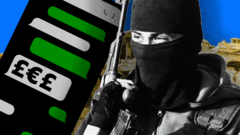
A recent investigation by European broadcasters has uncovered a vast underground network using a WhatsApp group chat to coordinate the transfer of hundreds of millions of euros in cash across borders. This network, operating under the guise of informal money brokers, has been linked to funding organized crime, extremism, and human trafficking. The discovery sheds light on how traditional financial systems are circumvented through the ancient hawala transfer method, raising significant concerns about money laundering, terror financing, and the challenges faced by law enforcement agencies across Europe.
The investigation focused on a WhatsApp group chat named "Traders of Greater Europe," which included 532 members. This group was used to arrange large cash transfers, often exceeding €5,000, across various cities in Europe, including major British cities like Birmingham and London. Over 82,000 messages exchanged between February and December 2022 revealed the scale and sophistication of the operation.
Members communicated primarily in Arabic to coordinate payments using the hawala system, an informal money transfer method relying on trusted brokers, known as hawaladars. This system enables funds to move globally without physical cash transport or conventional banking channels, leaving no formal paper trail or electronic records.
Hawala is an age-old money transfer system widely used for legitimate purposes, such as migrant workers sending remittances to families in countries with limited banking infrastructure. It operates on mutual trust between hawaladars in different locations, who settle their accounts later without immediate cash movement.
However, the anonymity and lack of formal oversight make hawala attractive to criminals seeking to evade detection. Unlike the Swift banking system, which monitors and flags suspicious transactions, hawala leaves no electronic footprint, complicating efforts to trace illicit funds. This dual nature presents a significant challenge for regulators and law enforcement agencies trying to balance legitimate use with preventing abuse.
The system involves an agreement between two hawaladars, where one receives cash and the other pays out the equivalent amount minus commission to the recipient. This arrangement allows money to move swiftly across borders without physical transport of notes, relying solely on trust and later settlement between brokers.
The WhatsApp group was initially uncovered during a Belgian investigation into terror financing. Belgian investigating magistrate Vincent Guerra described the volume of transactions as "staggering," noting the network extended globally. Some funds were traced to Islamic State militants in Syria, intended to assist militants’ families, including helping wives escape detention camps.
Further evidence from across Europe linked hawala networks to a range of criminal enterprises, including drug trafficking, prostitution, and people smuggling. A former money launderer, identified as Frank, disclosed involvement in transfers worth several hundred million euros, emphasizing the system’s extensive use in financing illegal activities.
In Austria, police dismantled hawala operations connected to human trafficking. One notable case involved a hawala office run from a kebab restaurant in Vienna, where two Syrian brothers were convicted of human trafficking and torture. Victims were coerced into paying large sums through hawala to avoid further abuse, illustrating the brutal enforcement mechanisms used by these networks.
Authorities also dismantled a people-smuggling ring financed through hawala that transported about 100,000 people into Europe over 18 months. This highlights the scale and human cost of hawala-facilitated criminal enterprises.
Hawala is illegal in many European countries, including most of the EU, but remains legal in the UK if brokers are registered with HM Revenue and Customs. This patchwork of regulations complicates cross-border enforcement efforts and allows hawaladars to exploit legal loopholes.
The discovery of the WhatsApp group chat on the phone of Abu Adam, a key figure in the Brussels network convicted in 2024, provided law enforcement with unprecedented insight into these underground bankers. His phone contained thousands of photos of €5 notes and identity cards used as unique transaction identifiers, suggesting at least 12,000 transactions processed.
Despite these breakthroughs, authorities face significant hurdles in dismantling such networks due to their decentralized nature, reliance on trust-based systems, and use of encrypted communication platforms. Europol and national police agencies continue to prioritize hawala-related investigations given its prominence as a money laundering channel.
Belgian investigating magistrate Vincent Guerra described the hawala operators as "bankers with no government oversight," highlighting the professionalism and scale of these illicit financial networks.
Beyond financial crimes, the hawala system has been implicated in facilitating human suffering. Austrian officials revealed that people smuggling gangs use hawala to collect ransom payments from families of migrants subjected to torture and abuse.
Gerald Tatzgern, head of human trafficking investigations at Austria’s Criminal Intelligence Service, described how videos of torture are sent to families to extort further payments. These payments, demanded through hawala brokers, fund continued operations and perpetuate cycles of violence and exploitation.
Such revelations underscore the complex interplay between financial crime and human rights abuses, highlighting the urgent need for coordinated international responses to dismantle these networks and protect vulnerable victims.
Police commander and Europol liaison officer Quentin Mugg emphasized that hawala is "the primary money-laundering channel for organised crime," used indiscriminately for funds ranging from migrant smuggling to legitimate remittances, demonstrating the system's wide-reaching impact.
The uncovering of the "Traders of Greater Europe" WhatsApp group chat has exposed a vast and sophisticated underground financial network operating beyond the reach of conventional banking oversight. While hawala remains a vital tool for many legitimate users, its exploitation by criminal and extremist groups poses serious threats to security and human rights across Europe. Addressing these challenges requires enhanced international cooperation, stronger regulatory frameworks, and innovative investigative techniques to disrupt illicit financial flows without undermining legitimate remittance services. As law enforcement agencies continue to unravel these complex networks, public awareness and policy responses must evolve to balance the benefits and risks inherent in informal money transfer systems.
Originally reported by bbc.co.uk. Adapted for our readers with AI assistance.
Keep reading
Business News
The National Drug Law Enforcement Agency has arrested multiple suspects and seized significant drug consignments in recent operations across Nigeria.
Business
Nigerian shoppers are increasingly turning to AI assistants like ChatGPT, Claude and Gemini for product ...
Business
The global developer workforce has undergone a transformative expansion over the past five years, fundam...
TAMFIS NIG LTD
Electrical and instrumentation engineering, bid preparation and consulting, IT and software.