
The ongoing conflict between Russia and Ukraine has witnessed numerous harrowing developments, but recent footage shared by Ukrainian President Volodymyr Zelensky has cast a stark light on a particularly chilling tactic. A drone, remotely operated by Russian forces, was captured pursuing and attacking a civilian street vendor in southern Ukraine’s Kherson region. This incident, described as a ‘human safari,’ underscores a disturbing pattern of using drones to deliberately target and intimidate civilians in frontline areas. This article examines the details of the attack, its broader implications, and the international response to these emerging war crimes.
The Drone Attack: A Civilian Targeted in Kherson
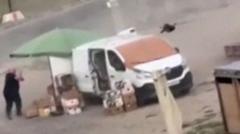
The video, widely circulated on social media and verified by BBC, shows a drone relentlessly chasing a man identified as Yuriy, a 52-year-old street vegetable vendor, in a marketplace near a roundabout in the Tavriiskyi district of northern Kherson. As Yuriy attempts to avoid the drone, which hovers menacingly above him, it pursues him around a white van before detonating near him. Despite sustaining multiple shrapnel wounds, concussion, and trauma, Yuriy survived the attack.
Yuriy recounted his experience from a hospital bed, describing how he and his wife had just begun setting up their vegetable stand when they heard the drone’s distinctive buzzing. His wife fled, but the drone focused on him. In a desperate attempt to communicate, Yuriy held up heads of garlic to the drone’s camera, signaling his peaceful intent and the civilian nature of his activity. The drone operator, however, continued the pursuit, even maneuvering under an umbrella as Yuriy ran.
The ‘Human Safari’: A Deliberate Strategy of Terror
The term ‘human safari’ refers to the use of remotely operated drones to hunt down civilians, a tactic reportedly employed by Russian forces in the Kherson region. Ukrainian officials, including President Zelensky and Foreign Minister Andrii Sybiha, have condemned these attacks as deliberate war crimes designed to terrorize and intimidate frontline populations.
Sybiha described the drone operations as a systematic and sadistic strategy, emphasizing that the operators knowingly target civilians. The attacks are not isolated incidents but part of a broader campaign to sow fear and disrupt daily life in contested areas. Videos of these attacks are often posted online, amplifying the psychological impact by allowing widespread public viewing of civilians’ final moments.
The United Nations has also weighed in, with a 2025 report highlighting recurrent killings and injuries of civilians by Russian drone strikes in Kherson. The UN condemned the posting of such videos as ‘outrages upon personal dignity,’ reinforcing the classification of these acts as war crimes.
Verifying the Evidence: Location and Context
BBC Verify geolocated the drone attack video to a market space beside a roundabout in the Tavriiskyi district of northern Kherson. Although the source of the footage remains unclear, the earliest public sharing was by a pro-Ukrainian Instagram account.
Kherson’s proximity to the frontline—just a few miles away—makes it a frequent site of conflict and civilian targeting. The area has seen repeated drone attacks, with civilians often caught in the crossfire. The use of drones allows Russian forces to conduct remote, precise strikes while minimizing their own risk, but at the cost of civilian safety and international law.
The public dissemination of these videos serves multiple purposes: it documents the attacks for evidence, exposes the brutality of the conflict, and galvanizes international attention and condemnation.
International Response and Legal Implications
The use of drones to deliberately target civilians violates international humanitarian law, which protects non-combatants during armed conflicts. The videos and testimonies emerging from Kherson have prompted calls from Ukrainian officials and human rights organizations for international investigations and accountability.
Ukraine’s government has demanded global condemnation of these ‘barbaric war crimes,’ urging the international community to recognize the systematic nature of the attacks and to hold perpetrators responsible.
The United Nations’ findings reinforce the need for rigorous monitoring and potential prosecution of those responsible for drone attacks on civilians. However, challenges remain in gathering evidence, ensuring impartial investigations, and enforcing international law amid ongoing hostilities.
Moreover, the psychological impact of these ‘human safari’ attacks extends beyond physical harm, as they aim to break the spirit of civilian populations and disrupt the social fabric of frontline communities.
The Human Cost: Stories from the Frontline
Yuriy’s survival and testimony provide a human face to the abstract statistics of war. His account reveals not only the physical dangers civilians face but also the psychological terror inflicted by drone attacks.
The fact that the drone operator could see the vegetables and the peaceful nature of Yuriy’s activity yet chose to attack highlights the cruelty of these tactics. Civilians in Kherson and other frontline areas live under constant threat, with daily activities such as selling produce becoming life-threatening.
These attacks disrupt livelihoods, instill fear, and contribute to the displacement and trauma of communities caught in conflict zones. The ‘human safari’ is not just a military tactic but a form of psychological warfare targeting the resilience of civilians.
What this means
The harrowing footage of a drone hunting down a civilian in Kherson starkly illustrates the brutal realities of modern warfare and the evolving tactics used to terrorize populations. The ‘human safari’ attacks represent not only a violation of international law but also a profound assault on human dignity and safety. As the conflict in Ukraine continues, the international community faces the urgent task of documenting these crimes, supporting victims, and ensuring that those responsible are held accountable. Only through sustained attention and action can the cycle of violence and intimidation be challenged, offering hope for the civilians caught in the crossfire.
Source: Video shows Russian drone chasing Ukrainian street vendor in 'human safari' attack via www.bbc.co.uk.
This article was curated with AI assistance and reviewed according to Tamfis editorial settings.