
News
RUSSIA versus NATO and BRICS vs. NATO Military SWOT
Recall that Poland’s Minister Sikorski’s core claim is partially supported by the numbers, but the framing “quite quickly” and “without the U.S.” does not…
TAMFIS NIG LTDRC 8067447CAC ACTIVEFinima, Bonny Island, Rivers State

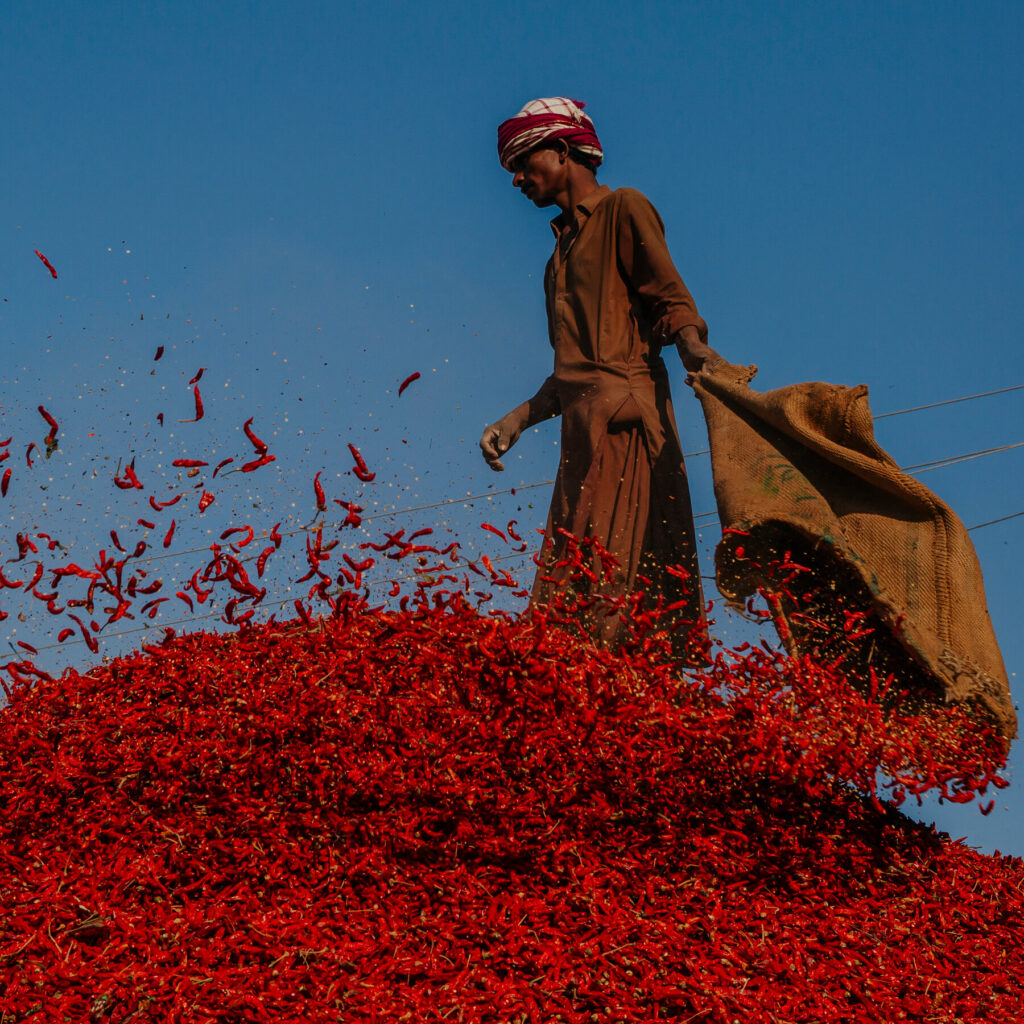
In the heart of Pakistan, a region renowned for its vibrant red chile peppers is confronting a growing threat: extreme heat driven by climate change. These peppers, integral to local culture and economy, are cultivated using time-honored methods that now struggle to withstand soaring temperatures and escalating production costs. As farmers grapple with these challenges, their efforts to adapt offer insight into the resilience and vulnerabilities of traditional agriculture under environmental stress.
Red chile peppers hold a special place in Pakistan’s agricultural landscape, particularly in regions known as the red chile capitals. These areas have long relied on the cultivation of red chiles not only as a source of income but also as a cultural staple, influencing local cuisine and traditions.
The farming practices associated with red chile cultivation have been passed down through generations, often involving manual labor and reliance on natural climate patterns. This traditional approach has helped sustain the crop’s quality and yield over decades, supporting local economies and communities.
Beyond their economic value, red chiles are deeply embedded in the cultural identity of these regions. They feature prominently in traditional dishes and festivals, symbolizing both heritage and community pride. The cultivation process itself fosters social cohesion, as families and neighbors often collaborate during planting and harvest seasons.
In recent years, the region has experienced a noticeable increase in extreme heat events, a direct consequence of global climate change. These rising temperatures have disrupted the delicate balance required for successful red chile cultivation.
Excessive heat stresses the plants, reducing their productivity and affecting the quality of the peppers. The traditional growing season is being altered, with heat waves causing premature drying or scorching of crops. This not only diminishes yields but also threatens the livelihoods of farmers who depend heavily on this single crop.
Moreover, unpredictable weather patterns, including irregular rainfall and prolonged droughts, compound the difficulties faced by farmers. Water scarcity becomes a critical issue, making irrigation more challenging and costly. The combination of heat stress and water shortages creates a hostile environment for crops that traditionally thrived under more stable conditions.
These climatic shifts also increase the vulnerability of red chile plants to pests and diseases, which can further reduce yields. The lack of predictability in weather patterns complicates planning and resource allocation for farmers, leaving them exposed to greater risks.
Beyond environmental challenges, farmers are contending with soaring costs related to inputs like fertilizers, pesticides, and labor. These economic pressures strain small-scale farmers who operate on thin margins.
The combination of climate-induced crop stress and increased production expenses raises questions about the long-term sustainability of traditional red chile farming. Many farmers find themselves at a crossroads, needing to balance heritage practices with the necessity of innovation to survive economically.
Additionally, market fluctuations and competition from other regions or countries add another layer of complexity, potentially undermining the profitability of red chile farming. Farmers face uncertainty not only from environmental factors but also from volatile market demands and pricing, which can impact their income stability.
The rising cost of agricultural inputs is partly driven by global economic trends and supply chain disruptions, making it harder for farmers to maintain their operations without incurring significant debt or reducing their scale of production.
In response to these challenges, Pakistani farmers are experimenting with new cultivation techniques aimed at mitigating the effects of extreme heat and reducing costs. Some are adopting heat-resistant chile varieties that can better tolerate higher temperatures without significant loss of quality.
Improved irrigation methods, such as drip irrigation, are being introduced to conserve water and enhance efficiency. These technologies help address water scarcity while maintaining adequate moisture levels for the crops.
Farmers are also exploring the use of shade nets and mulching to protect plants from direct sunlight and retain soil moisture. These practices, though relatively new to the region, show promise in preserving crop health under harsher climatic conditions.
Collaborative efforts involving agricultural experts, local governments, and farmer cooperatives are crucial in disseminating knowledge and resources to support adaptation. Training programs and access to affordable inputs are part of the broader strategy to sustain red chile farming.
Some farmers are also diversifying their crops to reduce dependency on red chiles alone, thereby spreading risk and enhancing resilience against climate-related shocks. This diversification is a strategic shift from traditional monoculture practices.
The integration of traditional knowledge with modern agricultural science is proving vital. Farmers are blending age-old wisdom about planting cycles and soil management with innovative tools and techniques to optimize productivity under changing conditions.
The plight of red chile farmers is emblematic of the wider challenges facing Pakistani agriculture amid climate change. Many crops and farming systems across the country are vulnerable to shifting weather patterns, water shortages, and economic instability.
Addressing these issues requires integrated approaches that combine climate resilience, economic support, and sustainable farming practices. Investments in research, infrastructure, and policy reforms will be necessary to safeguard food security and rural livelihoods.
Pakistan’s experience highlights the urgent need for global and local action to mitigate climate change impacts and support agricultural communities adapting to new realities.
The challenges faced by red chile farmers underscore the importance of developing climate-smart agriculture that can withstand environmental stresses while maintaining productivity. This includes adopting technologies that improve water use efficiency, pest management, and soil health.
Furthermore, strengthening farmer networks and cooperatives can enhance access to markets, credit, and technical assistance, enabling smallholders to better navigate economic uncertainties.
Ultimately, the sustainability of Pakistan’s agriculture depends on coordinated efforts among policymakers, scientists, and farmers to create resilient food systems capable of adapting to a warming climate.
The red chile capital of Pakistan stands at a critical juncture. The intersection of climate change and economic pressures challenges the viability of traditional farming methods that have sustained generations. While adaptation efforts offer hope, the path forward demands coordinated support from governments, experts, and communities to ensure that red chile cultivation—and the livelihoods it supports—can endure in a warming world. This case serves as a powerful reminder of the broader agricultural transformations necessary to confront the realities of climate change and secure food systems for the future.
Originally reported by nytimes.com. Adapted for our readers with AI assistance.
Keep reading
News
Recall that Poland’s Minister Sikorski’s core claim is partially supported by the numbers, but the framing “quite quickly” and “without the U.S.” does not…
News
By Engr. Tamunofiniarisa BrownReading Time: 6 Minutes The conflict between Russia and Ukraine is often framed in the media as a simple battle between…
World News
Following a tragic crash on the A66 near Middlesbrough that killed two police officers and five young men, Cleveland Police have arrested three more…
TAMFIS NIG LTD
Electrical and instrumentation engineering, bid preparation and consulting, IT and software.