
News
RUSSIA versus NATO and BRICS vs. NATO Military SWOT
Recall that Poland’s Minister Sikorski’s core claim is partially supported by the numbers, but the framing “quite quickly” and “without the U.S.” does not…
TAMFIS NIG LTDRC 8067447CAC ACTIVEFinima, Bonny Island, Rivers State

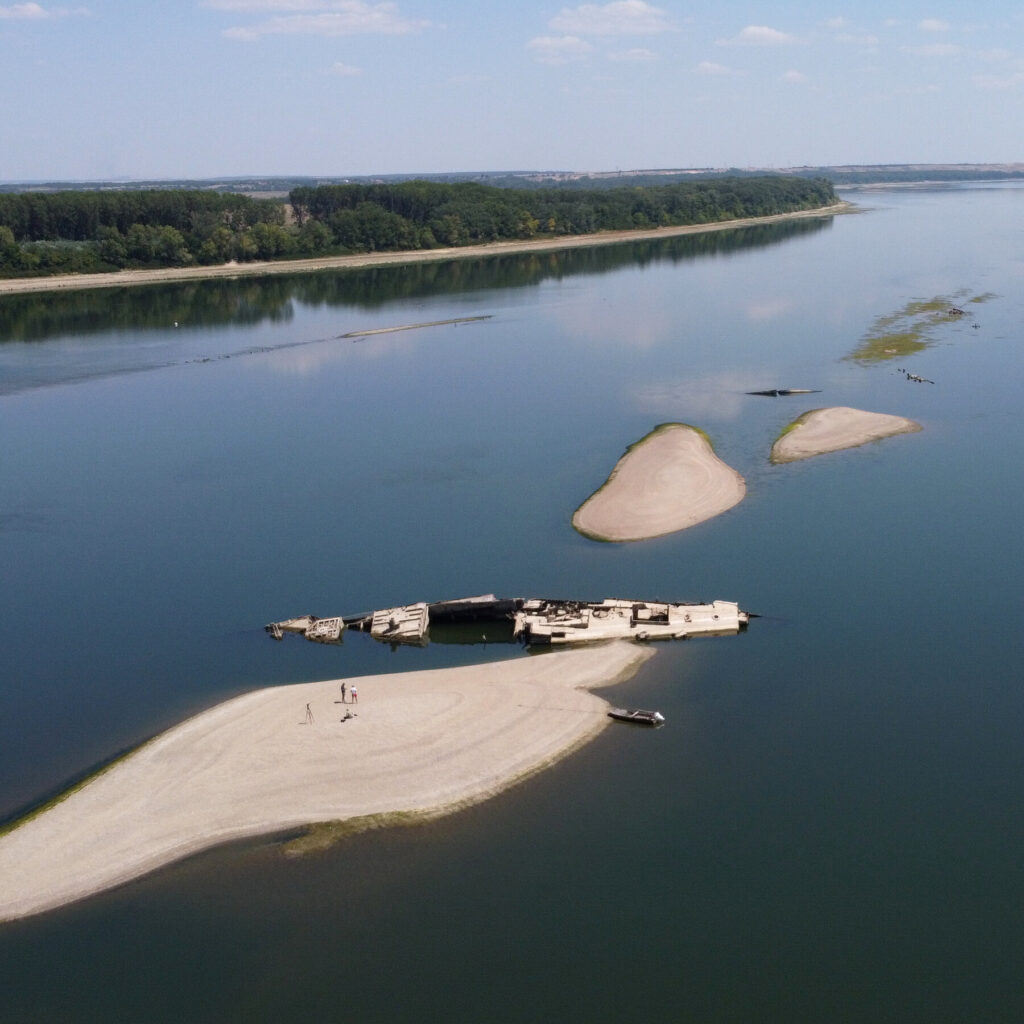
The Danube River, Europe’s second-longest waterway, is currently experiencing unprecedented low water levels due to a severe heatwave affecting the continent. This environmental phenomenon has exposed several sunken German vessels from World War II that have long rested beneath the river’s surface. While these relics offer a tangible connection to history, their sudden visibility is causing practical difficulties for river navigation and raising urgent questions about the impacts of climate change on Europe’s waterways and the communities that depend on them.
Europe has been grappling with a persistent and intense heatwave, leading to soaring temperatures and prolonged dry spells across the continent. The Danube River, which flows through ten countries including Germany, Austria, Hungary, and Serbia, has seen its water levels drop to historic lows. This dramatic reduction in water volume is primarily attributed to a combination of decreased rainfall, increased evaporation rates due to higher temperatures, and altered precipitation patterns that have disrupted the river’s natural flow.
The Danube’s diminished water levels represent more than just an environmental anomaly; they pose significant logistical challenges. As a critical artery for commerce and transportation across Central and Eastern Europe, the river facilitates the movement of goods such as grain, coal, and raw materials. Lower water levels restrict the size and load capacity of vessels, forcing operators to reduce cargo volumes to avoid grounding. This slowdown increases operational costs and delays supply chains, affecting industries and consumers alike.
As the Danube’s waters recede, several sunken German ships from World War II have become partially visible along the river’s course. These vessels, submerged for decades, were casualties of wartime operations and have remained hidden beneath the river’s surface until now. Their sudden emergence provides a rare and tangible connection to the river’s turbulent past during the mid-20th century.
While historically significant, the exposed wrecks are creating new navigational hazards. The partially submerged ships obstruct key shipping lanes, forcing vessels to reroute or reduce speed to avoid collisions. This situation complicates navigation in already challenging low-water conditions. Authorities in the affected countries are now tasked with assessing the structural integrity of these wrecks and determining whether removal, marking, or other mitigation measures are necessary to ensure safe passage for commercial and passenger traffic.
The Danube serves as a vital commercial waterway connecting the Black Sea to Central Europe, supporting a wide range of economic activities. The newly exposed shipwrecks, combined with the river’s low water levels, have compounded the difficulties faced by river traffic operators. Shipping companies report delays, increased fuel consumption, and higher operational costs as vessels navigate around obstacles and shallow areas.
These disruptions have a ripple effect on supply chains, particularly for industries dependent on bulk goods transported via the river, such as agriculture, energy, and manufacturing. Reduced navigability threatens the economic stability of communities along the Danube that rely heavily on river trade and tourism. The situation underscores the vulnerability of critical infrastructure to climate-induced environmental changes and highlights the need for adaptive strategies to maintain economic resilience.
The exposure of World War II shipwrecks is a stark reminder of the Danube’s layered history and the long-term environmental consequences of human conflict. These vessels, while historically valuable, may also pose ecological risks if they contain residual fuel, oil, or other hazardous materials that could leak into the river ecosystem as the wrecks deteriorate.
Environmental agencies across the Danube basin are closely monitoring the situation to prevent potential contamination and protect aquatic life. This incident also highlights the importance of comprehensive surveys of submerged wartime artifacts in European waterways, especially as climate change alters natural conditions and exposes previously hidden hazards.
Moreover, the situation invites reflection on how climate extremes can unearth hidden aspects of history, providing unique opportunities for archaeological research and heritage preservation. At the same time, it necessitates careful management to balance the protection of historical artifacts with contemporary safety and environmental concerns.
The Danube’s current state is symptomatic of a larger trend affecting rivers across Europe. Increasing temperatures and shifting precipitation patterns linked to climate change are leading to more frequent and severe droughts, causing fluctuating water levels and threatening freshwater availability.
These changes jeopardize biodiversity, disrupt ecosystems, and imperil the economic activities dependent on rivers, including agriculture, industry, and transportation. The challenges faced by the Danube serve as a case study for the urgent need to adapt water management practices, invest in resilient infrastructure, and develop comprehensive climate adaptation strategies.
Given the Danube’s transboundary nature, policymakers and scientists emphasize the importance of international cooperation among the ten countries it traverses. Coordinated efforts are essential to mitigate climate impacts, safeguard the river’s ecological health, and ensure its continued role as a commercial lifeline for millions of people.
The Danube River’s exposure of wartime shipwrecks amid record low water levels illustrates the complex interplay between history, environment, and modern economic activity. While these relics offer a unique window into the past, they also present immediate challenges for navigation and environmental safety. This unfolding situation highlights the pressing need for coordinated efforts to address the impacts of climate change on vital waterways. Protecting the Danube’s ecological health and ensuring its continued role as a commercial lifeline will require innovative solutions and international collaboration, balancing heritage preservation with the demands of a changing climate.
Originally reported by nytimes.com. Adapted for our readers with AI assistance.
Keep reading
News
Recall that Poland’s Minister Sikorski’s core claim is partially supported by the numbers, but the framing “quite quickly” and “without the U.S.” does not…
News
By Engr. Tamunofiniarisa BrownReading Time: 6 Minutes The conflict between Russia and Ukraine is often framed in the media as a simple battle between…
World News
Following a tragic crash on the A66 near Middlesbrough that killed two police officers and five young men, Cleveland Police have arrested three more…
TAMFIS NIG LTD
Electrical and instrumentation engineering, bid preparation and consulting, IT and software.