
Transportation
Navigating the Complex Landscape of Legal and Illegal E-Bikes in New York City
Electric bikes (e-bikes) have surged in popularity across New York City, offering a convenient and eco-f...
TAMFIS NIG LTDRC 8067447CAC ACTIVEFinima, Bonny Island, Rivers State

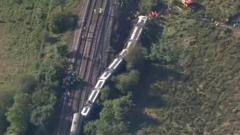
Train derailments, while relatively uncommon compared to other transportation accidents, can have significant impacts on safety, infrastructure, and logistics. Recently released aerial footage of a derailed train in Sussex has brought renewed attention to these incidents, providing a detailed view of the aftermath and prompting important questions about causes, prevention, and response. This article explores what can be learned from such events, the various factors that contribute to derailments, and how rail systems work to manage risks and respond effectively.
The recent aerial video showing a derailed train from above offers a comprehensive perspective on the extent of damage and disruption caused. Such aerial views are invaluable as they allow observers to assess the number of cars involved, the position of the train relative to the tracks, and the surrounding environment in a way ground-level images cannot capture.
In this particular case, the footage reveals that several train cars have left the tracks, with some appearing overturned or severely damaged. The rural or semi-rural setting of the incident adds complexity, as it may limit accessibility for emergency services and complicate cleanup efforts. This vantage point is especially useful for emergency responders and investigators, aiding in planning recovery operations and understanding the sequence of events that led to the derailment.
Beyond immediate response, aerial imagery also supports longer-term investigations by providing a clear spatial context, helping to identify potential environmental factors or infrastructure vulnerabilities. This comprehensive view can reveal subtle clues about track conditions, terrain, and surrounding obstacles that may have contributed to the accident.
Train derailments can result from a variety of factors, often involving a combination of mechanical failures, track issues, human error, or external influences. Mechanical problems such as axle or wheel defects can cause instability, while track-related issues like broken rails, misaligned tracks, or faulty switches frequently contribute to derailments.
Human factors also play a significant role. Operator errors, including excessive speed, failure to adhere to signals, or misjudgments under pressure, can precipitate derailments. Additionally, external factors such as obstacles on the tracks, adverse weather conditions like heavy rain or ice, and acts of vandalism or sabotage may lead to accidents.
Determining the root cause of a derailment requires a thorough investigation. This often involves analyzing the train’s event recorder (black box) data, conducting detailed track condition assessments, and interviewing crew members and witnesses to piece together the sequence of events. Such investigations are critical to developing targeted safety improvements and preventing future incidents.
Railway companies and regulators implement numerous safety protocols to minimize the risk of derailments. Regular maintenance and inspection of tracks and rolling stock form the foundation of these efforts. Advanced technologies, such as track geometry measurement vehicles and ultrasonic testing equipment, help detect hidden flaws before they can cause accidents.
Operational safety is further enhanced through rigorous training programs for personnel, emphasizing adherence to speed limits, signal compliance, and emergency procedures. Modern trains are equipped with automatic braking systems and other fail-safe technologies designed to mitigate risks stemming from human error.
Infrastructure improvements also play a critical role. The use of continuous welded rails reduces the number of joints, which are common points of failure, while better track design and improved materials contribute to greater durability and stability. Additionally, sensor-based monitoring systems and real-time data analytics are increasingly deployed to predict potential issues and enable proactive maintenance.
These combined strategies represent a multifaceted approach to safety, recognizing that preventing derailments requires attention to mechanical, human, and environmental factors. Continuous innovation and investment are essential to keep pace with evolving rail demands and emerging risks.
When a derailment occurs, a swift and coordinated emergency response is essential to minimize harm to passengers, crew, and the environment. First responders prioritize assessing the scene for injuries, securing the area, and managing hazards such as fuel leaks, fires, or unstable debris.
Recovery operations are complex and depend on the severity and location of the derailment. Tasks include clearing derailed cars, repairing damaged tracks, and restoring rail service. Aerial imagery, like the recent footage from Sussex, is instrumental in providing situational awareness and guiding logistical planning, especially in difficult-to-access areas.
Post-incident investigations follow, aiming to identify causes and recommend improvements to prevent future occurrences. Transparency and clear communication with the public during these phases are vital to maintaining trust and providing updates on service disruptions and safety measures. Effective communication also supports community resilience and helps manage public concerns.
Although derailments are infrequent, they highlight the ongoing need for vigilance in rail safety. Each incident exposes vulnerabilities in infrastructure and operational practices that require continuous attention and investment.
Public confidence in rail transport hinges on the industry's ability not only to prevent accidents but also to respond effectively when they do occur. Incidents like the one captured in the aerial footage serve as sobering reminders of the potential consequences of safety lapses.
Moreover, these events prompt important discussions about balancing the expansion of rail networks to meet growing demand with ensuring that safety measures evolve accordingly. As rail traffic increases and technology advances, maintaining robust safety protocols is critical to protecting passengers, workers, and communities.
The integration of new technologies, such as predictive maintenance tools and enhanced monitoring systems, offers promising avenues to further reduce risks. However, these must be complemented by strong regulatory frameworks and ongoing staff training to be truly effective.
The recent aerial footage of a derailed train offers a sobering view of the challenges inherent in rail transport safety. While derailments remain relatively rare, their consequences can be severe, affecting lives, infrastructure, and service reliability. Understanding the multifaceted causes and implementing robust safety measures are critical to minimizing risks. Continued advancements in technology, maintenance practices, and emergency response protocols will play a vital role in preventing future incidents and ensuring that rail remains a safe, reliable, and efficient mode of transportation. Ultimately, sustained commitment from industry stakeholders, regulators, and communities is essential to uphold and enhance rail safety standards in an evolving transportation landscape.
Originally reported by bbc.co.uk. Adapted for our readers with AI assistance.
Keep reading
Transportation
Electric bikes (e-bikes) have surged in popularity across New York City, offering a convenient and eco-f...
TAMFIS NIG LTD
Electrical and instrumentation engineering, bid preparation and consulting, IT and software.