
Transport
Half-Price Rail Travel Extended to 18-Year-Olds: What This Means for Young Travelers
Half-Price Rail Travel Extended to 18-Year-Olds: What This Means for Young Travelers is a topic that des...
TAMFIS NIG LTDRC 8067447CAC ACTIVEFinima, Bonny Island, Rivers State

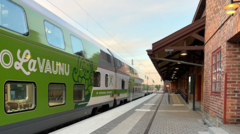
A historic rail connection between Finland and Sweden has been revived with the launch of a new passenger train service linking the Finnish city of Oulu to Sweden's Haparanda. This development restores a route that was suspended in the late 1980s and early 1990s due to technical challenges and low passenger demand. The renewed service not only strengthens ties between the two Nordic neighbors but also enhances Europe's rail network, enabling unprecedented long-distance train journeys stretching from southern Portugal to northern Finland. This article explores the significance of this rail restoration, the technical and historical context behind it, and its implications for regional travel and cooperation.
The rail link between northern Finland and Sweden was discontinued nearly four decades ago, primarily due to low passenger numbers and technical incompatibilities. Finland's railways utilize a broader track gauge inherited from its historical ties with Russia, differing from the European standard gauge used in Sweden and much of Europe. This discrepancy created operational challenges for cross-border services.
The original suspension of the route in the late 1980s and early 1990s reflected these difficulties, as well as shifting transportation demands. For years, the absence of a direct rail connection limited travel options and economic exchange between the two regions, particularly affecting northern Finland's accessibility to the rest of Europe.
During this period, the lack of a seamless rail connection hindered not only passenger travel but also freight movement, impacting regional development. The divergence in rail standards underscored the broader geopolitical and infrastructural divides within Europe, with Finland's unique gauge serving as a reminder of its historical ties to Russia.
One of the main obstacles to cross-border rail service has been the difference in track widths. Finland's rail gauge is wider than the European standard, a legacy from its period as part of the Russian Grand Duchy in the 19th and early 20th centuries. To address this, Finland is currently undertaking efforts to update its rail infrastructure to better align with European standards.
The new train service utilizes modern double-decker trains capable of operating on Finland's broad gauge tracks. Passengers traveling beyond Haparanda must transfer to standard gauge trains to continue southward into Sweden and further into Europe. Despite this transfer, the service significantly reduces travel times and improves convenience for passengers journeying between northern Finland and southern Europe.
These technical adaptations represent a compromise between maintaining Finland’s existing rail infrastructure and integrating with the broader European network. The use of transfer stations like Haparanda allows for gradual harmonization without the immediate need for costly and extensive track conversion across the entire Finnish rail system.
The inaugural journey departed early Monday morning from Oulu, a coastal city in Finland, and traveled westward along Finland's coastline before crossing the Torne River into Sweden. The train's arrival at Haparanda station was met with enthusiastic crowds waving Finnish and Swedish flags, symbolizing renewed cooperation and connectivity.
Operating twice daily, the 100-minute journey offers passengers scenic views of the Nordic landscape. While the service currently requires a transfer at Haparanda for onward travel into Sweden and beyond, it establishes a vital link that had been missing for decades.
This route enables a continuous rail journey of approximately 5,000 kilometers from Portugal's Algarve region in the south of Europe to Kolari, Finland's northernmost train station. This is believed to be the longest train route available in Europe, opening new possibilities for long-distance rail travel across the continent.
Additionally, the service facilitates a 24-hour train journey connecting the capitals of Helsinki and Stockholm, enhancing accessibility and fostering closer ties between these major Nordic cities. This improved connectivity is expected to boost tourism, business travel, and cultural exchange.
Finland's Transport Minister highlighted that the restoration of this cross-border service reflects growing cooperation between Finland and Sweden. The train link is more than a transportation route; it symbolizes strengthened political and economic ties in the Nordic region.
Elisa Markula, CEO of Finland's state-owned railway operator VR, expressed optimism about the broader renaissance of rail travel across Europe. She noted increasing passenger numbers in Finland, aligning with a continental trend toward sustainable and efficient transportation alternatives.
The service also facilitates a 24-hour train journey connecting the capitals Helsinki and Stockholm, enhancing accessibility and tourism between these major Nordic cities. This improved connectivity is expected to stimulate regional economies, encourage cultural exchange, and reduce carbon emissions by offering a viable alternative to air and road travel.
The renewed rail link aligns with wider European goals of promoting greener transportation and reducing reliance on short-haul flights. By providing a viable and scenic alternative, the service supports environmental sustainability while fostering regional integration.
Despite the positive developments, challenges remain. The necessity for passengers to transfer between different gauge trains at Haparanda introduces inconvenience and may limit seamless travel. Continued infrastructure upgrades and technological innovations will be crucial to further integrate Finland's rail system with the European network.
Moreover, maintaining and increasing passenger demand will be essential to sustain the service. The previous suspension was partly due to low ridership, so marketing, competitive pricing, and service quality will play significant roles in the route's success.
Looking ahead, the ongoing modernization of Finland’s rail infrastructure and the growing popularity of train travel across Europe suggest promising prospects for expanding and enhancing cross-border rail services in the Nordic region.
Future developments may include further gauge standardization, improved transfer facilities, and increased frequency of services, all aimed at creating a more seamless and attractive rail travel experience for passengers.
The revival of the rail link between Finland and Sweden marks a significant step forward in Nordic transportation and European rail integration. By overcoming historical technical barriers and renewing cross-border cooperation, this new service opens up extensive travel possibilities and strengthens regional ties. While operational challenges persist, the initiative reflects a growing commitment to sustainable, efficient, and connected rail travel in the Nordic countries and across Europe. As infrastructure improvements continue and passenger interest grows, this route could become a cornerstone of northern European mobility for decades to come.
Originally reported by bbc.co.uk. Adapted for our readers with AI assistance.
Keep reading
Transport
Half-Price Rail Travel Extended to 18-Year-Olds: What This Means for Young Travelers is a topic that des...
TAMFIS NIG LTD
Electrical and instrumentation engineering, bid preparation and consulting, IT and software.