NASA G-IV Plane Will Carry Next-Generation Science Instrument
Science & Technology

NASA G-IV Plane Will Carry Next-Generation Science Instrument

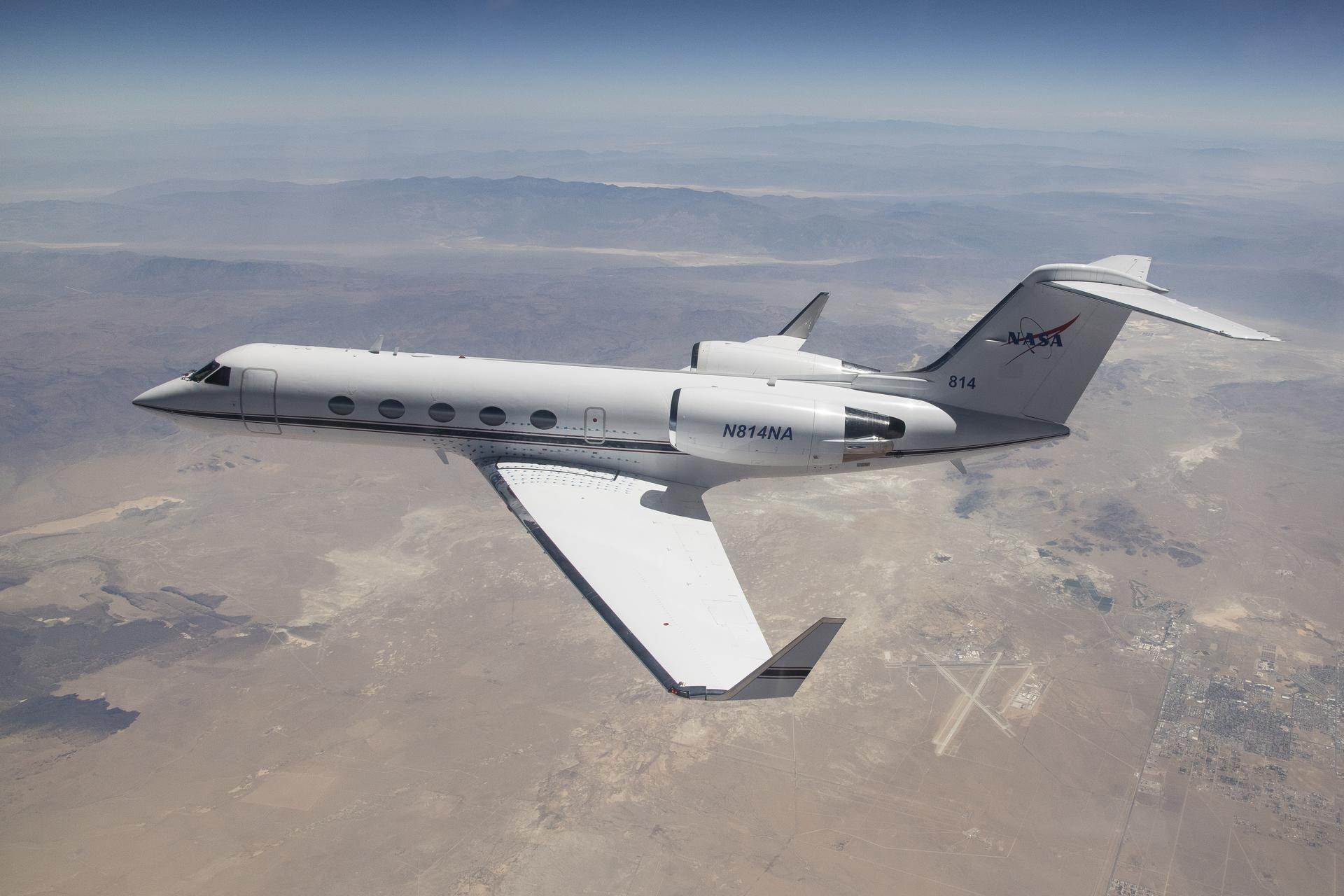
NASA Space Technology In June 2024, a new tail number swept the sky above NASA’s Armstrong Flight Research Center in Edwards, California. Pilots conducted flights of a Gulfstream IV (G-IV) to evaluate its handling characteristics and to familiarize pilots with it before it begins structural modifications. The research plane is joining the center’s fleet serving NASA’s Airborne Science program.The G-IV will carry the Next Generation Airborne Synthetic Aperture Radar (AIRSAR-NG), which sends and receives microwave signals to collect information about Earth’s topographic features and how they change over time. The goal for the team at NASA Armstrong is to modify the G-IV to accommodate three radars simultaneously.“The AIRSAR-NG will be composed of three different Synthetic Aperture Radar antennas in one instrument to provide new insight into Earth’s surface more efficiently,” said Yunling Lou, principal investigator...
Continue reading
NASA JPL Developing Underwater Robots to Venture Deep Below Polar Ice
Science & Technology

NASA JPL Developing Underwater Robots to Venture Deep Below Polar Ice

NASA Space Technology Called IceNode, the project envisions a fleet of autonomous robots that would help determine the melt rate of ice shelves.On a remote patch of the windy, frozen Beaufort Sea north of Alaska, engineers from NASA’s Jet Propulsion Laboratory in Southern California huddled together, peering down a narrow hole in a thick layer of sea ice. Below them, a cylindrical robot gathered test science data in the frigid ocean, connected by a tether to the tripod that had lowered it through the borehole.This test gave engineers a chance to operate their prototype robot in the Arctic. It was also a step toward the ultimate vision for their project, called IceNode: a fleet of autonomous robots that would venture beneath Antarctic ice shelves to help scientists calculate how rapidly the frozen continent is losing...
Continue reading
NASA’s Roman Space Telescope to Investigate Galactic Fossils
Science & Technology

NASA’s Roman Space Telescope to Investigate Galactic Fossils

NASA Space Technology The universe is a dynamic, ever-changing place where galaxies are dancing, merging together, and shifting appearance. Unfortunately, because these changes take millions or billions of years, telescopes can only provide snapshots, squeezed into a human lifetime.However, galaxies leave behind clues to their history and how they came to be. NASA’s upcoming Nancy Grace Roman Space Telescope will have the capacity to look for these fossils of galaxy formation with high-resolution imaging of galaxies in the nearby universe.Astronomers, through a grant from NASA, are designing a set of possible observations called RINGS (the Roman Infrared Nearby Galaxies Survey) that would collect these remarkable images, and the team is producing publicly available tools that the astronomy community can use once Roman launches and starts taking data. The RINGS survey is a preliminary concept that...
Continue reading
Robot Metalsmiths Are Resurrecting Toroidal Tanks for NASA
Science & Technology

Robot Metalsmiths Are Resurrecting Toroidal Tanks for NASA

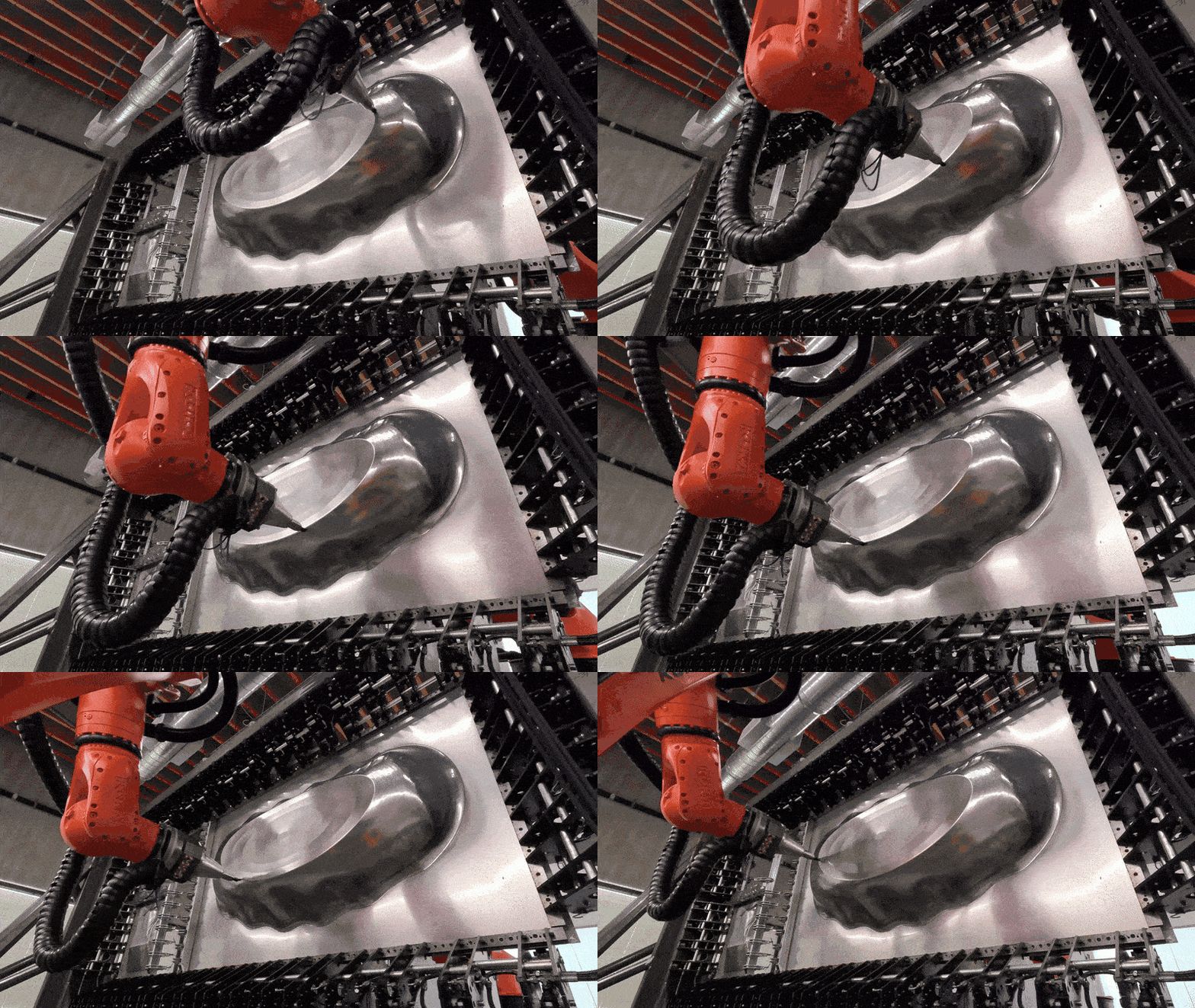
NASA Space Technology In the 1960s and 1970s, NASA spent a lot of time thinking about whether toroidal (donut-shaped) fuel tanks were the way to go with its spacecraft. Toroidal tanks have a bunch of potential advantages over conventional spherical fuel tanks. For example, you can fit nearly 40% more volume within a toroidal tank than if you were using multiple spherical tanks within the same space. And perhaps most interestingly, you can shove stuff (like the back of an engine) through the middle of a toroidal tank, which could lead to some substantial efficiency gains if the tanks could also handle structural loads.Because of their relatively complex shape, toroidal tanks are much more difficult to make than spherical tanks. Even though these tanks can perform better, NASA simply doesn’t have the expertise to manufacture...
Continue reading