Discovery Alert: a ‘Hot Neptune’ in a Tight Orbit
Science & Technology

Discovery Alert: a ‘Hot Neptune’ in a Tight Orbit

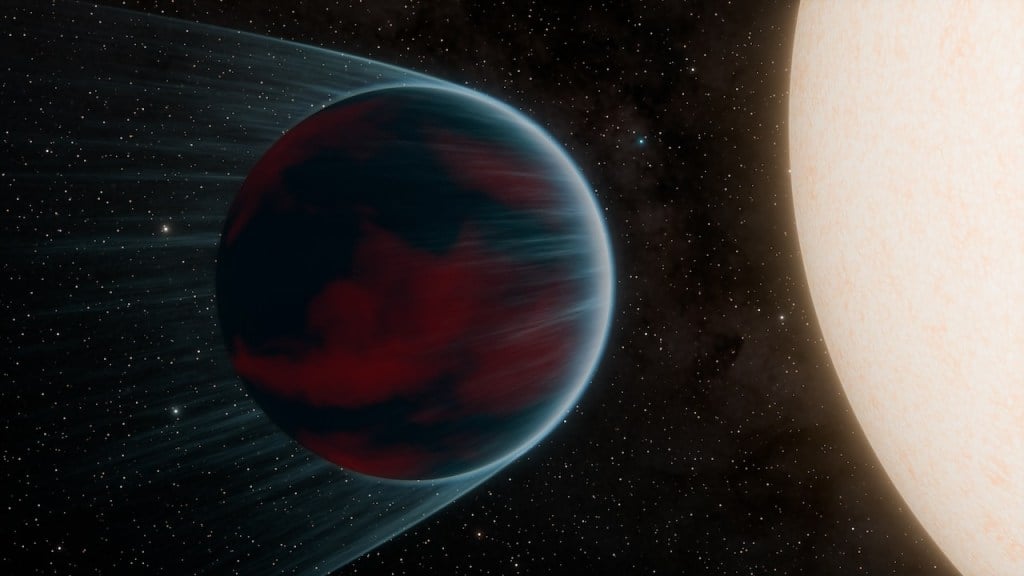
A Neptune-sized planet, TOI-3261 b, makes a scorchingly close orbit around its host star. Only the fourth object of its kind ever found, the planet could reveal clues as to how planets such as these form.An international team of scientists used the NASA space telescope, TESS (the Transiting Exoplanet Survey Satellite), to discover the exoplanet (a planet outside our solar system), then made further observations with ground-based telescopes in Australia, Chile, and South Africa. The measurements placed the new planet squarely in the “hot Neptune desert” – a category of planets with so few members that their scarcity evokes a deserted landscape. This variety of exoplanet is similar to our own Neptune in size and composition, but orbits extremely closely to its star. In this case, a “year” on TOI-3261 b is only 21 hours...

Continue reading
NASA spacecraft launched toward Jupiter’s Europa to see if ice-covered moon could host life
Science & Technology

NASA spacecraft launched toward Jupiter’s Europa to see if ice-covered moon could host life

Science NASA spacecraft launched toward Jupiter's Europa to see if ice-covered moon could host life NASA finally launched a spacecraft from Florida on Monday on a mission to examine whether Jupiter's moon, Europa, has conditions suitable to support life. The launch had been delayed a week due to Hurricane Milton. Europa Clipper launch Monday the start of a mission expected to last nearly 10 years Thomson Reuters · Posted: Oct 14, 2024 1:32 PM EDT | Last Updated: October 14 A SpaceX Falcon Heavy rocket launches at Kennedy Space Center in Cape Canaveral, Fla., on Monday for the Europa Clipper mission to study one of Jupiter's 95 moons. (Joe Skipper/Reuters) NASA launched a spacecraft from Florida on Monday on a mission to examine whether Jupiter's moon Europa has conditions suitable to support life, with a focus on the large subsurface ocean believed to be lurking beneath its thick...
Continue reading
Hubble Images a Grand Spiral
Science & Technology

Hubble Images a Grand Spiral

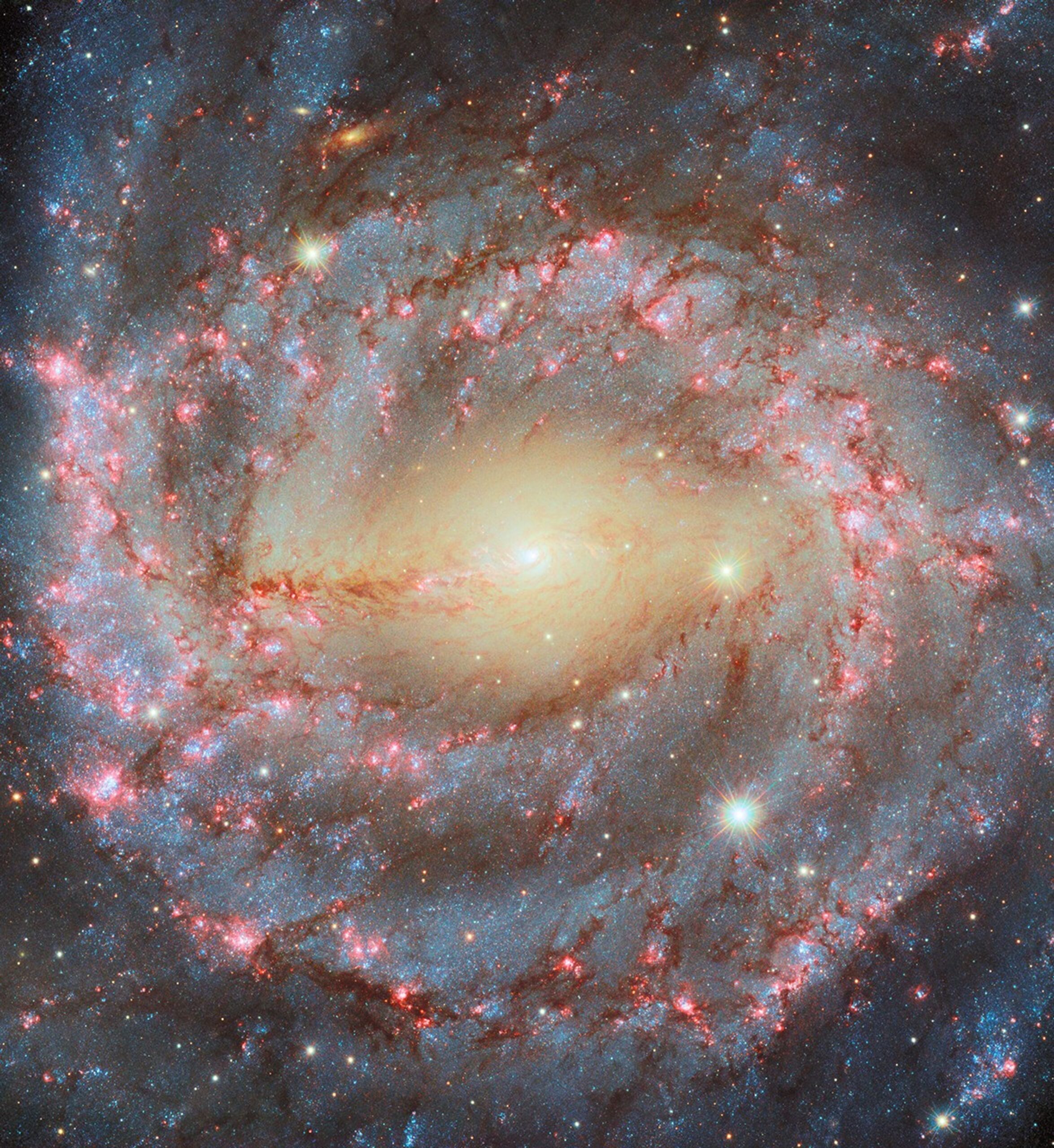
This NASA/ESA Hubble Space Telescope image features the glorious spiral galaxy NGC 5643, which is located roughly 40 million light-years away in the constellation Lupus, the Wolf. NGC 5643 is a grand design spiral, which refers to the galaxy’s symmetrical form with two large, winding spiral arms that are clearly visible. Bright-blue stars define the galaxy’s spiral arms, along with lacy reddish-brown dust clouds and pink star-forming regions. As fascinating as the galaxy appears at visible wavelengths, some of NGC 5643’s most interesting features are invisible to the human eye. Ultraviolet and X-ray images and spectra of NGC 5643 show that the galaxy hosts an active galactic nucleus: an especially bright galactic core powered by a feasting supermassive black hole. When a supermassive black hole ensnares gas from its surroundings, the gas collects in a disk...
Continue reading
NISAR planned to launch in March 2025 after antenna repairs
Science & Technology

NISAR planned to launch in March 2025 after antenna repairs

The addition of a reflective coating on the spacecraft's large deployable antenna delayed the launch of NISAR. Credit: NASA WASHINGTON — A joint Earth science mission between NASA and its Indian counterpart is now scheduled to launch as soon as next March after being delayed to repair its main radar antenna.In a presentation at the annual meeting of the American Geophysical Union here Dec. 11, Gerald Bawden, program scientist for the NASA-ISRO Synthetic Aperture Radar (NISAR) mission at NASA Headquarters, said the spacecraft is now scheduled to launch from India in a window that opens in late March. NISAR was previously scheduled to launch in the spring of this year, but NASA announced in March that it would delay the launch to make repairs to the spacecraft’s 12-meter deployable reflector used by its main radar instrument. Engineers...
Continue reading