
Is it aliens? Here’s why that’s the least important question about 3I/ATLAS.
Science & Technology

Is it aliens? Here’s why that’s the least important question about 3I/ATLAS.

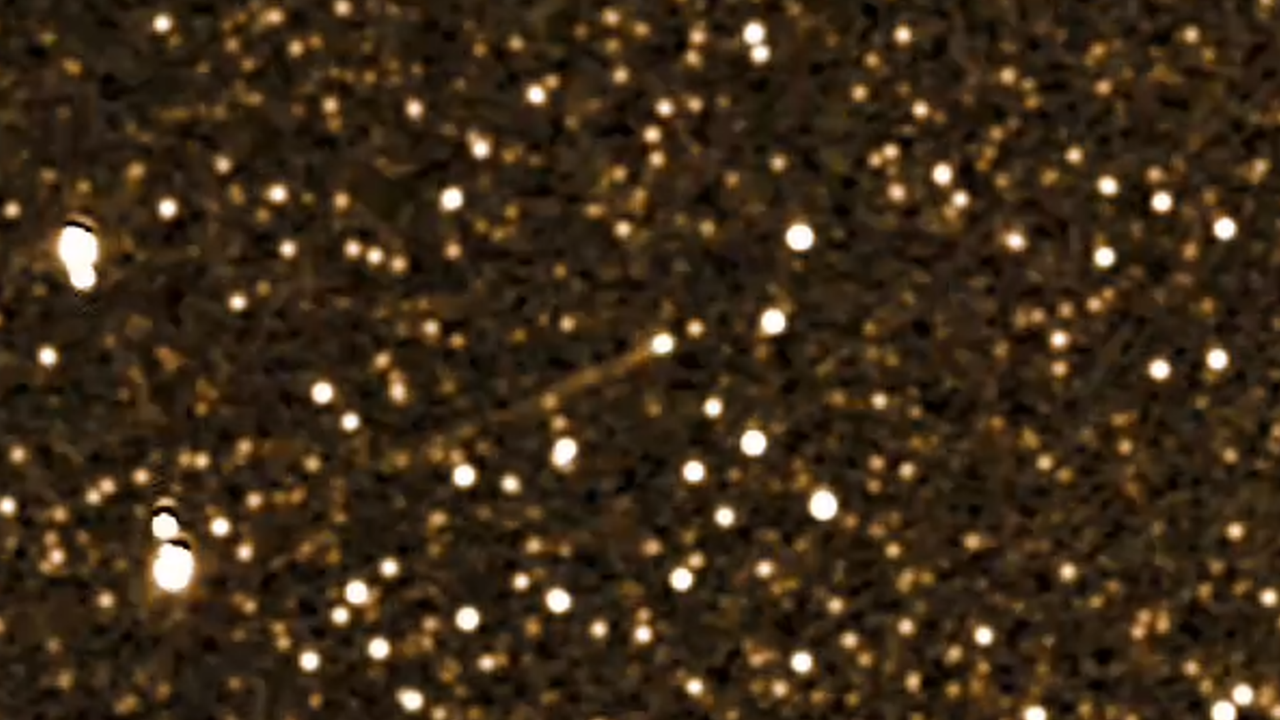
On October 29, Comet 3I/ATLAS reached its closest point to the sun. This point, known as perihelion, was around 210 million kilometers from the sunor 1.4 times the distance between the sun and Earthand it was on the opposite side of the sun to Earth. This means the sun had been blocking the comet from our view (from Earth). Now, ground telescopes have begun watching it again.When it was first detected on July 1 2025 by the Asteroid Terrestrial Last Alert System (or "ATLAS"), one of the first questions people asked was "but is it aliens?". This isn't the first time the alien question has come up in the context of a new astronomical discovery. But although it might be fun, it can also detract from the real (and very cool) science, and fuel misinformation.A long history...

Continue reading
NASA spacecraft tracks comet SWAN in incredible 40-day timelapse — and even glimpses interstellar invader 3I/ATLAS (video)
Science & Technology

NASA spacecraft tracks comet SWAN in incredible 40-day timelapse — and even glimpses interstellar invader 3I/ATLAS (video)

Comets are famous for making brief, dramatic appearances in our skies, but one icy wanderer just received an unprecedented level of attention from one of NASA's newest spacecraft. Comet SWAN moving across the sky in PUNCH images taken from Sept. 11 to 22, 2025. (Image credit: NASA/Southwest Research Institute)The video above stitches together hundreds of PUNCH images taken from Aug. 25 to Oct. 2, showing the comet gliding between two bright objects — Mars at the top and the star Spica in the constellation of Virgo at the bottom. Because the images were not fully processed before being combined, boundaries between individual snaps remain visible as thin black seams, the statement read.Comet C/2025 R2 (SWAN) was first spotted in September by Ukrainian amateur astronomer Vladimir Bezugly, who noticed the icy visitor a bright blob...
Continue reading
Google sends artificial intelligence into space. Project Suncatcher is the tech giant’s craziest plan yet
Science & Technology

Google sends artificial intelligence into space. Project Suncatcher is the tech giant’s craziest plan yet

The development of AI means that modern data centers consume astronomical amounts of energy and water, generating a huge carbon footprint. Google decided to attack this problem in a way that would have sounded like science fiction just a few years ago. The company has just revealed an ambitious plan to move its AI infrastructure to low Earth orbit. The project involves sending a constellation of satellites equipped with Trillium TPU systems, connected by advanced optical links.The sun emits over 100 trillion times more energy than humanity produces globally. In the right orbit, solar panels are up to 8 times more efficient than those installed on Earth.This private Vast Space space station will surprise NASA. The commercial orbital station Haven-1 will be launched in 2026Google Research has revealed the foundations of Project Suncatcher, which involves...
Continue reading