NASA’s C-130 aircraft en route to india in support of NISAR mission
Science & Technology

NASA’s C-130 aircraft en route to india in support of NISAR mission

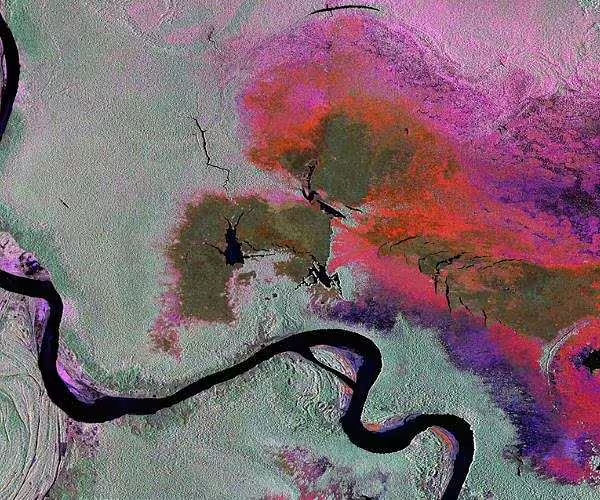
NASA Space Technology NASA's C-130 aircraft en route to india in support of NISAR missionby Olivia LittletonWallops Island VA (SPX) Oct 18, 2024NASA's globetrotting C-130 Hercules team is carrying out a cargo transport mission to Bengaluru, India, in support of the NASA-ISRO Synthetic Aperture Radar (NISAR) mission.The C-130 departed from NASA's Wallops Flight Facility in Virginia, Tuesday, Oct. 15, to embark on the multi-leg, multi-day journey. The flight path will take the aircraft coast to coast within the United States, across the Pacific Ocean with planned island stops, and finally to its destination in India.The goal: safely deliver NISAR's radar antennae reflector, one of NASA's contributions to the mission, for integration on the spacecraft. NISAR is a joint mission between NASA and ISRO (Indian Space Research Organisation).The cargo transport mission will encompass approximately 24,500 nautical...
Continue reading
NASA’s Crewed Mars Mission in the 2030s Could Unlock Some Geologic Mysteries
Science & Technology

NASA’s Crewed Mars Mission in the 2030s Could Unlock Some Geologic Mysteries

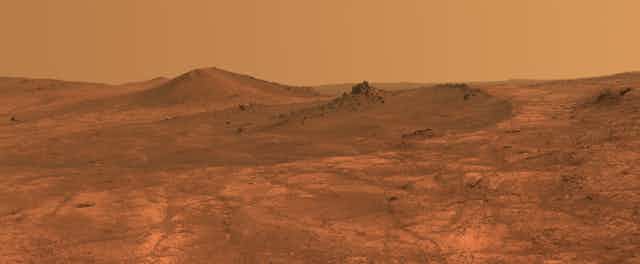
NASA Space Technology NASA plans to send humans on a scientific round trip to Mars potentially as early as 2035. The trip will take about six to seven months each way and will cover up to 250 million miles (402 million kilometers) each way. The astronauts may spend as many as 500 days on the planet’s surface before returning to Earth.NASA’s Artemis program plans to return humans to the Moon this decade to practice and prepare for a Mars mission as early as the 2030s. While NASA has several reasons for pursuing such an ambitious mission, the biggest is scientific exploration and discovery.I’m an atmospheric scientist and former NASA researcher involved in establishing the scientific questions a Mars mission would investigate. There are many mysteries to investigate on the red planet, including why Mars looks...
Continue reading
NASA’s Earth Information Center at the Smithsonian
Science & Technology

NASA’s Earth Information Center at the Smithsonian

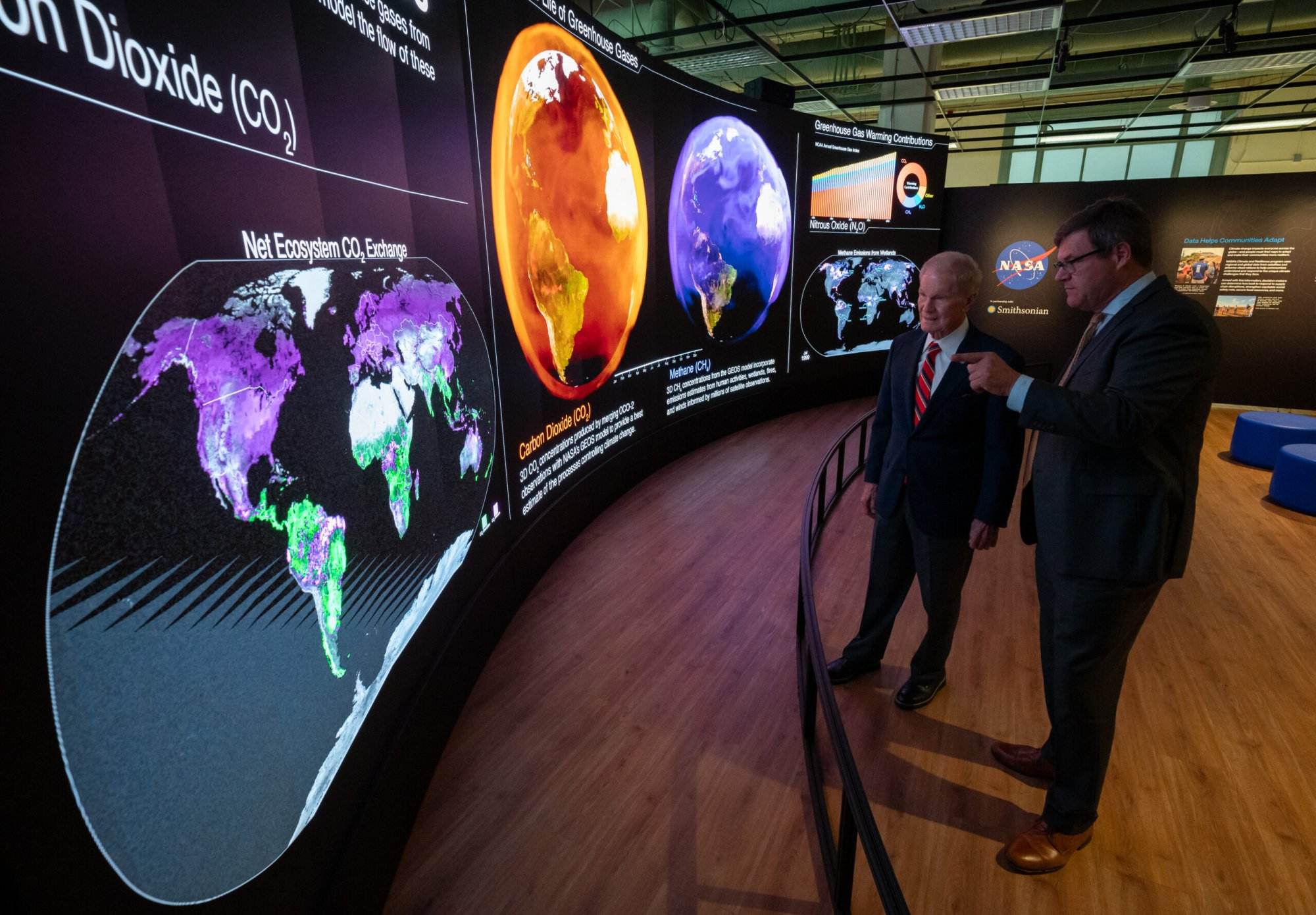
NASA Space Technology Monika LuabeyaOct 08, 2024NASA Administrator Bill Nelson and Kirk Johnson, Sant Director of the Smithsonian’s National Museum of Natural History in Washington, preview the agency’s new Earth Information Center exhibit on Monday, Oct. 8, 2024. This new exhibit is the Earth Information Center’s second physical location.The exhibit at the Smithsonian includes a 32-foot-long, 12-foot-high video wall displaying Earth science data visualizations and videos, interpretive panels showing Earth’s connected systems, information on our changing world, and an overview of how NASA and the Smithsonian study our home planet. It opens to the public Tuesday, Oct. 8, and will remain on display through 2028.Image Credit: NASA/Bill Ingalls
Continue reading
News

NASA’s exoplanet hunter TESS spots a record-breaking 3-star system

NASA Space Technology Using NASA's exoplanet-hunting spacecraft, the Transiting Exoplanet Survey Satellite (TESS), scientists have spotted a record-breaking triple-star system so tightly bound that it could fit comfortably between the sun and its closest planet, Mercury.The system, designated TIC 290061484 contains twin stars that race around each other once every 1.8 Earth days as well as a third star that orbits this pair once every 25 Earth days. This triple star system's super-tight orbit, located just under 5,000 light-years away in the constellation Cygnus, the swan, makes it a record-breaker.The previous record-holder for the tightest three-star system orbit is Lamba Tauri, which set the record in 1956 with its third star taking 33 days to orbit its inner twin stars.Related: Giant exoplanet the size of 2 Jupiters has a hidden companion disturbing its orbitThe discovery...
Continue reading