Three NASA Interns Expand Classroom Access to NASA Data
Science & Technology

Three NASA Interns Expand Classroom Access to NASA Data

NASA Space Technology This summer, NASA welcomed interns with professional teaching experience to help make the agency’s data more interactive and accessible in the classroom. Their efforts are an important step in fostering the education and curiosity of the Artemis Generation of students who will shape the future workforce.A 35-year-veteran educator, Diane Ripollone teaches Earth science, astronomy, and physics to high school students in North Carolina. In her decades of experience, she’s seen firsthand how students with physical challenges can face difficulties in connecting with lessons. She decided to tackle the issue head-on with her internship.Ripollone supports the My NASA Data Program, which provides educational materials to interact with live data collected by NASA satellites, observatories, and sensors worldwide. As a NASA intern, she has worked to create physical materials with braille for students with-...

Continue reading
Hubble Images a Classic Spiral
Science & Technology

Hubble Images a Classic Spiral

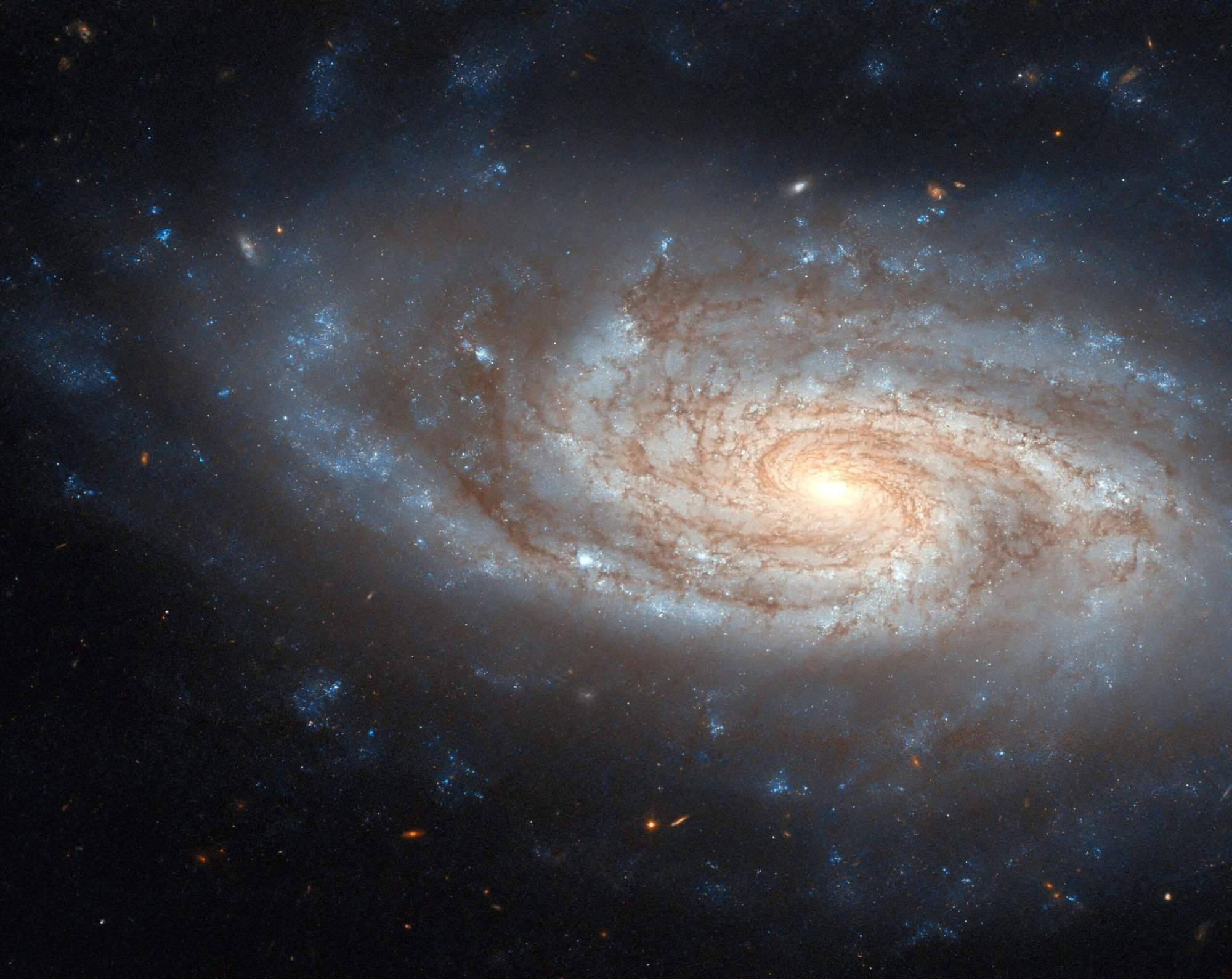
NASA Space Technology NASA Hubble Mission TeamGoddard Space Flight CenterJul 26, 2024This NASA/ESAHubble Space Telescopeimage treats viewers to a wonderfully detailed snapshot of the spiral galaxy NGC 3430 that lies 100 million light-years from Earth in the constellation Leo Minor. Several other galaxies, located relatively nearby to this one, are just beyond the frame of this image; one is close enough that gravitational interaction is driving some star formation in NGC 3430 — visible as bright-blue patches near to but outside of the galaxy’s main spiral structure. This fine example of a galactic spiral holds a bright core from which a pinwheel array of arms appears to radiate outward. Dark dust lanes and bright star-forming regions help define these spiral arms.NGC 3430’s distinct shape may be one reason why astronomerEdwin Hubbleused to it to help...
Continue reading
NASA Returns to Arctic Studying Summer Sea Ice Melt
Science & Technology

NASA Returns to Arctic Studying Summer Sea Ice Melt

NASA Space Technology What happens in the Arctic doesn’t stay in the Arctic, and a new NASA mission is helping improve data modeling and increasing our understanding of Earth’s rapidly changing climate. Changing ice, ocean, and atmospheric conditions in the northernmost part of Earth have a large impact on the entire planet. That’s because the Arctic region acts like Earth’s air conditioner.Much of the Sun’s energy is transported from tropical regions of our planet by winds and weather systems into the Arctic where it is then lost to space. This process helps cool the planet.The NASA-sponsored Arctic Radiation Cloud Aerosol Surface Interaction Experiment (ARCSIX) mission is flying three aircraft over the Arctic Ocean north of Greenland to study these processes. The aircraft are equipped with instruments to gather observations of surface sea ice, clouds, and...
Continue reading