Webb Discovers Early Galaxy with Odd Light Signature
Science & Technology

Webb Discovers Early Galaxy with Odd Light Signature

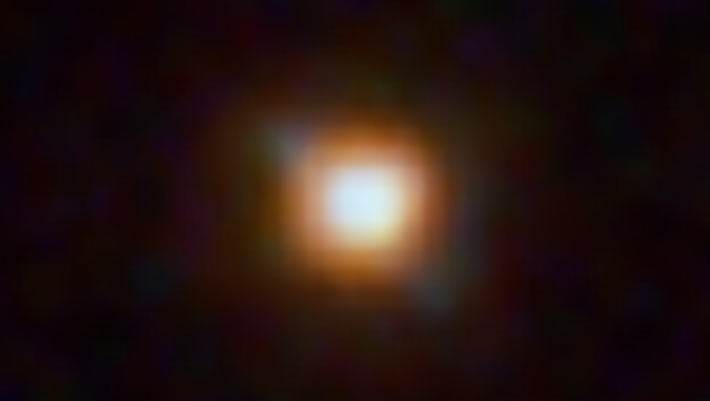
NASA Space Technology Astronomers using the NASA/ESA/CSA James Webb Space Telescope have spotted a galaxy with a never-before-seen light signature — indicating that its gas is outshining its stars. Found approximately one billion years after the Big Bang, this galaxy — labeled JADES-GS+53.12175-27.79763 (GS-NDG-9422 hereafter) — may be a missing-link phase of galactic evolution between the Universe’s first stars and familiar, well-established galaxies.Detailed information on the chemical makeup of GS-NDG-9422, captured by Webb’s NIRSpec (Near-Infrared Spectrograph) instrument, indicates that the light we see in this image is coming from the galaxy’s hot gas, rather than its stars. Image credit: NASA / ESA / CSA / STScI / A. Cameron, University of Oxford.“My first thought in looking at the galaxy’s spectrum was, ‘that’s weird,’ which is exactly what Webb was designed to reveal: totally new phenomena...
Continue reading
Meet Hector Chavez: Leading Johnson’s Giant Leap into Low Earth Orbit
Science & Technology

Meet Hector Chavez: Leading Johnson’s Giant Leap into Low Earth Orbit

NASA Space Technology As systems integration team lead for NASA’s Commercial Low Earth Orbit Development Program (CLDP), Hector Chavez helps build a future where NASA and private industry work together to push the boundaries of space exploration.With the rise of commercial providers in the space sector, Chavez’s team works to ensure that these companies can develop end-to-end systems to support NASA’s low Earth orbit operations—from transporting crew and cargo to operating mission centers. His team’s role is to assess how commercial providers are using their systems engineering processes to achieve program goals and objectives.With a background that spans both the National Nuclear Security Administration and NASA, Chavez brings knowledge and insight into working with interdisciplinary teams to create complex, reliable systems. He has collaborated across organizations, contracts, and government to ensure design and operational improvements...
Continue reading
NASA Michoud Continues Work on Evolved Stage of SLS Rocket for Future Artemis Missions
Science & Technology

NASA Michoud Continues Work on Evolved Stage of SLS Rocket for Future Artemis Missions

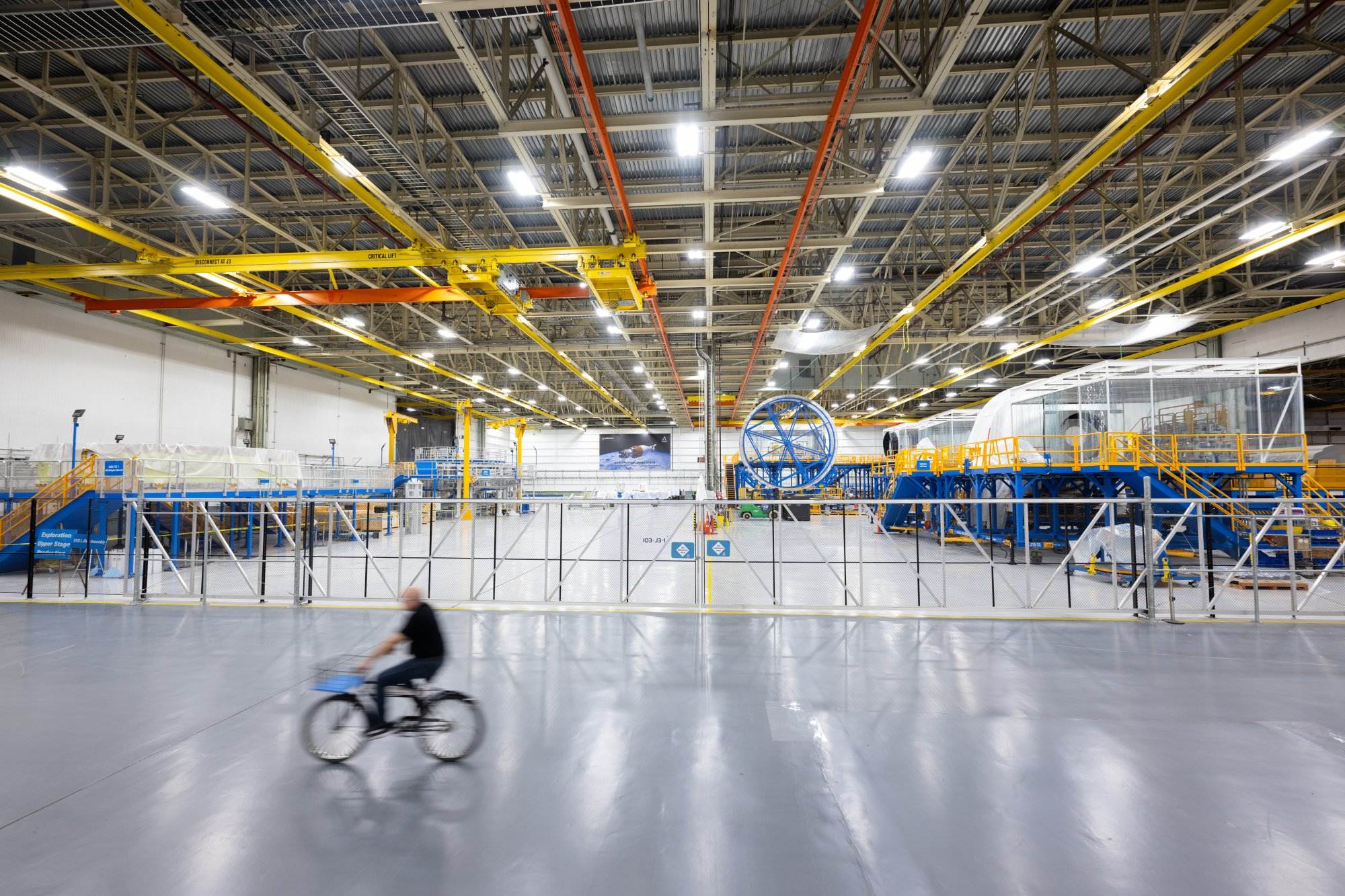
NASA Space Technology Manufacturing equipment that will be used to build components for NASA’s SLS (Space Launch System) rocket for future Artemis missions is being installed at the agency’s Michoud Assembly Facility in New Orleans, Louisiana.The novel tooling will be used to produce the SLS rocket’s advanced exploration upper stage, or EUS, in the factory’s new manufacturing area. The EUS will serve as the upper, or in-space, stage for all Block 1B and Block 2 SLS flights in both crew and cargo configurations.In tandem, NASA and Boeing, the SLS lead contractor for the core stage and exploration upper stage, are producing structural test articles and flight hardware structures for the upper stage at Michoud and the agency’s Marshall Space Flight Center in Huntsville, Alabama. Early manufacturing is already underway at Michoud while preparations for an...
Continue reading
NASA’s Record-Breaking Laser Demo Completes Mission
Science & Technology

NASA’s Record-Breaking Laser Demo Completes Mission

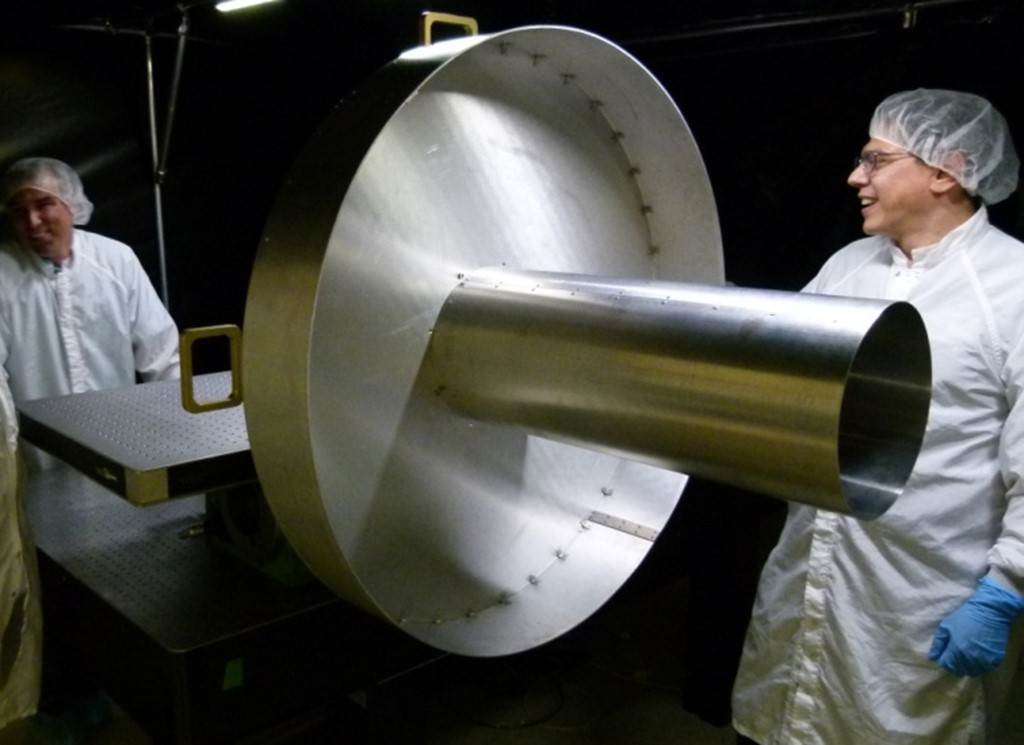
NASA Space Technology NASA’s TBIRD (TeraByte InfraRed Delivery) demonstration and its host spacecraft — the PTD-3 (Pathfinder Technology Demonstrator-3) — have completed their technology demonstration. The TBIRD payload spent the past two years breaking world records for the fastest satellite downlink from space using laser communications.NASA’s PTD series leverages a common commercial spacecraft to provide a robust platform for effective testing of technologies with minimal redesign in between launches. After launch in May 2022 on the SpaceX Transporter 5 mission, the PTD-3 spacecraft entered low-Earth orbit and shortly after TBIRD began sending laser communications signals to an optical ground station in Table Mountain, California.TBIRD’s two-year demonstration showcased the viability of laser communications. Most NASA missions rely on radio frequency communication systems, however, laser communications use infrared light and can pack significantly more data in a...
Continue reading