NASA’s Crewed Mars Mission in the 2030s Could Unlock Some Geologic Mysteries
Science & Technology

NASA’s Crewed Mars Mission in the 2030s Could Unlock Some Geologic Mysteries

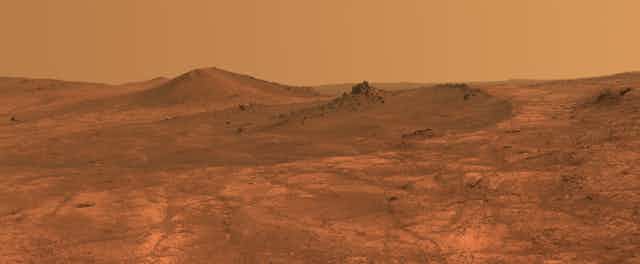
NASA Space Technology NASA plans to send humans on a scientific round trip to Mars potentially as early as 2035. The trip will take about six to seven months each way and will cover up to 250 million miles (402 million kilometers) each way. The astronauts may spend as many as 500 days on the planet’s surface before returning to Earth.NASA’s Artemis program plans to return humans to the Moon this decade to practice and prepare for a Mars mission as early as the 2030s. While NASA has several reasons for pursuing such an ambitious mission, the biggest is scientific exploration and discovery.I’m an atmospheric scientist and former NASA researcher involved in establishing the scientific questions a Mars mission would investigate. There are many mysteries to investigate on the red planet, including why Mars looks...
Continue reading
NASA laser-based data transmission demonstrates serviceable internet 290 million miles from Earth
Science & Technology

NASA laser-based data transmission demonstrates serviceable internet 290 million miles from Earth

NASA Space Technology Serving tech enthusiasts for over 25 years. TechSpot means tech analysis and advice you can trust.Pushing the envelope: NASA is boldly going where no one has gone before with laser communications. The space agency's Deep Space Optical Communications experiment hitched a ride on the Psyche asteroid mission and achieved broadband speeds in deep space. In late July, the Deep Space Optical Communications (DSOC) transmitted laser data across 290 million miles from the Psyche spacecraft back to Earth. That's roughly the maximum distance between our planet and Mars. The record-breaking downlink capped off the first operational phase for DSOC since its launch last October.The test downlinked nearly 11 terabits during its first phase. Project Operations Lead Meera Srinivasan at NASA's Jet Propulsion Laboratory said the milestone confirmed laser communications could be a "robust and transformative...
Continue reading
NASA powers down science instrument to conserve Voyager 2 power supply
Science & Technology

NASA powers down science instrument to conserve Voyager 2 power supply

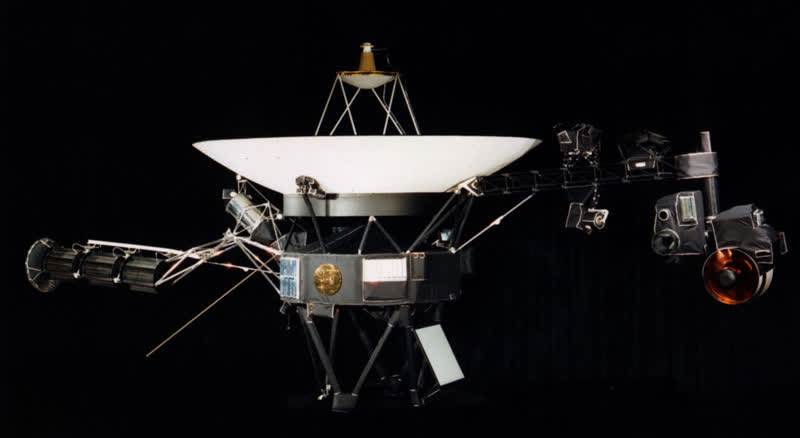
NASA Space Technology Serving tech enthusiasts for over 25 years. TechSpot means tech analysis and advice you can trust.What just happened? NASA has remotely disabled one of the science instruments on its Voyager 2 spacecraft in response to the probe's dwindling energy supply. The space agency had hoped to keep all five of the probe's instruments up and running through at least 2026 thanks to a revised power strategy that involved siphoning a small amount of backup juice from the craft's radioisotope thermoelectric generators, which turn heat from decaying plutonium-238 atoms into electricity. Unfortunately, they were not able to stretch the reserve power as far as anticipated.As a result, NASA made the decision to turn off the craft's plasma science instrument to conserve any remaining power. For now, the craft will continue operating with its four other...
Continue reading
NASA, Collaborators Announce a New Student Lunar Autonomy Challenge!
Science & Technology

NASA, Collaborators Announce a New Student Lunar Autonomy Challenge!

NASA Space Technology Space is hard, but it’s not all hardware.The new Lunar Autonomy Challenge invites teams of students from U.S. colleges and universities to test their software development skills. Working entirely in virtual simulations of the Moon’s surface, teams will develop an autonomous agent using software that can accomplish pre-defined tasks without help from humans. These agents will be used to navigate a digital twin of NASA’s ISRU Pilot Excavator (IPEx) and map specified locations in the digital environment. The IPEx is an autonomous mobility robot engineered to efficiently collect and transport lunar regolith, the loose rocky material on the Moon’s surface.Autonomous systems allow spacecraft, rovers, and robots to operate without relying on constant contact with astronauts or mission control. Before hardware is trusted to operate independently on location, which for Artemis missions includes...
Continue reading