
Tag: Medicaid

  • Journalists Talk Medicaid Work Rule Logistics and Colon Cancer Increase Among Young Adults

    Journalists Talk Medicaid Work Rule Logistics and Colon Cancer Increase Among Young Adults

    KFF Health News Montana correspondent Katheryn Houghton discussed Medicaid work requirements on The Majority Report with Sam Seder on Aug. 7.

    • Click here to watch Houghton on The Majority Report with Sam Seder.
    • Read Houghton’s “Republicans Call Medicaid Rife With Fraudsters. This Man Sees No Choice but To Break the Rules.” and “New Medicaid Federal Work Requirements Mean Less Leeway for States,” co-reported with Bram Sable-Smith.

    Céline Gounder, KFF Health News’ editor-at-large for public health, discussed what’s fueling the rise of colon cancer in adults under 54 on CBS News 24/7’s “The Daily Report” on Aug. 4.

    • Click here to watch Gounder on “The Daily Report.”

    Related Topics

    • Medicaid
    • Public Health
    • Cancer

    Contact UsSubmit a Story Tip

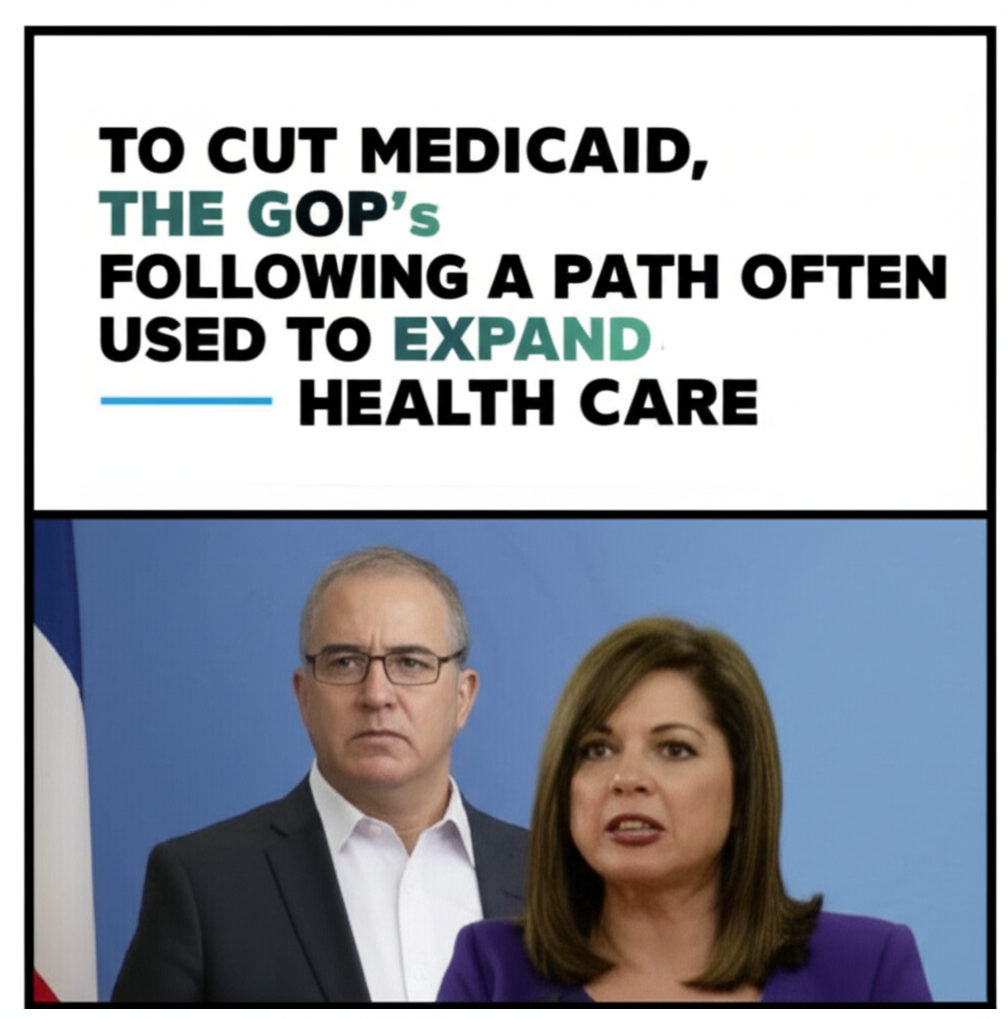
  • To Cut Medicaid, the GOP’s Following a Path Often Used To Expand Health Care

    To Cut Medicaid, the GOP’s Following a Path Often Used To Expand Health Care

    President Donald Trump’s “One Big Beautiful” budget reconciliation bill would make some of the most sweeping changes in health policy in years, largely affecting Medicaid and Affordable Care Act plans — with reverberations felt throughout the health care system.

    With only a few exceptions, the budget reconciliation process — which allows the political party in control to pass a bill with only 51 votes in the Senate, rather than the usual 60 — is how nearly every major piece of health legislation has passed Congress since the 1980s.

    But using reconciliation to constrict rather than expand health coverage, as the GOP is attempting now? That is unusual.

    One of the best-known programs born via reconciliation is the “COBRA” health insurance continuation, which allows people who leave jobs with employer-provided insurance to keep it for a time, as long as they pay the full premium.

    That is one of dozens of health provisions tucked into COBRA, or the Consolidated Omnibus Budget Reconciliation Act of 1985. Also included was the Emergency Medical Treatment and Active Labor Act, which requires hospitals that take Medicare to treat or transfer patients with medical emergencies, regardless of their insurance status — a law that’s become a focus of abortion opponents as they seek to limit access to the procedure.

    Email Sign-Up

    Subscribe to KFF Health News’ free weekly newsletter, “The Week in Brief”

    A key reason so much health policy has passed this way has to do with how Congress manages the federal budget. Federal government spending falls into two categories: mandatory, or spending required by existing law, and discretionary, which traditionally is allocated and renewed each year as part of the appropriations process.

    Lawmakers use the reconciliation process to make changes to mandatory spending programs — Medicare and Medicaid are among the largest — as well as tax policy. (For complicated political reasons, reconciliation bills cannot touch Social Security, the last prong in the entitlement program trifecta.)

    Reconciliation comes into play only if it is needed to reconcile taxes or mandatory spending to comply with the terms Congress sets for itself each year, through the annual budget resolution. This year the GOP’s focus is finding the cash to renew Trump’s expiring tax cuts, which largely benefit wealthier Americans, and boost military and border security spending.

    In years when Congress orders a reconciliation bill, health policy almost always plays a major part. Usually, reconciliation instructions call for reductions in payments to health providers under Medicare — which costs the most of the federal health programs.

    For much of the 1980s and 1990s, Democrats in Congress quietly used reconciliation to expand eligibility for the Medicaid program, often by cutting more than the budget called for from Medicare. For every $5 cut from Medicare, about $1 would be redirected to provide Medicaid to more low-income people.

    But budget reconciliation has also become a convenient way to make policy changes to the nation’s major health programs, as it is usually considered a “must-pass” bill likely to be signed by the president and not subject to filibuster in the Senate.

    As a result, all manner of now-familiar health programs were created by budget reconciliation bills, many of which provided health coverage to more Americans.

    The 1989 reconciliation bill created a new system for paying doctors who treat Medicare patients, as well as a new federal agency to study the cost, quality, and effectiveness of health care, today known as the Agency for Healthcare Research and Quality.

    Children’s health has been a popular add-on over the years, including the gradual expansion of Medicaid coverage to more children based on family income. The 1993 reconciliation bill created the Vaccines for Children program, which ensures the availability and affordability of vaccines nationwide for uninsured and underinsured kids. The 1997 reconciliation bill created the Children’s Health Insurance Program, which today provides insurance to more than 7 million children.

    In fact, the list of major health bills of the past 50 years not passed using budget reconciliation is short. For instance, the 2003 Medicare Modernization Act, which added a prescription drug benefit to the program for the first time, attracted just enough bipartisan support to pass on its own.

    The biggest health care law of recent decades — the Affordable Care Act — didn’t start out as a reconciliation bill, but it ended up using the process to clear its final hurdles.

    After initial passage of the bill in December 2009, a special election cost Democrats their 60th seat in the Senate — and with it, the supermajority they needed to pass the bill without Republican votes. In the end, the two chambers used a separate reconciliation measure, the Health Care and Education Reconciliation Act of 2010, to negotiate a compromise that included the ACA.

    HealthBent, a regular feature of KFF Health News, offers insight into and analysis of policies and politics from KFF Health News chief Washington correspondent Julie Rovner, who has covered health care for more than 30 years.

  • Medicaid ‘Unwinding’ Decried as Biased Against Disabled Folks

    Medicaid ‘Unwinding’ Decried as Biased Against Disabled Folks

    Health News tamfitronics

    Jacqueline Saa has a genetic condition that leaves her unable to face and stroll on her like or set a job. Every weekday for four years, Saa, 43, has relied on a residence successfully being aide to support her put together dinner, bathe and dress, drag to the physician, discover medicines, and originate other day after day responsibilities.

    She obtained protection by Florida’s Medicaid program till all of it with out delay stopped at the quit of March, she mentioned.

    “Each day the dismay builds,” mentioned Saa, who lost her home successfully being aide for 11 days, beginning April 1, despite being eligible. The converse has since restored Saa’s home successfully being aide provider, nonetheless at some level of the outlet she leaned on her mom and her 23- and 15-one year-customary daughters, whereas struggling to procure her Medicaid advantages.

    “It’s right so noteworthy to effort about,” she mentioned. “Right here is a successfully being care system that’s presupposed to support.”

    Medicaid’s home and neighborhood-based companies and products are designed to support folks appreciate Saa, who possess disabilities and desire reduction with day after day actions, set out of a nursing facility. But folks are losing advantages with tiny or no survey, getting despicable suggestion when they call for data, and going by predominant disruptions in care whereas they await the train to rep sorted out, in line with attorneys and advocates who’re listening to from sufferers.

    In Colorado, Texasand Washington, D.C., the National Properly being Law Program, a nonprofit that advocates for low-income and underserved folks, has filed civil rights complaints with two federal agencies alleging discrimination in opposition to folks with disabilities. The neighborhood has no longer filed a lawsuit in Florida, though its attorneys tell they’ve heard of most of the same considerations there.

    Attorneys nationwide tell the special needs of disabled folks had been no longer prioritized as states began to examine eligibility for Medicaid enrollees after an endemic-generation mandate for defense expired in March 2023.

    Email Stamp-Up

    Subscribe to KFF Properly being Info’ free Morning Briefing.

    “As an more than just a few of monitoring and guaranteeing that contributors with disabilities would possibly perhaps perhaps well perhaps additionally originate their plan by the approach, they kind of handled them appreciate each person else with Medicaid,” mentioned Elizabeth Edwardsa senior felony knowledgeable for the National Properly being Law Program. Federal law places an “duty on states to make rush folks with disabilities don’t rep left out.”

    On the least 21 million folks nationwide had been disenrolled from Medicaid since states began eligibility redeterminations in spring 2023, in line with a KFF diagnosis.

    The unwinding, because it’s known, is an mammoth venture, Edwards mentioned, and a few states didn’t steal additional steps to space up a diversified phone line for these with disabilities, as an illustration, so folks would possibly perhaps perhaps well perhaps additionally renew their protection or contact a case manager.

    As states willing for the unwinding, the Amenities for Medicare & Medicaid Services, the federal company that regulates Medicaid, suggested states that they must give folks with disabilities the support they must rep pleasure from the program, along side undoubtedly knowledgeable communications for folks which are deaf or blind.

    The Florida Department of Teens and Families, which verifies eligibility for the converse’s Medicaid program, has a undoubtedly knowledgeable team that processes capabilities for home successfully being companies and products, mentioned Mallory McManusthe department’s communications director.

    Folks with disabilities disenrolled from Medicaid companies and products had been “smartly noticed and both didn’t answer timely or no longer met financial eligibility necessities,” McManus mentioned, noting that contributors “would had been contacted by us up to 13 events by phone, mail, e-mail, and textual snort before processing their disenrollment.”

    Allison Pellegrin of Ormond Seaside, Florida, who lives with her sister Rhea Whitaker, who is blind and cognitively disabled, mentioned that by no manner came about for her household.

    Health News tamfitronics A picture of a girl smiling and sitting in a wheelchair indoors.
    Rhea Whitaker’s home successfully being aide care became chop for 12 days — with out her receiving any survey. Whitaker’s sister, Allison Pellegrin, took ruin day from work to steal care of Whitaker, who became disabled by a severe brain hurt in 2006.(Allison Pellegrin)

    “They right chop off the advantages with out a call, with out a letter or one thing else pointing out that the advantages will seemingly be terminating,” Pellegrin mentioned. Her sister’s home successfully being aide, whom she had aged on each day basis for nearly eight years, stopped provider for 12 days. “If I’m getting the whole lot else in the mail,” she mentioned, “it appears to be like unfamiliar that after 13 events I wouldn’t possess obtained undoubtedly one of them.”

    Pellegrin, 58, a sales manager who gets successfully being insurance by her employer, took ruin day from work to like Whitaker, 56, who became disabled by a severe brain hurt in 2006.

    Medicaid reports had been complex, partly, by the indisputable truth that eligibility works in every other case for home successfully being companies and products than for fundamental protection, per federal guidelines that give states extra flexibility to rep out financial eligibility. Earnings limits for home successfully being companies and products are higher, for occasion, and resources are counted in every other case.

    In Texas, a mum or dad in a household of three will seemingly be restricted to earning no bigger than $344 a month to qualify for Medicaid. And most adults with a disability can qualify with out a dependent tiny one and be eligible for Medicaid home successfully being companies and products with an income of up to $2,800 a month.

    The converse became no longer taking that into consideration, mentioned Terry Ansteea supervising felony knowledgeable for neighborhood integration at Disability Rights Texas, a nonprofit advocacy neighborhood.

    Even a short lapse in Medicaid home successfully being companies and products can break relationships that took years to produce.

    “It will seemingly be very complex for that one that lost that attendant to rep one other attendant,” Anstee mentioned, thanks to physique of workers shortages for attendants and nurses and high search data from.

    Nearly all states possess a ready list for home successfully being companies and products. About 700,000 folks had been on ready lists in 2023, most of them with intellectual and developmental disabilities, in line with KFF knowledge.

    Daniel Tsai, a deputy administrator at CMS, mentioned the company is committed to constructing sure that contributors with disabilities receiving home successfully being companies and products “can renew their Medicaid protection with as tiny crimson tape as that you simply would possibly perhaps perhaps well perhaps possibly think of.”

    CMS finalized a rule this one year for states to song Medicaid home successfully being companies and products. Let’s tell, CMS will now song how prolonged it takes for folks that want home successfully being care to receive the companies and products and will require states to song how prolonged folks are on waitlists.

    Workers turnover and vacancies at native Medicaid agencies possess contributed to backlogs, in line with complaints filed with two federal agencies concerned about civil rights.

    The District of Columbia’s Medicaid company requires that case managers reduction folks with disabilities whole renewals. On the opposite hand, a complaint says, case managers are the most real looking likely ones who can reduction enrollees whole eligibility reports and, as soon as rapidly, they don’t originate their jobs.

    Advocates for Medicaid enrollees possess additionally complained to the Federal Change Commission about tainted eligibility systems developed by Deloitte, a world consulting company that contracts with about two dozen states to rep, enforce, or characteristic automated advantages systems.

    KFF Properly being Info stumbled on that a whole lot of audits of Colorado’s eligibility system, managed by Deloitte, uncovered errors in notices despatched to enrollees. A 2023 evaluate by the Colorado Place of business of the Affirm Auditor stumbled on that 90% of sampled notices contained considerations, about a of which violate the converse’s Medicaid principles. The audit blamed “flaws in system rep” for populating notices with unsuitable dates.

    Deloitte declined to commentary on explicit converse components.

    In March, Colorado officials paused disenrollment for folks on Medicaid who obtained home successfully being companies and products, which contains folks with disabilities, after a “system update” led to wrongful terminations in February.

    Yet any other current scenario is folks being suggested to reapply, which at this time cuts off their advantages, as an alternative of inspiring the cancellation, which can perhaps well originate clear that their protection whereas the claim is investigated, mentioned felony knowledgeable Miriam Harmatzfounding father of the Florida Properly being Justice Mission.

    “What they’re being suggested to originate is no longer appropriate. The handiest plan to protect their apt rights,” Harmatz mentioned, “is to file an attraction.”

    But some disabled folks are insecure about having to repay the pricetag of their care.

    Saa, who lives in Davie, Florida, obtained a letter rapidly before her advantages had been chop that mentioned she “will seemingly be to blame to repay any advantages” if she lost her attraction.

    The converse must aloof presume such folks are aloof eligible and preserve their protection, Harmatz mentioned, on fable of income and resources for most beneficiaries are no longer going to elongate vastly and their stipulations are no longer going to enhance.

    The Florida Department of Teens and Families would no longer tell how many of us with disabilities had lost Medicaid home successfully being companies and products.

    But in Miami-Dade, Florida’s most populous county, the Alliance for Rising oldera nonprofit that helps older and disabled folks educate for Medicaid, saw requests for reduction soar from 58 in March to 146 in April, mentioned Lisa Melethe group’s director of its Rising older and Disability Sources Heart.

    “So many of us are calling us,” she mentioned.

    States are no longer monitoring the numbers, so “the affect is no longer clear,” Edwards mentioned. “It’s a undoubtedly complex struggle.”

    Saa filed an attraction March 29 after studying from her social employee that her advantages would expire at the quit of the month. She went to the company nonetheless couldn’t stand in a line that became 100 folks deep. Calls to the converse’s Medicaid eligibility evaluate company had been fruitless, she mentioned.

    “After they indirectly connected me to a buyer provider representative, she became actually right reading the same clarification letter that I’ve read,” Saa mentioned. “I did the whole lot in my vitality.”

    Saa canceled her home successfully being aide. She lives on restricted Social Safety disability income and mentioned she would possibly perhaps perhaps well perhaps additionally no longer possess ample money to pay for the care.

    On April 10, she obtained a letter from the converse asserting her Medicaid had been reinstated, nonetheless she later learned that her idea didn’t qu ilt home successfully being care.

    The next day, Saa mentioned, advocates put her in contact with a degree particular person at Florida’s Medicaid company who restored her advantages. A residence successfully being aide showed up April 12. Saa mentioned she’s thankful nonetheless feels anxious about the prolonged speed.

    “The hardest a part of that length is gleaming that that would possibly perhaps perhaps well happen at any time,” she mentioned, “and no longer thanks to one thing else I did detrimental.”

    Be pleased you or somebody you understand with disabilities lost Medicaid advantages since April 2023? Bid KFF Properly being Info about it right here.

    KFF Properly being Info correspondents Samantha Liss and Rachana Pradhan contributed to this picture.

Our Portfolio

Latest Questions

Categories

TAGS

Contacts

Miscellaneous

Categories

SWITCH CURRENCY