
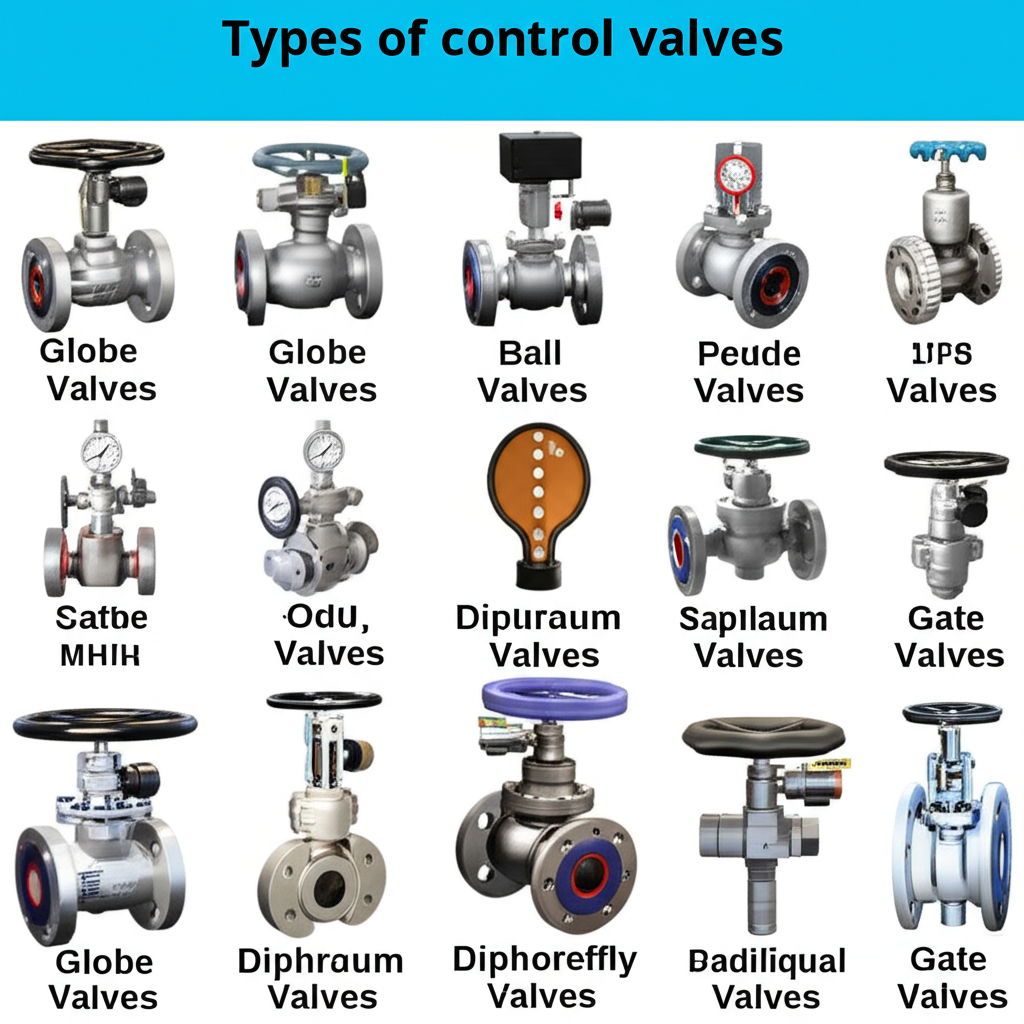
Types of Control Valves
Educational Resources, Instrumentation

Control Valves: Comprehensive Guide to Industrial Flow Control Systems

Control Valves: Comprehensive Guide to Industrial Flow Control Systems Control valves are fundamental components in industrial process control systems, serving as the final control elements that regulate the flow of fluids (liquids, gases, or steam) through piping systems. These devices respond to control signals from process controllers to maintain desired process variables such as flow rate, pressure, temperature, or level. The importance of control valves cannot be overstated, as they directly influence process efficiency, safety, and product quality across industries ranging from oil and gas to pharmaceuticals and water treatment. This comprehensive guide explores the essential aspects of control valves, including their types, characteristics, sizing methodologies, and actuation systems. Understanding these components is crucial for engineers, technicians, and operators involved in process control and instrumentation. Types of Control Valves Control valves come in various designs, each optimised for specific...
Continue reading
Liquid Level Measurement
Educational Resources, Instrumentation

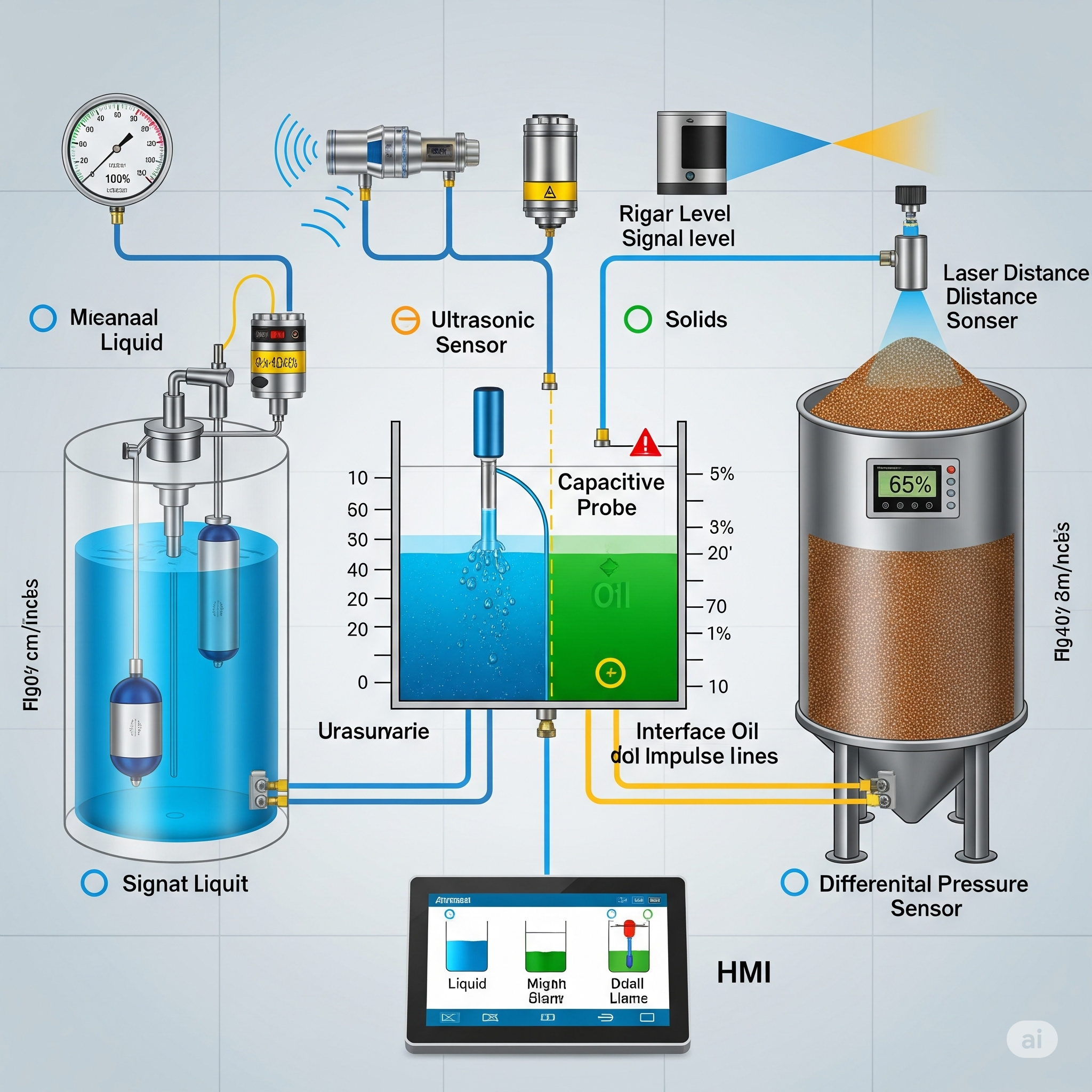
MODULE 5: Level Measurement (Liquids, Solids, Interfaces)

Introduction Level measurement plays a crucial role in ensuring the safe and efficient operation of industrial processes. From storage tanks in oil depots to chemical reactors and nuclear containment vessels, accurate and reliable level detection ensures effective inventory management, process control, and safety compliance. This module provides a comprehensive overview of the technologies used for level measurement, including contact and non-contact methods, challenges faced in real-world applications, and the criteria for choosing the right instrument. Focus areas include tank farms, silos, separators, and reactor vessels across industries like oil & gas, manufacturing, energy, and nuclear power. Section 1: Principles of Level Measurement 1.1 Differential Pressure (DP) Measurement Operating Principle: Level is inferred from the hydrostatic pressure exerted by the height of the liquid. A DP transmitter with one port at the bottom and one at the reference point measures the...
Continue reading
Thermometer png sticker, transparent background
Educational Resources, Instrumentation

Module 3: Temperature Measurement (Contact & Non-Contact)

Introduction Temperature measurement is a critical aspect of process control in industrial operations, influencing safety, product quality, energy efficiency, and process reliability. Whether monitoring turbine inlet temperatures in power plants, controlling furnace conditions in oil and gas refining, or measuring reactor core heat in nuclear plants, selecting the appropriate temperature measurement method is vital. This training module on "Temperature Measurement" provides an in-depth understanding of both contact and non-contact techniques used across various industries. Section 1: Fundamentals of Temperature Measurement Temperature is the measure of the thermal state of a substance, indicating its energy content. Accurate temperature measurement enables optimal process conditions and helps in preventing overheating or undercooling scenarios. Two Primary Methods of Temperature Measurement: Contact Methods: Instruments are in direct contact with the process medium. Examples include RTDs and Thermocouples. Non-Contact Methods: Instruments detect emitted infrared radiation from the...
Continue reading
a person holding white and gray digital device
Educational Resources, Instrumentation

Module 1: Instrumentation Fundamentals & Calibration

Universal Foundation for Safety, Quality & Compliance 1. SI Units: The Language of Measurement Core Concept: Standardised units ensure consistency across industries.Key Units: Pressure: Pascal (Pa), bar, psi Temperature: Kelvin (K), Celsius (°C), Fahrenheit (°F) Flow: m³/s, L/min, GPM Level: Meters (m), % of span Industry Application: Nuclear: Precise Kelvin for reactor cooling. Oil & Gas: PSI/bar for pipeline pressure. Power: °C/°F for turbine exhaust monitoring. Table: SI Unit Conversions ParameterSI UnitIndustrial EquivalentPressure1 Pa0.00001 barTemperature0 K-273.15°CFlow1 m³/s15,850 GPM Visual: Animation: Global map showing SI units used in target industries (e.g., PSI in US pipelines, bar in EU refineries). 2. Accuracy, Precision & Errors Definitions: Accuracy: Closeness to the true value. Precision: Repeatability of measurements. Error: Deviation from true value (e.g., ±0.5% FS). Industry Impact: Safety: Inaccurate pressure readings ⇒ overpressure explosions. Quality: Imprecise temperature control ⇒ product defects. Diagram: Accuracy vs. PrecisionCaption: High accuracy + low precision = Consistent errors. High precision + low accuracy = Repeatable but wrong. Visual: GIF: Dartboard analogy (accurate = bullseye, precise = tight cluster). 3. Range, Span...
Continue reading