Tag: Dhabi

  • UAE: Louvre Abu Dhabi receives 5 artworks on loan from Mexico

    Lifestyle

    They will remain on display at the museum until at least April 2025

    By WAM

    Lifestyle Photo & Video: WAM

    Photo & Video: WAM

    Published: Fri 20 Sep 2024, 4:00 PM

    Last updated: Fri 20 Sep 2024, 9:07 PM

    Louvre Abu Dhabi on Friday announced the arrival of five unique artefacts on loan from Mexicos National Institute of Anthropology and History (INAH).

    It is part of a historic cultural exchange announced by Mohamed Khalifa Al Mubarak, Chairman of the Department of Culture and Tourism Abu Dhabi and Chairman of Louvre Abu Dhabi, and Maria Teresa Mercado, Deputy Minister of Foreign Affairs of Mexico.

    This is the first time that these valuable pieces have been transferred to the region, and they include a ritual mask from Calakmul, a recent archaeological discovery dating back to the Mayan civilisation.

    The five artifacts will remain on display at the museum until at least April 2025.

    Stay up to date with the latest news. Follow KT on WhatsApp Channels.

    Since its establishment in Abu Dhabi in 2017 as the first world-class museum in the Arab world, the Louvre has become a beacon of global human creativity, telling stories of cultural connections across time.

    This mission is supported by the museums influential international partnerships and constructive relationships with many international institutions through the signing of reciprocal loan agreements that facilitate the display of artifacts and artworks from various historical periods from around the world.

    Lifestyle About the 5 artifacts

    The five Mexican artifacts on loan to the museum include a colossal head weighing 5,840 kg, carved from a massive block of basalt, Olmec civilisation (1200-500 BC) Mexico, Veracruz State, San Lorenzo-Teotihuacan (1200-900 BC) from the National Museum of Anthropology in Xalapa; University of Veracruz.

    The colossal heads represent Olmec rulers who may have held political and religious positions in their time.

    Another item is a theatrical type incense burner, Teotihuacan civilization (100 BC-800 AD); Mexico, Teotihuacan (0-650 AD), Teotihuacan Archaeological Site, from the National Institute of Anthropology and History.

    Incense burners began to be manufactured between 1 and 100 AD, and incense was made from charcoal and copal, which were abundant in Central America.

    The third of the five pieces, a stone mask in the shape of a human face (100 BC – 800 AD), Mexico, Teotihuacan (200 – 900 AD), Teotihuacan Archaeological Site, from the National Institute of Anthropology and History, embodies the features of a traditional human face, and its carving style is associated with the agricultural and fertile city of Teotihuacan in central Mexico. The fourth, a ritual mask from the Mayan civilization (600 BC – 1521 AD), Mexico, Campeche, Calakmul Archaeological Site (200 – 600 AD), from the National Institute of Anthropology and History in Campeche, is a recent archaeological discovery and is being displayed to the public for the first time; Royal burial rituals saw the appearance of such elaborate masks, as well as other objects such as incense burners and vessels.

    The fifth is a carved column from Chichen Itza, Chichen-Itza, Maya (600 BC – 1521 AD), Mexico, Yucatn, Chichen-Itza (900 – 1200 AD), National Museum of World Cultures, National Institute of Anthropology and History, belonging to the category of Atlantean statues, which are anthropomorphic sculptures; their arms are raised above their heads, and they carry an altar, a bench, or the threshold of a building that is likely a place of worship.

    ALSO READ:

    • ‘We reinvented the museum model for Arab world’: Louvre Abu Dhabi director on tackling 10,000 years of history through art
    • Meet Dubai artist who uses fingerprints to create masterpieces
    • ‘The possibilities are endless’: How Emirati women are contributing to the global art scene
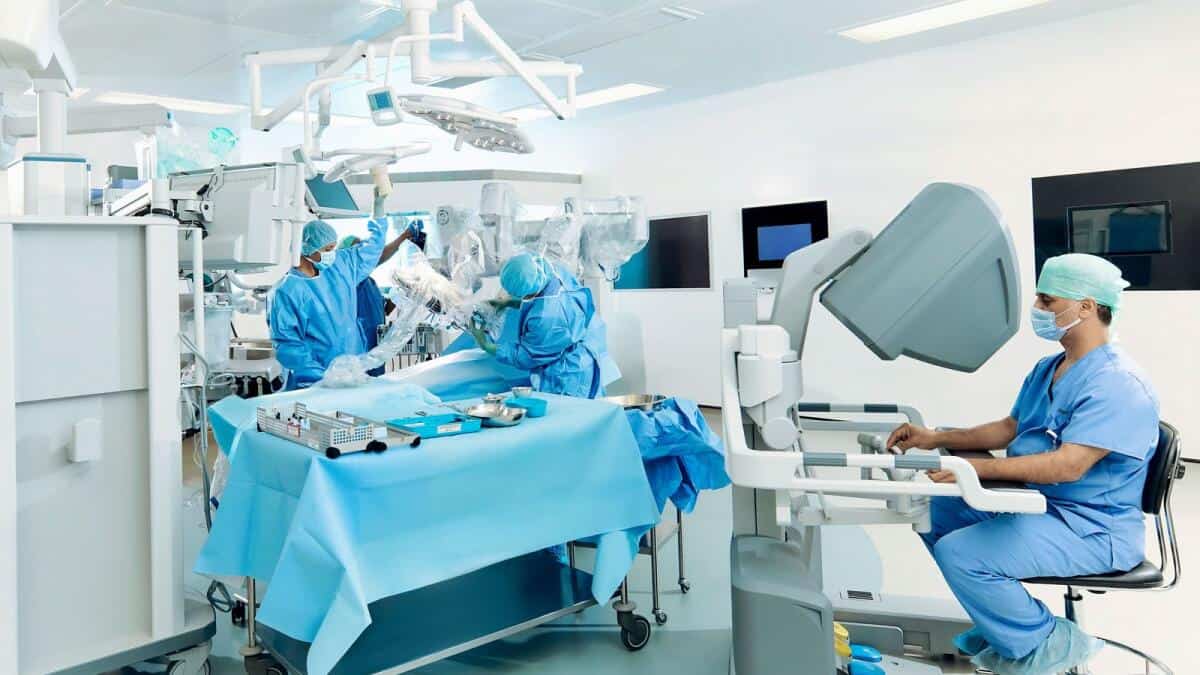
  • Abu Dhabi: Robotic-assisted surgery repairs bile duct injury utilizing ‘most modern applied sciences’

    Abu Dhabi: Robotic-assisted surgery repairs bile duct injury utilizing ‘most modern applied sciences’

    Lifestyle

    The patient made a fat recovery and became discharged interior three days

    Lifestyle Photo: Supplied

    Photo: Supplied

    Printed: Tue 7 Can also fair 2024, 2:58 PM

    Final up up to now: Tue 7 Can also fair 2024, 3:16 PM

    An Abu Dhabi-basically based mostly clinical institution for severe and complex care has successfully repaired a bile duct injury in an Emirati patient utilizing an progressive robotic surgery diagram.

    The 30-one year-old college patient became admitted to Sheikh Shakhbout Scientific City (SSMC) with clinical functions of bile duct injury a rare complication that can occur following a surgical treatment linked to extra than one gallstones and of acute cholecystitis (inflammation of the gallbladder) which has an incidence rate of three to six conditions per thousand.

    Radiological investigations, alongside with a CT scan and MRI, confirmed bile duct injury. The patient became scheduled for a delayed bile duct injury restore conducted utilizing SSMCs surgical robotic-assisted technology.

    Preserve up up to now with the most contemporary news. Apply KT on WhatsApp Channels.

    Dr Salem Al Harthi, guide and chair of the surgery division at SSMC, led the surgery, which marked one more vital achievement in minimally invasive surgery and robotic-assisted procedures.

    Using the most contemporary applied sciences in robotic-assisted surgery, I became ready to salvage precise surgical restore by extremely cramped incisions. The usage of intra-venous dye, robotic magnification, and precise instrument support a watch on, facilitated the complex anastomosis between the bile duct injury and the cramped bowel, in very close proximity to the liver. The surgery proved a success, even underneath the most not easy anatomical conditions, Dr Al Harthi stated whereas explaining the progressive methodology.

    Dr Al Harthi indispensable that robotic-assisted surgery enables surgeons to salvage a extremely intricate design with elevated phases of precision and support a watch on.

    On this case, it provided our multidisciplinary surgical personnel with an unparalleled visualisation of the bile duct anatomy, enabling us to attain optimum outcomes for the patient.

    The patient made a fat recovery and became discharged interior three days.

    Dr Abdulqader Almessabi, appearing chief clinical officer at SSMC, highlighted: This milestone achievement underscores SSMC’s dedication to leveraging decreasing-edge technology, innovation, and abilities to give world-class wisely being care products and companies to our sufferers. It also additional highlights SSMCs place as a wisely being care centre of excellence that is proudly leading the methodology in the UAE and the station on next-technology, personalized care.

    ALSO READ:

Our Portfolio

Latest Questions

Categories

TAGS

Contacts

Miscellaneous

Categories

SWITCH CURRENCY