
Lifestyle
How to Find a Room Rental That Fits Your Budget and Lifestyle
Lifestyle Choosing a room rental involves more than selecting the lowest monthly figure. Housing costs interact with commuting, food, utilities, privacy, safety, and household…
TAMFIS NIG LTDRC 8067447CAC ACTIVEFinima, Bonny Island, Rivers State

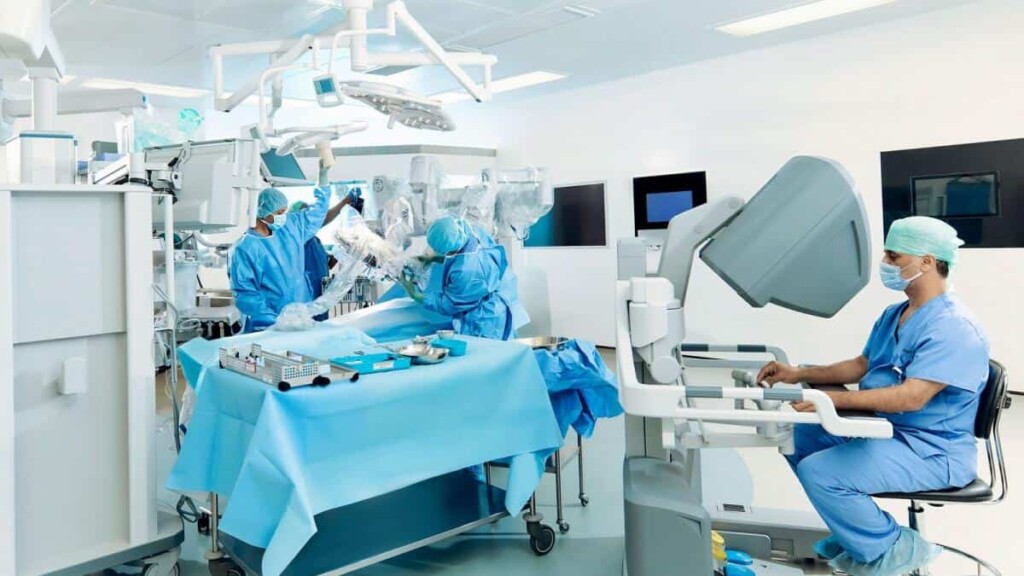
Bile duct injuries, though rare, represent a serious complication often arising from gallbladder-related surgeries such as cholecystectomy. These injuries can lead to significant morbidity if not promptly and effectively managed. Recently, a pioneering medical team at Sheikh Shakhbout Medical City (SSMC) in Abu Dhabi utilized state-of-the-art robotic-assisted surgery to repair a bile duct injury in a 31-year-old Emirati patient. This innovative approach not only ensured a successful surgical outcome but also exemplified how modern applied technologies are transforming complex surgical care. This article delves into the details of this remarkable surgical feat, the technology behind it, and its broader implications for healthcare in the region.
Bile duct injuries (BDIs) are uncommon but serious complications that can occur during or after gallbladder surgeries, especially in cases involving multiple gallstones or acute cholecystitis. The bile duct, responsible for transporting bile from the liver to the small intestine, is delicate and anatomically complex, making surgical repairs particularly challenging.
The incidence of bile duct injuries ranges from three to six cases per thousand gallbladder surgeries. When these injuries occur, they can lead to bile leakage, infection, jaundice, or even long-term liver damage. Early diagnosis and precise surgical intervention are critical to prevent severe complications and improve patient outcomes.
Traditional repair methods often involve open surgery, which can be invasive, lengthen recovery time, and pose higher risks of complications. The complexity of the bile duct’s anatomical location near vital structures like the liver and intestines demands advanced surgical techniques that provide enhanced visualization and precision.
Sheikh Shakhbout Medical City (SSMC) in Abu Dhabi is renowned for delivering advanced and specialized healthcare services. As a leading institution for complex and critical care, SSMC continuously invests in cutting-edge technologies and highly skilled multidisciplinary teams to address challenging medical conditions.
The institution's commitment to innovation is evident in its adoption of robotic-assisted surgical systems, which facilitate minimally invasive procedures with enhanced accuracy. This approach aligns with global trends in healthcare, where technology integration is pivotal to improving surgical outcomes and patient safety.
The recent successful repair of a bile duct injury at SSMC underscores the facility’s role as a center of excellence in the UAE, showcasing how modern medical technologies can be harnessed to deliver world-class care tailored to the needs of individual patients.
Robotic-assisted surgery represents a significant advancement in minimally invasive surgical techniques. By employing robotic arms controlled by surgeons, this technology offers enhanced dexterity, precision, and magnified three-dimensional visualization, which are invaluable when operating on intricate anatomical structures like the bile duct.
In the case at SSMC, the surgical team utilized robotic technology to perform a delayed repair of the bile duct injury. The procedure involved making tiny incisions through which robotic instruments were inserted, allowing for meticulous dissection and reconstruction without the need for large open incisions.
This technique minimizes tissue trauma, reduces blood loss, and shortens hospital stays. For the patient, it translates into less postoperative pain, quicker recovery, and a lower risk of complications compared to conventional open surgery.
The success of the bile duct repair at SSMC was facilitated by several modern technologies integrated into the robotic-assisted surgical system. One key innovation was the use of intravenous dye, which enhanced the visualization of the bile ducts during surgery, allowing the surgeons to clearly delineate the injury and surrounding anatomy.
Robotic magnification provided a highly detailed, three-dimensional view of the surgical field, enabling the surgical team to perform complex anastomosis—the connection between the bile duct and a segment of the bowel—with exceptional accuracy. This was particularly critical given the proximity of the injury to the liver and other vital structures.
Precise instrument control via the robotic system allowed the surgeons to operate in confined spaces with stability and flexibility beyond human hand capabilities. These technological enhancements collectively contributed to the successful outcome of a surgery that would have been considerably more challenging using traditional methods.
The repair was led by Dr. Salem Al Harthi, Chair of the Surgery Department at SSMC, whose expertise in minimally invasive and robotic-assisted surgery was instrumental in navigating the complexities of the procedure. The surgical team comprised specialists from various disciplines, ensuring comprehensive care throughout the patient’s treatment journey.
A multidisciplinary approach is vital in managing bile duct injuries due to their complexity and potential for complications. Radiologists, anesthesiologists, and surgical nurses collaborated closely to optimize preoperative planning, intraoperative management, and postoperative recovery.
This coordinated effort under expert leadership ensured not only the technical success of the surgery but also the patient’s rapid recovery and discharge within three days, highlighting the efficacy of combining advanced technology with skilled clinical practice.
Following the robotic-assisted bile duct repair, the patient experienced a smooth and rapid recovery, underscoring the benefits of minimally invasive surgery. The reduced trauma from small incisions and precise surgical techniques contributed to decreased pain and faster mobilization.
Postoperative care included monitoring liver function, managing pain, and preventing infection. The multidisciplinary team provided tailored care plans to support the patient’s healing process and ensure optimal long-term outcomes.
The patient was discharged within three days, a testament to the effectiveness of the surgical approach and the comprehensive care provided by SSMC. Such outcomes reinforce the value of integrating advanced surgical technologies in complex cases.
This successful robotic-assisted surgery marks a milestone in the UAE’s healthcare landscape, demonstrating how embracing cutting-edge technologies can elevate patient care standards. SSMC’s achievement highlights the country's commitment to becoming a regional leader in innovative medical treatments.
By leveraging robotic surgery and other advanced modalities, healthcare providers in Abu Dhabi are improving surgical precision, reducing recovery times, and enhancing patient safety. These advancements align with the UAE’s broader vision of fostering a knowledge-based economy supported by technological innovation.
Furthermore, such developments encourage ongoing medical research, training, and collaboration, ensuring that healthcare professionals remain at the forefront of global best practices and continue to deliver personalized, next-generation care.
The success of robotic-assisted bile duct repair opens avenues for wider application of this technology in various complex surgical procedures, including oncology, cardiovascular, and transplant surgeries. Its ability to improve visualization and control makes it particularly suitable for delicate operations.
As robotic systems continue to evolve with enhanced artificial intelligence, augmented reality, and improved ergonomics, surgeons will gain even greater capabilities to tackle challenging cases with higher safety margins and better outcomes.
Healthcare institutions in Abu Dhabi and beyond are expected to expand their robotic surgery programs, investing in training and infrastructure to make these benefits accessible to a broader patient population, thereby advancing the standard of care throughout the region.
The groundbreaking bile duct repair performed at Sheikh Shakhbout Medical City exemplifies how modern applied technologies, particularly robotic-assisted surgery, are transforming complex surgical care in Abu Dhabi. This achievement not only reflects the expertise and dedication of the medical team but also underscores the importance of innovation in enhancing patient outcomes. As robotic surgery continues to evolve, it promises to revolutionize the management of intricate medical conditions, offering patients safer procedures, faster recoveries, and improved quality of life. Abu Dhabi’s leadership in adopting such advanced technologies positions it at the forefront of healthcare excellence in the region and sets a benchmark for future medical advancements.
Originally reported by khaleejtimes.com. Adapted for our readers.
Keep reading
Lifestyle
Lifestyle Choosing a room rental involves more than selecting the lowest monthly figure. Housing costs interact with commuting, food, utilities, privacy, safety, and household…
Lifestyle
Lifestyle Mention Phuket and visions of a sun-kissed beach escape immediately come to mind — where days are spent basking in the tropical sun by…
Lifestyle
Lifestyle Lifestyle When asked to name the most productive American trot set apart, most would say...
TAMFIS NIG LTD
Electrical and instrumentation engineering, bid preparation and consulting, IT and software.