
NASA space telescope sees interstellar visitor comet 3I/ATLAS flare up while exiting the solar system
Science & Technology

NASA space telescope sees interstellar visitor comet 3I/ATLAS flare up while exiting the solar system

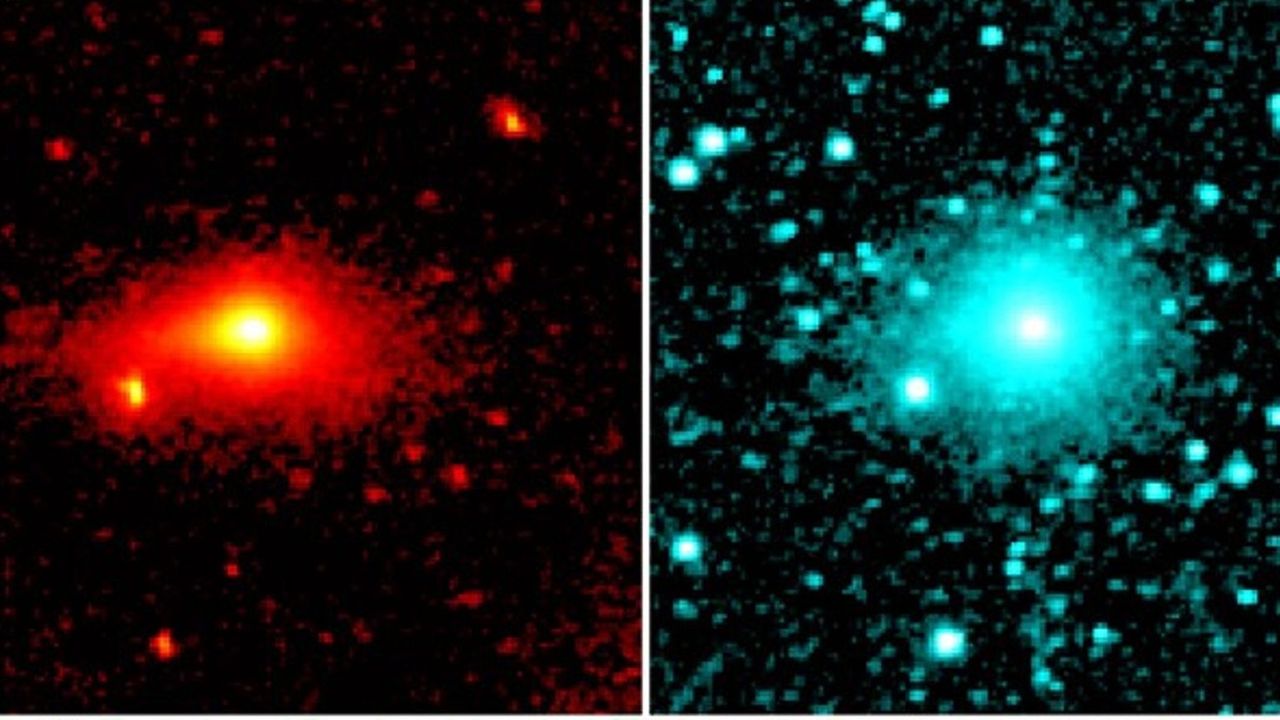
NASA's SPHEREx captured these infrared observations during a December 2025 campaign, revealing dust, water, organic molecules and carbon dioxide in comet 3I/ATLAS's coma.(Image credit: NASA/JPL-Caltech)New infrared observations reveal the rare interstellar visitor comet 3I/ATLAS dramatically brightening during its farewell tour of the solar system. NASA's SPHEREx (Spectro-Photometer for the History of the Universe, Epoch of Reionization and Ices Explorer) space telescope captured views in December 2025 of the comet releasing a surge of gas, dust and complex molecules two months after the object's closest approach to the sun — a surprising outburst that's giving scientists their clearest chemical look yet at material formed around another star, according to a statement from NASA."Comet 3I/ATLAS was full-on erupting into space in December 2025, after its close flyby of the sun, causing it to significantly brighten," Carey Lisse, lead...
Continue reading
NASA space telescope gets 1st clear X-ray image of sun-like star blowing a bubble
Science & Technology

NASA space telescope gets 1st clear X-ray image of sun-like star blowing a bubble

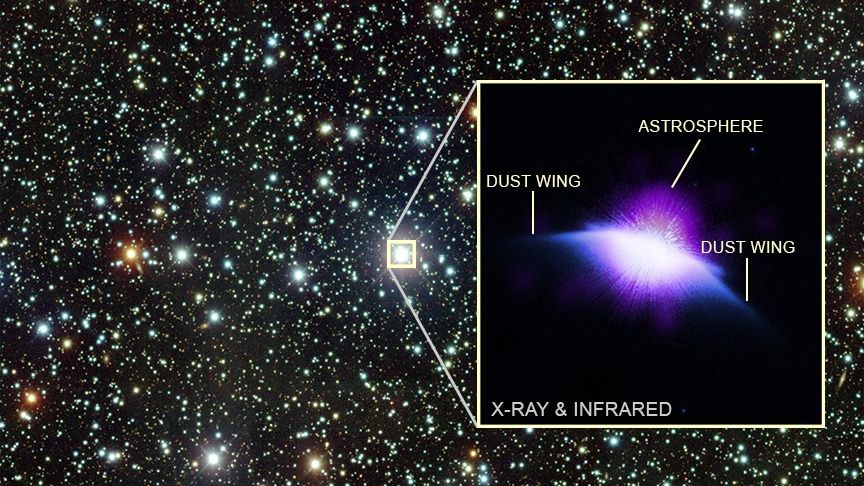
Astronomers have captured the first views of a young sun-like star blowing bubbles, offering a rare glimpse at how our solar neighborhood might have behaved in its youth. Using NASA's Chandra X-ray Observatoryresearchers observed HD 61005 — a young star located about 120 light-years from Earth with roughly the same mass and temperature as our sun — and detected a vast bubble of hot gas surrounding it. This wind-blown bubble, known as an "astrosphere," forms when a star's powerful stellar wind slams into surrounding interstellar gas and dust, carving out a protective cavity much like the sun's heliosphere that shields our solar system from galactic cosmic rays, according to a statement from NASA. This marks the first X-ray evidence of an astrosphere around a star like our sungiving astronomers their clearest look yet at one of these...
Continue reading