
Is it aliens? Here’s why that’s the least important question about 3I/ATLAS.
Science & Technology

Is it aliens? Here’s why that’s the least important question about 3I/ATLAS.

On October 29, Comet 3I/ATLAS reached its closest point to the sun. This point, known as perihelion, was around 210 million kilometers from the sunor 1.4 times the distance between the sun and Earthand it was on the opposite side of the sun to Earth. This means the sun had been blocking the comet from our view (from Earth). Now, ground telescopes have begun watching it again.When it was first detected on July 1 2025 by the Asteroid Terrestrial Last Alert System (or "ATLAS"), one of the first questions people asked was "but is it aliens?". This isn't the first time the alien question has come up in the context of a new astronomical discovery. But although it might be fun, it can also detract from the real (and very cool) science, and fuel misinformation.A long history...
Continue reading
Science & Technology

Are we all aliens? NASA’s returned asteroid samples hold the ingredients of life from a watery world

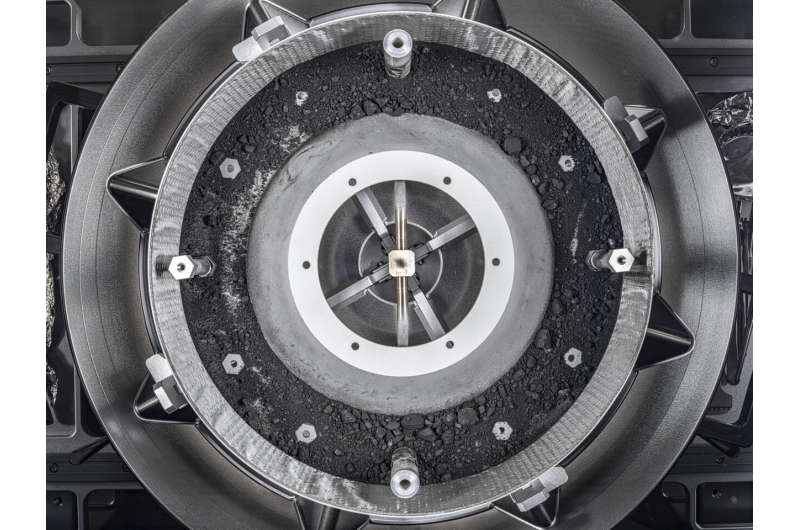
  This image provided by NASA shows a top-down view of the OSIRIS-REx Touch-and-Go-Sample-Acquisition-Mechanism (TAGSAM) head with the lid removed, revealing the remainder of the asteroid sample inside. Credit: NASA via AP Asteroid samples fetched by NASA hold not only the pristine building blocks for life but also the salty remains of an ancient water world, scientists reported Wednesday. The findings provide the strongest evidence yet that asteroids may have planted the seeds of life on Earth and that these ingredients were mingling with water almost right from the start. "That's the kind of environment that could have been essential to the steps that lead from elements to life," said the Smithsonian Institution's Tim McCoy, one of the lead study authors. NASA's Osiris-Rex spacecraft returned 122 grams (4 ounces) of dust and pebbles from the near-Earth asteroid Bennu, delivering the...
Continue reading