
In 2026, Fifa faced a significant crisis following its president Gianni Infantino’s plan to create a commercial subsidiary allowing private investors to buy stakes in major tournaments such as the World Cup. Despite offering substantial financial incentives to member associations, the proposal met fierce opposition, culminating in its withdrawal. This episode exposed deep divisions within football’s global governing body and raised pressing questions about leadership, transparency, and the sport’s future direction.
The Controversial Investment Proposal
Fifa president Gianni Infantino unveiled a plan to establish a commercial subsidiary responsible for organizing and managing Fifa’s premier competitions, including the men’s and women’s World Cups. This subsidiary would enable private investors to acquire stakes, fundamentally changing how these tournaments are financed and operated.
To secure backing, Infantino offered each of Fifa’s 211 member associations $40 million (£30 million) if they supported the initiative. The proposal aimed to inject new capital into football’s global events, potentially increasing revenues and commercial opportunities.
However, the plan quickly sparked controversy. Many stakeholders voiced concerns about privatizing parts of football’s most prestigious competitions, fearing loss of control and conflicts of interest. UEFA, representing 55 European nations, threatened to boycott all Fifa tournaments if the plan proceeded, signaling a major rift within the sport’s governance.
The backlash reflected deep mistrust among member associations about the transparency and long-term implications of such a move. Critics argued that opening Fifa’s flagship events to private investment could undermine the sport’s integrity and shift priorities away from football development toward profit maximization.
Arsene Wenger’s Role and Response
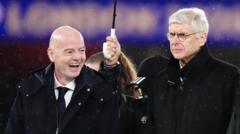
Arsene Wenger, Fifa’s chief of global football development since 2019, oversees data analysis, youth competitions, and online training programs aimed at growing the game worldwide. Though he previously supported some of Infantino’s initiatives—such as holding the men’s World Cup every two years—Wenger distanced himself from the investment plan.
In a statement released a week after the plan’s unveiling, Wenger emphasized the need for transparency and integrity within Fifa. He clarified he was not involved in developing the investment strategy and first learned of it through media reports.
Wenger described the decision to abandon the plan as “absolutely necessary and beyond question,” underscoring his belief in maintaining an independent Fifa that serves football with commitment and openness. His stance highlights broader concerns about governance and the direction of football’s global administration.
Since joining Fifa, Wenger has been a prominent advocate for the sport’s development at all levels, including youth engagement and technological innovation. His disapproval of the investment plan signals significant internal divergence on balancing commercial ambitions with Fifa’s core mission.
Internal Fallout and Resignations
The backlash extended into Fifa’s internal administration, revealing fractures within its leadership. Mattias Grafstrom, Fifa’s secretary general and a close ally of Infantino, expressed disappointment in an internal memo, calling the episode “a sad and reproachable series of events.” He urged staff to remain focused on their mission despite the turmoil and assured them protection from political fallout.
Carlos Cordeiro, Infantino’s senior adviser on global strategy and governance, was the only senior official to resign over the controversy. He publicly condemned the proposal as “a bad deal for football” that would jeopardize the sport’s future, highlighting internal disagreements at the highest levels.
Additionally, UEFA’s legal threat and a document preservation letter naming 18 Fifa officials, including Wenger, indicate ongoing tensions and potential legal scrutiny surrounding the aborted plan. These developments underscore how the controversy strained relationships not only between member associations but also within Fifa’s executive ranks.
This internal discord illustrates the challenges of managing a global sports organization where competing interests and visions for the future can clash dramatically, especially when transparency and trust are perceived to be lacking.
Accusations of Leadership Failures and Ethical Concerns
Prince Ali of Jordan, a prominent critic of Fifa’s leadership, accused the organization of withholding prize money owed to Jordan’s football association as coercion to gain support for Infantino’s re-election. He described the situation as “blackmail” and emphasized Jordan’s commitment to ethical values by refusing to endorse Infantino under such conditions.
Prince Ali, who has twice run unsuccessfully for the Fifa presidency, also alleged that Jordanian fans were denied visas to attend the World Cup in the United States, further fueling criticism of Fifa’s governance and fairness.
These accusations highlight broader concerns about transparency, fairness, and the use of financial leverage within Fifa’s political landscape. Prince Ali’s statements have drawn attention to the pressures faced by smaller football associations navigating global football politics.
His claims add to the narrative of leadership failures within Fifa, suggesting ethical considerations are sometimes sidelined in favor of political maneuvering. This situation has amplified calls for reform and greater accountability within the organization.
Implications for Football Governance
The aborted investment plan and ensuing controversies underscore the challenges facing football’s global governing body. The episode reveals deep divisions among member associations, conflicting visions for the sport’s commercial future, and questions about Fifa’s leadership accountability.
While Infantino’s proposal aimed to modernize and financially strengthen Fifa’s competitions, the backlash suggests many stakeholders prioritize maintaining control and preserving football’s traditional structures over rapid commercialization.
The situation illustrates the delicate balance Fifa must strike between innovation and governance integrity, and the importance of transparent decision-making involving all member associations.
Moving forward, Fifa faces the critical task of rebuilding trust, enhancing communication with its 211 member associations, and ensuring reforms align with football’s broader interests worldwide. The controversy serves as a reminder that leadership in global sports organizations must balance commercial ambitions with ethical stewardship to preserve the game’s integrity and unity.
What this means
The withdrawal of Fifa’s private investment proposal marks a significant moment in the ongoing debate over football governance’s future. While financial innovation remains a priority for some leaders, the backlash demonstrates global stakeholders demand transparency, fairness, and respect for established structures. Moving forward, Fifa must rebuild trust, improve communication with member associations, and ensure reforms serve football’s broader interests worldwide. This episode is a potent reminder that leadership in global sports organizations must carefully balance commercial ambitions with ethical stewardship to preserve the game’s integrity and unity.
Source: Top Fifa official Wenger says scrapping World Cup plan 'absolutely necessary' via www.bbc.co.uk.
This article was curated with AI assistance and reviewed according to Tamfis editorial settings.